金沢
The Richest Clan Outside the Shogun's Own Spent 300 Years Proving It Wasn't a Threat — A Garden, a Sweet, and a Soup That All Came Out of That Fear
3時間30分、その金が何を残したかを辿る。一棟の茶亭から始まった庭。三代藩主が作らせ、茶人が名づけた干菓子。そしてその隣の椀を満たしてきた麩。三つのうち二つは、自分の手でつくる。
時間帯
午前、午後
最大参加人数
最大6名
言語
日本語, 英語
概要
Kanazawa is a craft city because its rulers were frightened.
The Maeda held the largest domain in Japan outside the shogun's own. That was the problem. A clan that rich, that far from Edo, looked like the beginning of a war. So they spent where the money could not be mistaken for an army: on tea, on Noh, on gardens, on confectioners and lacquerers and gold beaters. They also took a shogun's granddaughter as a bride — the retainers who came north with her settled on a street beside the garden, and the street still carries the name. Three centuries of demonstrating harmlessness is the reason almost everything worth touching in this city is made by hand.
The morning follows three pieces of that spending, in the order they were made.
First the garden — which began in 1676 as a single villa beside a pond, built by the fifth lord for taking tea. Everything else accumulated outward from that room over roughly 180 years: the second pond, the trained pines, the two-legged lantern, the fountain still driven by a canal cut in 1632. You take matcha inside the reconstruction of that first room, rebuilt in 2000 from surviving floor plans.
Then the sweet. A confectioner has been working in this city since 1625, and the third lord commissioned from them a dry pressed sweet that a tea master of the day named Chōseiden — still counted among the three great confections of Japan, still made for tea. Upstairs at their main shop you press your own into a carved wooden mould: no heat, no blades, just pressure and timing. It comes out in seconds, and you eat part of it with matcha while it's still soft. Beside the workshop, a room holding over a thousand moulds carved from the Edo period on, some for sweets whose recipes no longer exist.
Then the savoury half, five minutes down the street. Since 1865, one merchant house has made fu — wheat gluten, the backbone of tea kaiseki, temple cooking and jibuni. You'll build three soup monaka from dozens of parts and take them home sealed.
A garden, a sweet, and a soup. All of it produced by a clan trying very hard to look like it had nothing else on its mind.
運営

このアクティビティを案内できる Locals
このアクティビティの研修を受けた Locals です。担当の Locals は予約リクエストの後に決まります。

ルート
- 1
Kenrokuen Garden
【Kenroku-en Garden】What the money bought first
Thirty minutes through the garden with the politics attached: the 1632 canal and the fountain it still drives, Kasumigaike and the Kotoji lantern, the Karasaki pine, and the tea-shop street named for the retainers who came north with a shogun's granddaughter when she married into the clan.
詳細 →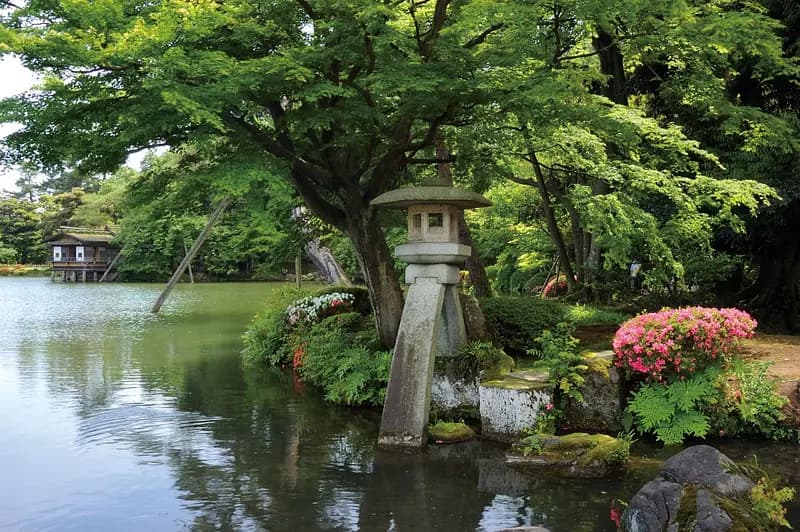 1 / 8
- 2
玉泉庵(玉泉院丸庭園内)
【Gyokusen-an】Tea in the room that started it
Tatami seating, the garden filling the window, a seasonal wagashi and a bowl of matcha. Not a formal ceremony to sit through — the way tea has actually been taken in this room: unhurried, in conversation. Your guide walks you through the order of things and what the season has to do with what you're holding.
詳細 →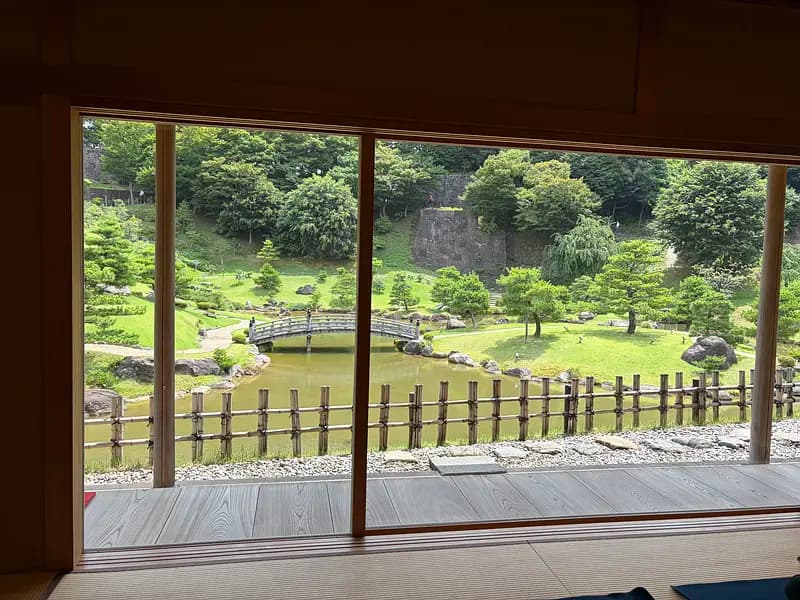 1 / 81 / 9
- 3
Out of the garden, into the confectioners' quarter
Kenrokuen → Otemachi Twenty minutes on foot past the castle to a house that has made sweets here since 1625 — half a century before the garden you just left existed.
- 4
加賀藩御用菓子司 森八 本店
A thousand moulds for sweets nobody makes anymore
Kanazawa Confectionery Mould Museum Over a thousand moulds kept by one family since the Edo period: cranes, shells, crests, seasonal figures, and some whose recipes are gone. Your guide reads the ones worth stopping at.
詳細 →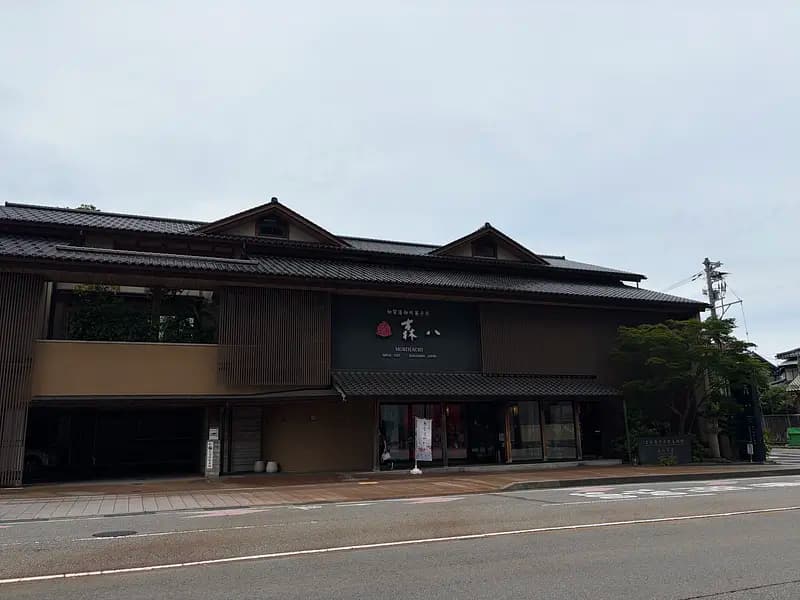
- 5
加賀麩 不室屋 尾張町本店
【Fumuro-ya - Kaga Fu】The savoury half, since 1865
Forty-five minutes building three soup monaka — fillings from dozens of fu shapes and dried vegetables, a broth from six dashi and miso bases — then the house specialty, shiratama nama-fu. Ends around 12:00 in Owaricho with your guide's list for lunch: Omicho Market five minutes one way, Higashi Chaya fifteen the other.
詳細 →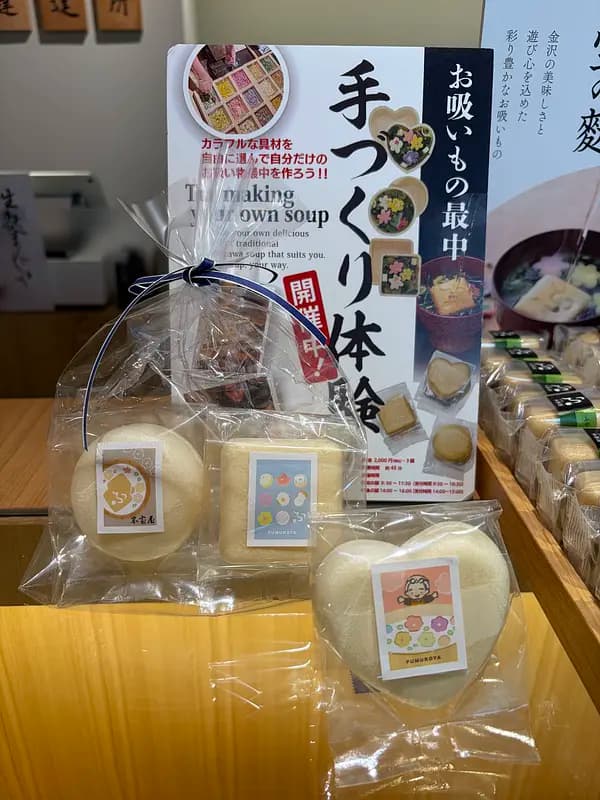 1 / 71 / 8
料金に含まれるもの
- カスタマイズされた旅程
- ガイド料
- 地元の情報や役立つ情報
- 入場料
- 食べ物と飲み物
- English-speaking WOW U Local guide throughout (3.5 hours) - Kenrokuen admission - Matcha and seasonal sweet at Gyokusen-an - Mould Museum Soup monaka workshop at Kagafu Fumuroya (three pieces, yours to take home) - Shiratama nama-fu at the dessert counter - Cultural interpretation at all three stops
含まれないもの
- 交通費
- その他の個人経費
- Hotel pickup and drop-off - Lunch, meals and personal drinks beyond the above - Personal shopping
リクエスト後の流れ
- 1
リクエストを送る
希望日と人数を選んでリクエストを送信します。この時点では支払いは発生しません。
- 2
内容を一緒に決める
いしかわローカルズとチャットで相談しながら、日程・プラン・最終金額を一緒に決めます。
- 3
お支払い
内容が確定したら、安全な決済リンクからお支払いいただくと予約が確定します。
- 4
当日の体験を楽しむ
当日 Locals と合流して体験を楽しみましょう。終了後はクチコミを投稿できます。
キャンセル料はキャンセルポリシーをご覧ください。
注意事項
◾️ Good to know
Please arrive at Kenrokuen's Katsurazaka Gate at the time specified by your guide.
This activity requires at least 2 participants and must be booked in advance always private, never merged with another group.
The teahouse is tatami seating. Let your guide know at booking if sitting on the floor is difficult.
Both workshops are hands-on but gentle: no heat, no blades.
Well suited to children and to travelers who don't consider themselves crafty. Contains wheat in both workshops.
Please tell your guide at booking about allergies or dietary needs — fillings can be adjusted, shells and moulds cannot.
What you carry home: a boxed set of rakugan and three sealed soup monaka. Both are dry goods and travel well.
About 30 minutes of walking in total, mostly downhill. Taxis can be arranged — please request at booking.
Kenrokuen admission, the teahouse, workshop and museum admission are all included.
金沢の見どころ
このアクティビティと同じエリアのスポットです。電車や車での移動が必要な場所もあります。