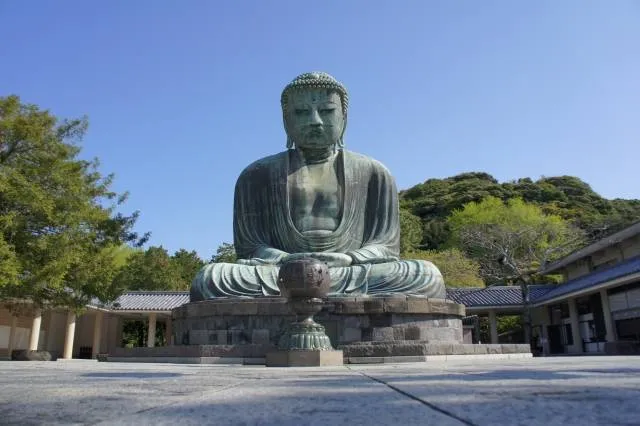
Kamakura is a historical city an hour south of Tokyo. Once a political capital, the city is full of temples and shrines and is most famous for its Great Buddha.
Summary
Kamakura is a historical city an hour south of Tokyo. Once a political capital, the city is full of temples and shrines and is most famous for its Great Buddha. Meeting the Great Buddha and going inside should be in your to-do list.
Planning a Kamakura Day Trip
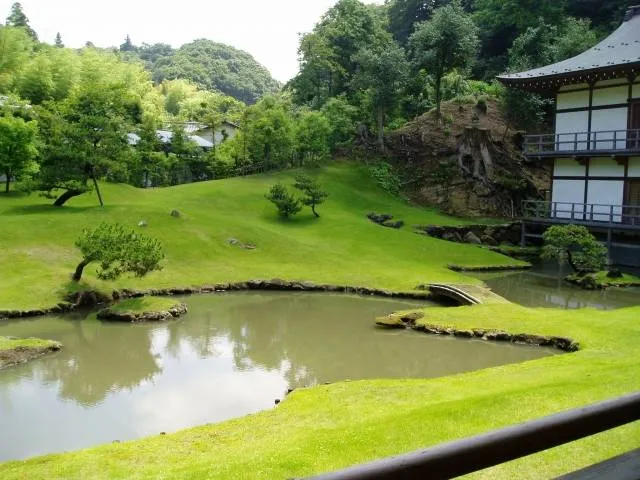
Just an hour away from central Tokyo in southern Kanagawa prefecture, there is a lovely city by the coastline called Kamakura. A popular tourist destination, the traditional city has a great variety of historical tourist spots, natural wonders (mountains and beaches), good food, new and old Japanese culture, and a laid back atmosphere away from the hustle and bustle of Tokyo. Kamakura also becomes busy with beachgoers in the summer, foliage viewers in autumn, temple visitors in the New Year, and festivals in the spring- making it an exciting place to visit any time of the year.
Various theories exist on how the area came to be called Kamakura. One theory says it comes from the city’s geology, which makes sense if you look at the kanji of Kamakura. Three sides of the city are surrounded by mountains, and look like a cooking hearth (Kamado or Kama in Japanese) and a warehouse (kura in Japanese) because both only have one side open. Thus the name Kamakura, combining these two words together. Other theories bring up stories of historical legends but the real truth is unknown.
Before Kyoto, Kamakura was the political capital of Japan from the year 1192 for over a century. It is also the birthplace of Japan’s first military government. Kamakura has historically played a significant role in Japanese history and in shaping Japanese culture. Major temples, shrines, and historical buildings remain in the city- one of them being the big bronze Daibutsu or the Great Buddha.
The Great Buddha in Kamakura, Japan
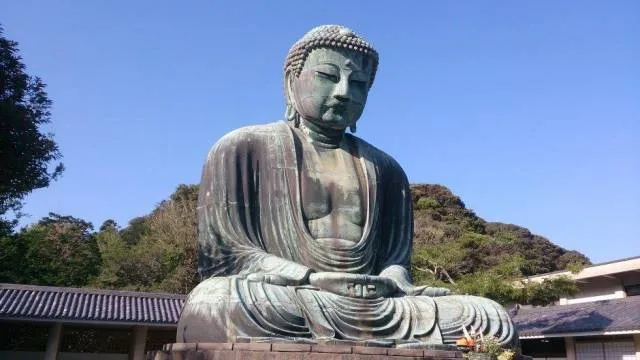
When we hear the word “Kamakura” many of us think “the Great Buddha.” Placed inside the Kotokuin Temple, no buildings surround the Great Buddha. All you have is the sky and the Great Buddha, a 44 ft (13.4 m) tall bronze statue weighing more than 100 tons, looking down at us.
Although the Great Buddha symbolizes Kamakura, it’s actually not clear as to when, who, and for what reason this Buddha was created. Many theories exist but there are no historical records that substantiate any of them. Most people however, support the below theory.
The Great Buddha began to be built in the year 1238. In 1242, the Great Buddha was wooden. 5 years later the Great Buddha got destroyed due to a typhoon, and in the year 1252, the a gold copper Great Buddha started to be built. However again due to numerous typhoons and earthquakes the Great Buddha was destroyed, and in the 1700s to 1800s the Great Buddha was rebuilt and refurbished. The Great Buddha now is however, copper. There are still a lot of questions to be answered.
Once you are done taking pictures with the Great Buddha outside, you should take the time to go inside. You can step inside the Great Buddha’s body after paying 20 yen extra as a worship fee. The Buddha is made of 7 body parts, and the head is made of 11 parts. What’s not known is that the neck is made of plastic, which is unusual for a Buddha statue. There is no artificial light set inside, just sunlight from the windows on the back of the Buddha.
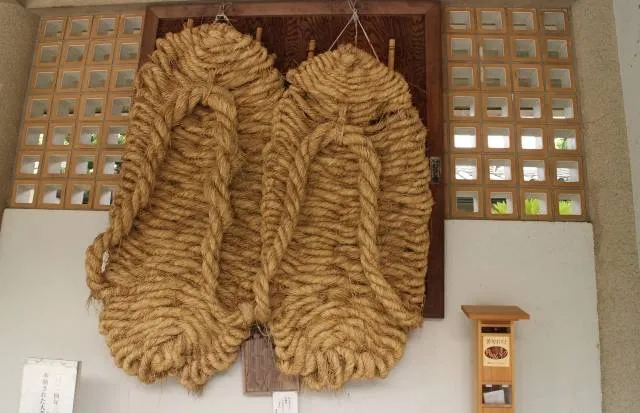
After getting out of the Buddha, you’ll see a pair of giant straw sandals. They are 35 inches (90cm) × 70 inches (180cm) in size and were first dedicated for the Buddha to wear, praying for Japan’s happiness after World War II. Ever since, these sandals have been renewed every three years.
Other Tourist Spots Close By the Great Kamakura Buddha
It goes without saying that there is a lot to see in Kamakura city. A Kamakura day trip is sometimes not enough. If you want to hike up a mountain, there are hiking courses available. Even walking around randomly you will come across interesting shops, small temples and shrines everywhere. It’s hard to get bored in this traditional city. Here we introduce three top Kamakura things to do that are walking distance from the Great Buddha.
1. Hasedera Temple
1. Hasedera Temple
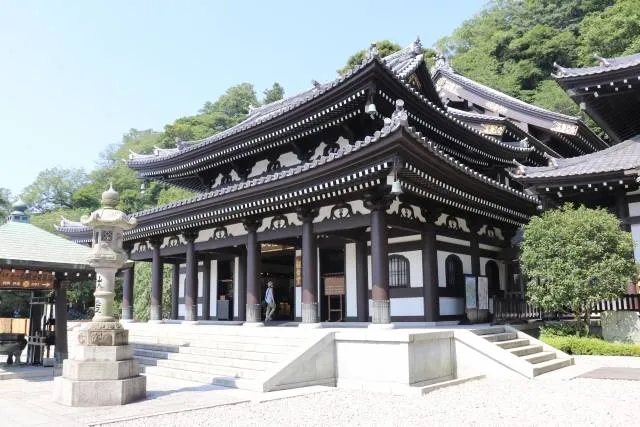
After seeing the Great Buddha, why not also see the great Kannon? Commonly referred to as the Hase Kannon, this Buddhist temple is famous for housing one of the largest wooden statues of Kannon in Japan. With a height of 30.1 ft (9.18 m), the Kannon has 11 heads, each head representing a different phase in the road to enlightenment. The temple has a great view of the sea and a flower garden that is especially beautiful in June when hydrangeas are in full bloom.
Address: 3-11-2 Hase, Kamakura Kanagawa
Tel: +81-467-22-6300
Opening Hours: 8 AM to 5:30 PM (From Oct to Feb until 5 PM)
Entrance Fee: 300 yen (children 100 yen)
2. Kamakura Museum of Literature
Address: 3-11-2 Hase, Kamakura Kanagawa
Tel: +81-467-22-6300
Opening Hours: 8 AM to 5:30 PM (From Oct to Feb until 5 PM)
Entrance Fee: 300 yen (children 100 yen)
2. Kamakura Museum of Literature
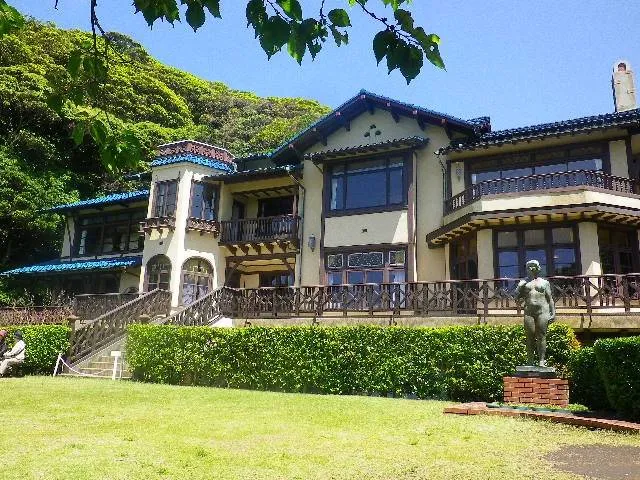
If you are feeling a little “templed-out”, this is a great place to visit. Contrary to the Great Buddha, this small and quiet museum has a Western look, with a massive rose garden in spring and autumn. Formerly a summer villa of a Japanese general, the architecture is kept the same as it was back when it was first built in 1936. The museum contains information about writers that have lived or spent time in Kamakura city.
Address: 1-5-3 Hase, Kamakura, Kanagawa
Tel: +81-467-23-3911
Opening Hours: 9 AM to 5 PM (From Oct to Feb until 4:30 PM), closed on Mondays
Entrance Fee: 400 yen (children 200 yen)
3. Zeniarai Benzaiten Ugafuku Shrine (Goddess of Money Washing)
Address: 1-5-3 Hase, Kamakura, Kanagawa
Tel: +81-467-23-3911
Opening Hours: 9 AM to 5 PM (From Oct to Feb until 4:30 PM), closed on Mondays
Entrance Fee: 400 yen (children 200 yen)
3. Zeniarai Benzaiten Ugafuku Shrine (Goddess of Money Washing)
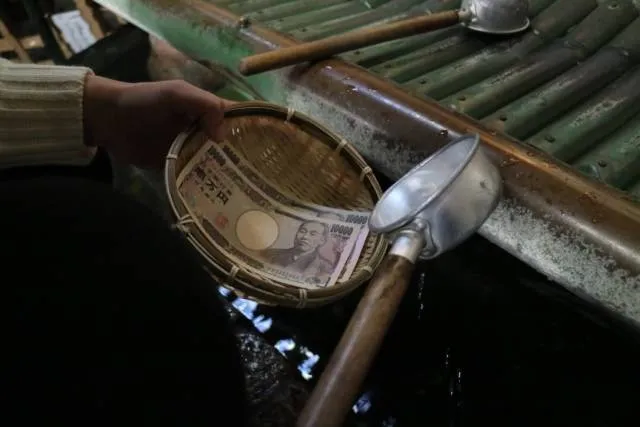
Visitors wash their money at this Shinto shrine, because it is believed the washed money will double or multiply. You see all these visitors washing their paper money-- an interesting experience, indeed. The shrine houses a traditional spirit called Ugafukujin and a Buddhist goddess, Benzaiten. It’s rare for a shrine to house both gods but traditionally, they coexisted.
Address: 2-25-16 Sasuke, Kamakura, Kanagawa
Tel: +81-467-25-1081
Opening Hours: 8 AM to 4:39 PM
Entrance Fee: Free
Depending on your mood, you can skip all the temples and shrines and go straight to the Kamakura Seaside Park Yuigahama Area to enjoy the sandy beach instead. Do not miss out on visiting the Great Buddha though- this is a must-see in Kamakura. Also, if you want to learn more about Kamakura and walk around efficiently, then booking a tour is always an option.
Related Tour
One Day Kamakura Private Guided Tour| WOW U
Catch all the wonderful sights of Kamakura, a town full of ancient history, and let your personal guide show you around the top spots : Tsurugaoka Hachimangu Shrine, Komachi-dori street,
The Great Statue of Buddha and Hasedera Temple!
Information
From JR Tokyo station, ride the JR Yokosuka line to the JR Kamakura station (1 hour). From the JR Kamakura station, ride the number 2 bus and get off at Daibutsumae stop (8 minutes). It’s a 2-minute walk from the bus stop.
Kotokuin Temple
Address: 4-2-28 Hase, Kamakura, Kanagawa
Tel: +81-467-22-0703
Opening Hours: 8 AM to 5:30 PM (From Oct to March to 5 PM)
Entrance Fee: 200 yen (150 yen for elementary school children)
*an extra 20 yen as a worship fee to those going inside the Great Buddha
Kotokuin Temple
Address: 4-2-28 Hase, Kamakura, Kanagawa
Tel: +81-467-22-0703
Opening Hours: 8 AM to 5:30 PM (From Oct to March to 5 PM)
Entrance Fee: 200 yen (150 yen for elementary school children)
*an extra 20 yen as a worship fee to those going inside the Great Buddha