content: Here we introduce the top 5 Great Buddhist Statues (Daibutsu) in Japan: Asuka Daibutsu, Ushiku Daibutsu, Nara Daibutsu, Kamakura Daibutsu and Fukuoka Daibutsu.
Summary
Here we introduce the top 5 Great Buddhist Statues (Daibutsu) in Japan: Asuka Daibutsu, Ushiku Daibutsu, Nara Daibutsu, Kamakura Daibutsu and Fukuoka Daibutsu. Some of them allow you to go inside to explore the Great Buddha’s body.If you're looking for even more "Japanese Culture" you can find them all on our brand new website called「WOW U」
Buddhist Statues In Japan
 Japan is well known for having many unique Buddhist statues that you can see and experience throughout all 47 prefectures. This is just one example of how much Buddhism has had a great influence on the development of Japanese culture and society.
Buddhism was first introduced to Japan from Korea in the 6th century. Buddhist statues symbolise the teachings of Buddha so the spread of Buddhism also meant the spread of Buddhist statues. Several decades after Buddhism was introduced to Japan, original Buddhist statues were created in Japan. Here we introduce the top five Great Buddha or Daibutsu of Japan.
Top Five Great Buddhas (Daibutsu) In Japan
 1. The Oldest Great Buddha In Japan: Asuka Daibutsu, Nara Prefecture
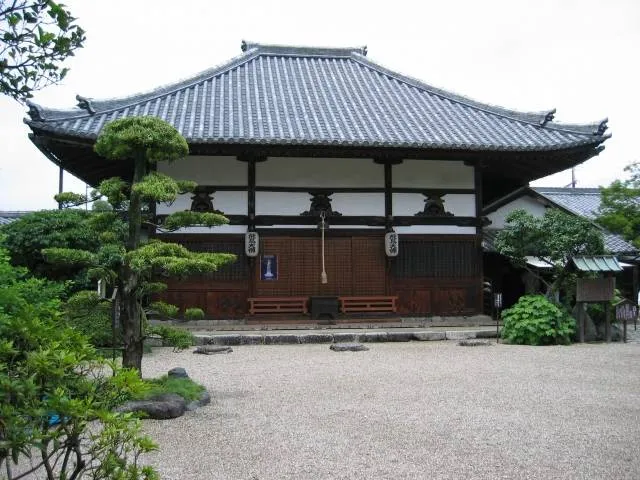
Asukadera Temple is considered to be one of the oldest temples in Japan, and in it stands the first Great Buddha that was ever made in Japan. The Great Buddha was created about 70 years after Buddhism was first introduced to Japan. It was made by Kuratsukuri Tori; a master sculptor in the 7th century whose family had emigrated to Japan from the Korean peninsula. Commissioned by the Empress and Crown Prince of that time, Tori completed the Asuka Daibutsu in the year 606. This Great Buddha represents the enlightened Buddha in sitting form. It is 9.84 ft (3 m) tall, and has a slender face compared to other Great Buddhas in Japan.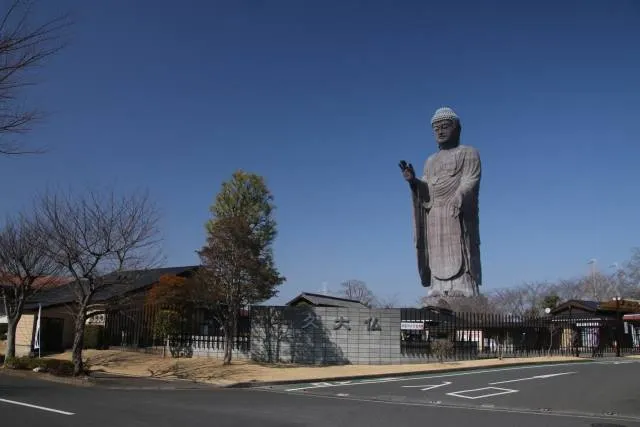 2. The Tallest Great Buddha In Japan: Ushiku Daibutsu, Ibaraki Prefecture
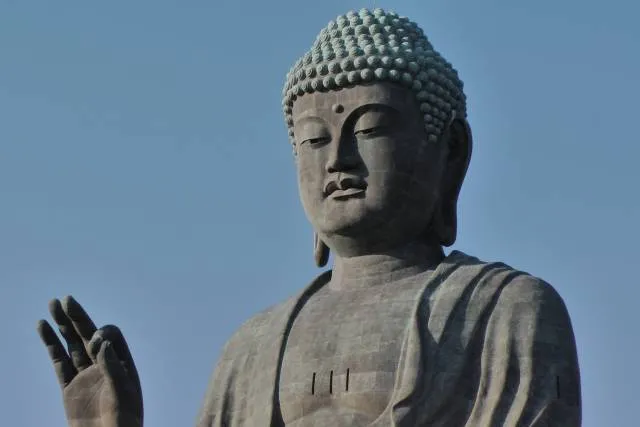
Completed in 1995, this Great Buddha is the tallest Buddhist statue in Japan. It is 390 ft (120 m) tall, and is one of the world’s top 5 tallest statues. It’s a bronze statue that represents the Amida Buddha. Inside, there is an elevator that takes visitors up to the Great Buddha’s observation deck where people can enjoy the beautiful view of the Ushiku region and, if weather permits, Mount Fuji. They have various parks including a traditional garden and an animal park with monkeys, rabbits, and goats.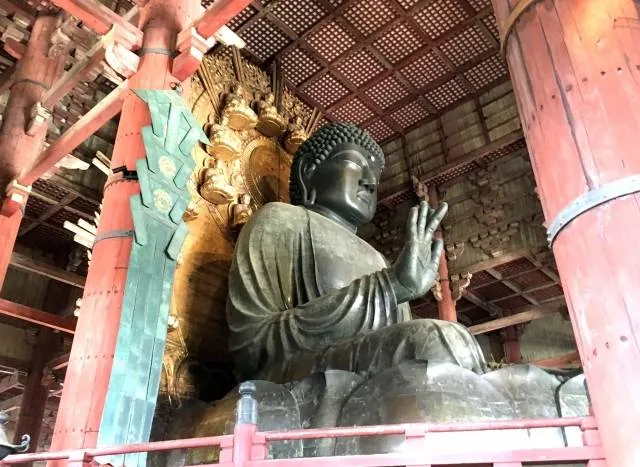 3. One of the Most Famous Great Buddhas In Japan: Nara Daibutsu, Nara Prefecture
This Great Buddha is displayed in a historically significant temple called the Todaiji Temple. Todaiji Temple’s Daibutsuden (or the “Great Buddha Hall”) is the largest wooden building in the world. The Nara Daibutsu inside the hall is a gilt bronze 49.1 ft tall (15m) statue that depicts the Vairocana Buddha. The temple is also famous for their wild deer roaming in front of the temple. Tourists feed them with the snacks sold by vendors nearby.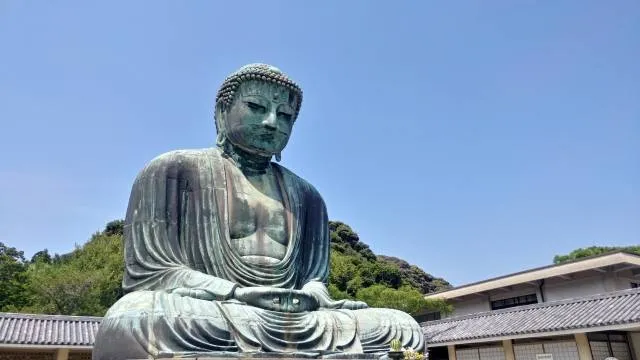 4. One Of The Most Popular Great Buddhas To Visit: Kamakura Daibutsu, Kanagawa Prefecture
This 44ft (13.4 m) tall bronze Buddha statue is one of the most popular Great Buddha to visit in the country. Situated inside Kotokuin Temple, it is a copper Buddha statue that depicts the Amida Buddha. Visitors can step inside the Great Buddha and check out the Buddha’s 7 body parts and the head’s 11 parts. 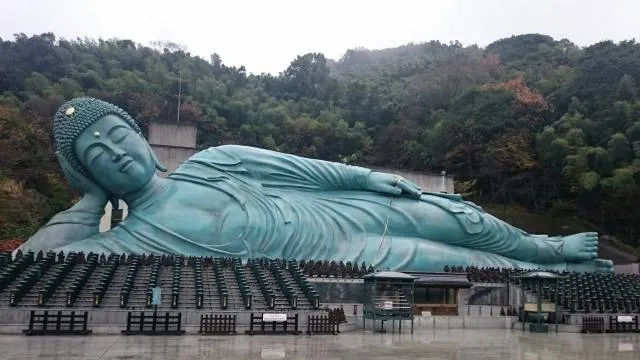 5. World’s Largest Reclining Buddha: Fukuoka Daibutsu, Fukuoka Prefecture
Located inside Nanzoin Temple in the mountains, lies a 134 ft (41 m) bronze reclining Buddha, which is the world’s largest bronze reclining Buddha. On special occasions they let visitors see the back of the Buddha. Perhaps this Buddha is most known to bring good financial luck. It is said that after creating this reclining Buddha, the chief priest won the lottery. For this reason, many visitors come to this temple to pray for better financial luck. Visitors can go underneath the Buddha to the praying room to light a stick of incense.
Things To Remember When Visiting A Great Buddha
 The Great Buddha symbolizes the teachings of Buddhism and holds great meaning to the Japanese people. Just because it is outdoors doesn’t mean you can be less respectful than when you are at other temples and shrines. Some places do not allow selfie sticks so if you want to use one, please make sure you ask the staff before you start to shoot away. The inside of the Buddha is a holy place so please pay your respect by being quiet inside.
Even from a distance, whenever I see a Great Buddha, I feel at peace. I hope that when you visit a Great Buddha, you too, will feel at peace.
Information
Asukadera Temple (Asuka Daibutsu) Access: Fly from Tokyo Haneda Airport to Osaka International airport (1 hr 10 min). From Osaka International airport, take the Itami airport line to Abenobashi station (30 min), then ride the Kintetsu express train to Kashiharajingu-mae station. From the station, there is an hourly Kame Loop bus that stops at Asuka Daibutsu-mae bus stop, which is right outside the temple.Address: 682 Asuka, Asuka-mura, Takaichi-gun, Nara 634-0103
Tel: +81-744-54-2126
Admission: ¥350 (adults), ¥250 (middle and high school students), ¥200 (elementary school students) to see the temple interior
Open Hours: 9:00 AM to 5:30 PM (until 5 PM from October to March)Ushiku Daibutsu
Access: From Tokyo Haneda airport ride the Keikyu line to Shinagawa station (12 min). From Shinagawa station, ride the JR Joban line headed to Tsuchiura, to Ushiku station (1 hour). From Ushiku station ride a local bus from platform 2 to Ushiku Daibutsu stop (24 min). From the bus stop it is a 5-10 min walk.
Address: 2083 Kuno-cho, Ushiku City, Ibaraki 300-1288
Tel: +81-29-889-2931
Admission: ¥800 (from December to March ¥700)
Open Hours: 9:30 AM to 4:30 PM on weekdays 5 PM on weekends (March to September), 9:30 AM to 4:00 PM on weekdays and weekends (October to February)Todaiji Temple (Nara Daibutsu)
Access: Fly from Tokyo Haneda Airport to Osaka International airport (1 hr 10 min). From Osaka International Airport, ride the limousine bus to Kintetsu Nara station (1 hour). From Kintetsu Nara station it is a 20-min walk.
Address: 406-1 Zoshicho, Nara City, Nara, 630-8211
Tel: +81-742-22-5511
Admission: ¥600
Open Hours: 7:30 AM to 5:30 PM (April to October) 8:00 AM to 5:00 PM (November to March)Kotokuin Temple
From Tokyo Haneda station, ride the Keikyu line to Yokohama station (30 min) then transfer to JR Yokosuka line and get off at JR Kamakura station (35 min). From JR Kamakura station, ride the number 2 bus and get off at Daibutsu-mae stop (8 minutes). It’s a 2-minute walk from the bus stop.
Address: 4-2-28 Hase, Kamakura, Kanagawa
Tel: +81-467-22-0703
Admission: ¥200 (¥150 for elementary school children)
*an extra ¥20 as a worship fee to those going inside the Great Buddha
Open Hours: 8 AM to 5:30 PM (From Oct to March to 5 PM)Nanzoin Temple (Fukuoka Daibutsu)
Access: Fly from Tokyo Haneda Aiport to Fukuoka Airport (2 hours). From Fukuoka Airport, take the Fukuoka City Subway Airport Line Bound for Nishikaratsu (about 6 min). Get off at Hakata station, then transfer to JR Sasaguri Line bound for Fukuoka (about 20 min) and get off at Kidonanzoin-mae station. Nanzoin temple is a three-minute walk from Kido Nanzoin-mae station.
Address: 1035 Sasaguri, Sasaguri-machi, Kasuya-gun, Fukuoka 811-2405
Tel: +81-92-947-7195
Admission: Free (+ ¥500 to go underneath the Great Buddha)
Open Hours: 9 AM to 5 PM (open all year round)
Reference List
https://www.britannica.com/biography/Kuratsukuri-Tori
https://kaiun.website/archives/974
http://osyakasama.net/archives/81.html