content: The amazing "Side Dish Heaven" in Koto Ward, Tokyo. Its name is the Sunamachi Ginza shopping area. What makes this area so popular despite being located further away from the train station? Read on to find out more including the history of this little town.
Summary
The amazing "Side Dish Heaven" in Koto Ward, Tokyo. Its name is the Sunamachi Ginza shopping area. What makes this area so popular despite being located further away from the train station? Read on to find out more including the history of this little town.
Over 30 Shops To Buy Various Types Of Side Dishes
Side dishes are great for when you don’t have time to cook, or you simply want to add an extra dish to your planned meal. It can be fun even merely just browsing the choices at the supermarket, underground department store or local convenience store. For foodies like this, who enjoy side dishes, there is the perfect shopping street just for you. Did you know it was in Kitasuna, Koto Ward, Tokyo? 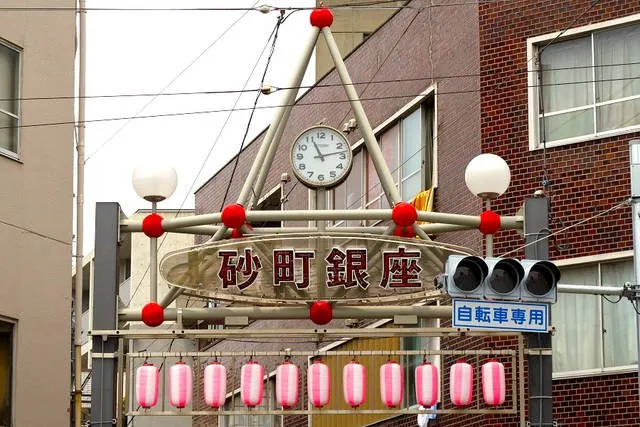
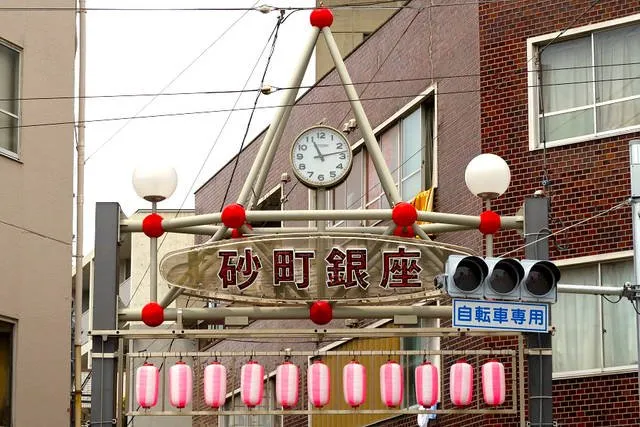
Photograph: Sunamachi Ginza Shopping District Entry Sign
via (07.22.2018. Photograph by the ULM editorial department)The name is the Sunamachi Ginza Shopping District and it runs approximately 0.4 miles (670 meters) east to west from Meiji Dori to Maruhachi Street. Along this stretch, there are around 170 stores with over 30 of them selling various types of side dishes.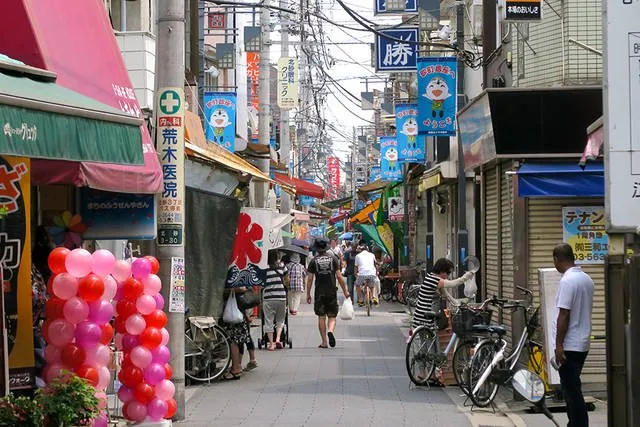
Photograph: Shoppers enjoying the Sunamachi Ginza shopping district
via (07.22.2018. Photograph by the ULM editorial department)The nearest stations are Nishi-Ojima Station on the Toei Shinjuku Line, or Minami-Sunamachi Station on the Tokyo Metro Tozai Line, however both are over 1.2 miles (2km) away. So it is best to get the train to Nishi-Ojima Station or Kinshicho Station, or, Toyocho Station on the Tozai Line, or Kameido Station on the JR Sobu Line and take a bus. You should aim to get off at the "Kitasuna 2-chome" bus stop.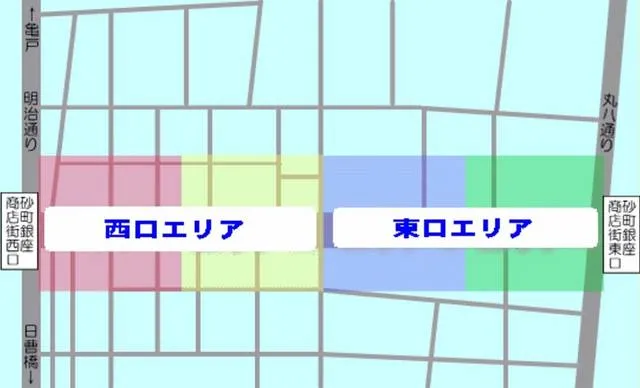
Photograph: Map of Sunamachi Ginza Shopping District. The shopping district is divided into two areas
via image: Sunamachi Ginza shopping districtEven though no one could say it was exactly the easiest place to get to, on the weekends it is visited by around 10,000 people a day. What’s even more impressive is 2/3 of the visitors come from outside of the area. Just what kinds of side dishes are sold in Sunamachi Ginza? Allow us to introduce this town and how it came to be.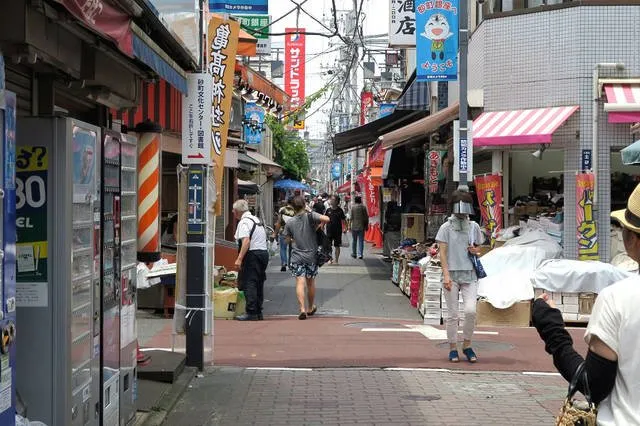
Photograph: Nearside is the east area entrance. The other side of the road is the west area entrance. The street is quite narrow
via (07.22.2018. Photograph by the ULM editorial department) According to Masafumi Numata (75 years old) who runs the liquor store “Isenobu” and who is the deputy director of the Sunamachi Ginza Shopping District Promotion Association, the shopping district was created in 1930. At which time, it started with just 28 shopkeepers. The number of stores increased rapidly from 1950 to 1955, and by 1963, it looked much as it does today.
Developing Since The 1940’s, Recently Customers Who Come On A Date And Tourists Are Increasing
At that time, the shopping area had factories involved in metal work, broom production and small transportation businesses. There were also many dual-income households, and it is said this is how the stores selling side dishes and foods that do not require cooking came about and subsequently to increase. By the 1950s it is said that 2/3 of the stores were selling side dishes and it got the nickname "Side Dish Alley" or "Alley Department Store".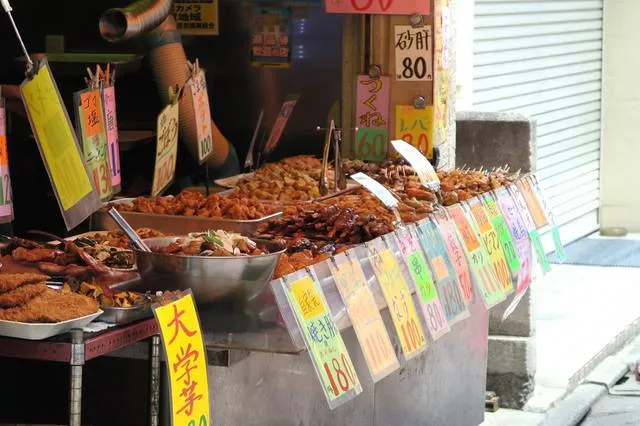
Photograph: A shop full of fried and grilled side dishes
via (07.22. 2018. Photograph by the ULM editorial department) According to Mr. Numata, at the time many people from around a 2.5-mile (4km) radius, would use the train and bus to come to the shopping area from Nihon-bashi and Ryugoku. In the 1970s, apartment construction and developments led to the surrounding population increasing. Mr. Numata said that the residential developments led to an increased number of stores of various types.In the shopping district, they sell a wide variety of side dishes such as croquette and breaded pork cutlets, from deep fried foods to yakitori (Japanese style skewered chicken), with boiled food, salads and tofu which can all be purchased in small quantities. Also a key characteristic here is that the prices are generally quite low. The reason for this Mr. Numata talks about below.
"The side dishes in the shops in this shopping district are largely handmade so even if they sell similar side dishes, each shop has its own totally different unique seasoning. Because of this, each store has their own fans and can always sell a certain amount. Also, many of the shops work with the aim of selling out of all their products every day, so there is little food waste. Thanks to this even sold so cheaply they can still make a profit. I think the prices are probably 10 to 20% cheaper than other shopping districts." (Mr. Numata)Then, we asked which 4 stores in the Sunamachi Ginza shopping district were most popular among foodies who like side dishes.
One Side Dish Item Was Even Introduced In The Popular Drama - "Solitary Gourmet"
The first shop is the "Masuei Kamaboko (boiled fish paste) Shop". The store sells more than 30 types of oden (Japanese style soup rice cake) continuously for between 30 to 100 yen. In particular, mochikinchaku (rice cake in a pouch of fried tofu), daikon (Japanese radish), eggs, satsuma-age (deep-fried ball of fish paste), gyoza-maki (dumpling rolled in deep-fried fish paste), shumai wiener and chikuwabu (flour paste cake in the form of a tube) are especially popular among young women. 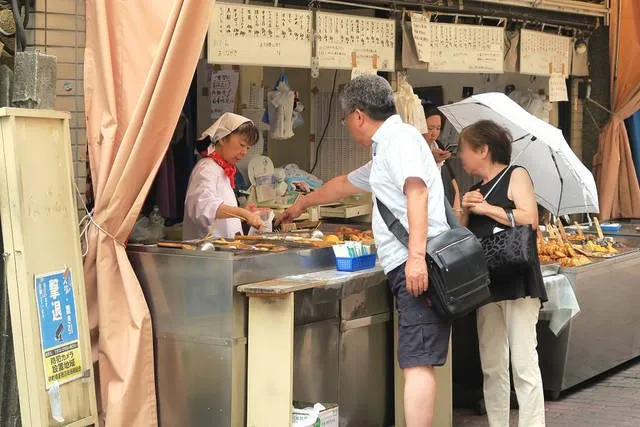
Photograph: Store selling various oden side dishes
via (07.22.2018. Photograph by the ULM editorial department) The second store is "Umemura". It is a store that mainly sells dumplings, ohagi (a rice ball coated with sweetened red beans) and inari sushi (flavored boiled rice wrapped in fried bean curd). However, they have one other speciality, Salt Udon (300 yen) as a take away set which is very popular. The set comes with noodles, tenkasu (crunchy bits of deep-fried dough produced as a byproduct), green onion and special salt broth so you can easily enjoy Salt Udon at home. The salt broth is a combination of soup stock from Hidaka kelp,the highest quality dried sardines and the secret (salt sauce) passed down through the generations. "Our store’s salt broth has a delicate taste. The flavour of the dashi (soup stock) pushes to the front rather than the saltiness of the salt itself. When you take your first sip of the soup,the aroma of the dashi first fills the mouth, and then the salty taste comes through." (Person in charge of the store)
Because the color of the soup is so clear, it can even be mistaken for water, people who try it for the first time are surprised by such gap.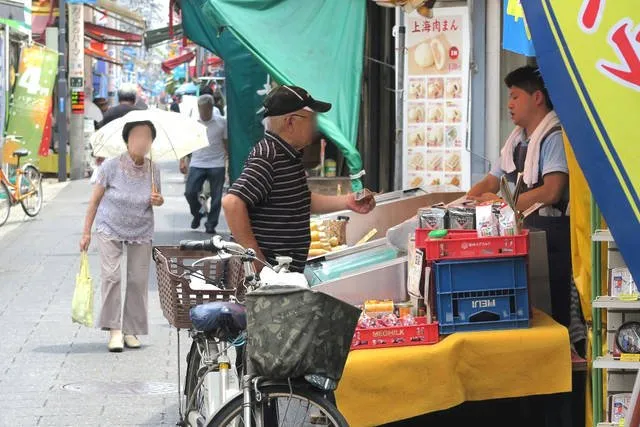
Photograph: Seeing friendly shop owners chatting up with customers is a common scene
via (07.22.2018. Photograph by the ULM editorial department) The third store "Tenbei" sells 22 - 25 types of tempura (deep-fried fish and vegetables in a light batter) such as horse mackerel, sillago, shiitake mushroom and shrimp. Amongst these the most popular items with young women are the sweet potato and pumpkin tempura (both 100 yen).
"Compared to other stores they are thicker. Also, they are fried slowly at a lower temperature which brings out the sweetness so you can eat them without adding any seasoning" (Store representative). By the way, Mukiebi Kakiage (mixed vegetable and shrimp tempura) (120 yen) is popular with foreign tourists and it is served with sweet soy sauce here. The other good thing is if you eat at the store there is free green tea available.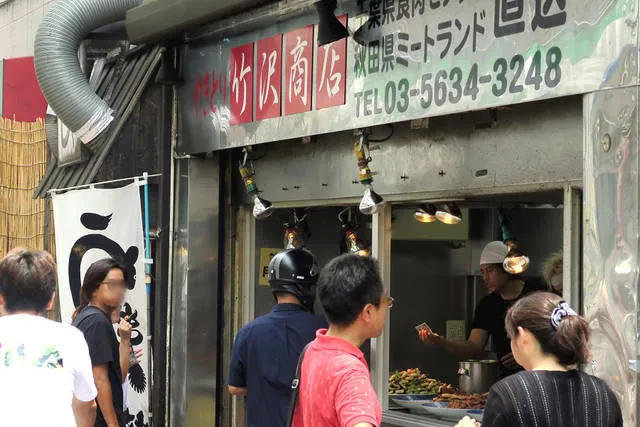
Photograph: A busy scene in front of one of the side dish restaurants near the entrance to the east area
via (07.22.2018. Photograph by the ULM editorial department) The fourth store is the "Handmade Store: Sakai". Shumai (10 for 600 yen) and gyoza (5 for 250 yen) are expertly steamed with softness being their selling point.
Tuna Mince Cutlet (300 yen) is popular with young women and was introduced on the popular TV drama "Kodoku no Gurume (Solitary Gourmet): Season 2". They provide special bags and sauce for people who want to walk while eating their tuna mince cutlet. Each one is a generous 6 ounces (170 g), and if you are lucky you could even get to eat a freshly fried one.The reason for Sunamachi Ginza shopping districts popularity with so many people is that it supports the dining tables of everyone living near through the abundance of side dishes and their reasonable pricing. It truly is the "Side Dish Heaven". Why don’t you come and experience for yourself, the Sunamachi Ginza Shopping District.
Information
Sunamachi Ginza Shopping District Address: 3-5 Kitasuna, Koto Ward, Tokyo Access: About 15 minutes by bus from Kinshicho Stationon Hanzomon Line. Around 12 minutes by bus from Toyocho Station Tozai Line. Around 5 minutes by bus from Nishi-Ojima Station on the Toei Shinjuku Line (get off Kitasuna 2 chome for all buses). *The information is current as of the time the article was published ### Supervision Provision of Article
URBAN LIFE METRO
ーーーーーーーーーーーーーーー
Tokyo Metro Co., Ltd.
3-19-6, Higashi-ueno, Taito-ku, Tokyo
TEL:+81 FAX:+81 E-mail:
ーーーーーーーーーーーーーーー
© urban life metro 2018
ーーーーーーーーーーーーーーー
Tokyo Metro Co., Ltd.
3-19-6, Higashi-ueno, Taito-ku, Tokyo
TEL:+81 FAX:+81 E-mail:
ーーーーーーーーーーーーーーー
© urban life metro 2018