Looking for a religious experience? The ancient Shikoku pilgrimage is the most attractive and well-known pilgrimage route in Japan. Alongside, Ishiteji Temple, a National Treasure featuring spiritual stones is a must-see.we will introduce the background of the pilgrimage and many tips for your journey.
Summary
The ancient Shikoku pilgrimage is the most well-known pilgrimage route both in Japan and overseas. The route is, associated with a famous Buddhist monk Kukai, and about 745mi(1,200km) with 88 official temples along the way.
Here, you will find amazing backgrounds and useful tips for taking the journey. Ishiteji, known as the 51st Temple, is full of attractions.
Here, you will find amazing backgrounds and useful tips for taking the journey. Ishiteji, known as the 51st Temple, is full of attractions.
What Is The Shikoku Pilgrimage?
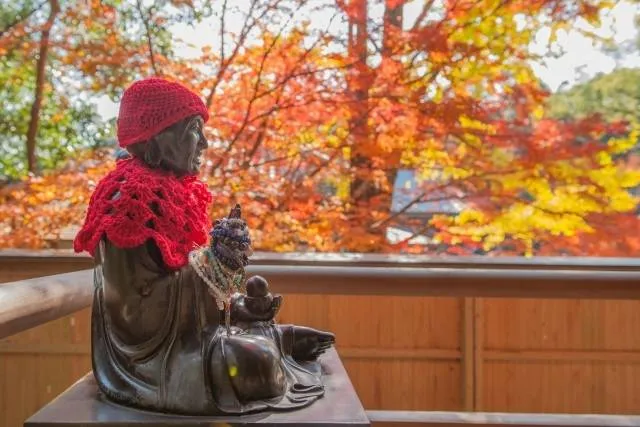
The Shikoku pilgrimage is the most well-known pilgrimage both in Japan and overseas. The route is, associated with a famous Buddhist monk Kukai, and about 745miles(1,200km) in total with 88 official temples along the way. Kukai, posthumously known as Kobo Daishi, was born in Shikoku in 774, and founded the Shingon sect of Japanese Buddhism after his official China visit.
In Japan, pilgrimage originated as a religious practice by monks or Yamabushi (Japanese mountain ascetic hermits). Since the Heian period, it has gradually taken off and become popular during the Edo-Period. Over time, temples and shrines on the original route were changed, and the current locations were established.
In Japan, pilgrimage originated as a religious practice by monks or Yamabushi (Japanese mountain ascetic hermits). Since the Heian period, it has gradually taken off and become popular during the Edo-Period. Over time, temples and shrines on the original route were changed, and the current locations were established.
The Shikoku pilgrimage is specially called “Shikoku Henro.” The term, “Henro” means “Pilgrimage” which refers only to this pilgrim journey. Shikoku residents call the pilgrims “O-henro-san.”
In general, pilgrims visit all of the 88 temples for the virtue of doing good deeds. The number 88 refers to the worldly desires of people. After completing the pilgrimage, it is said that the desires are extinguished and the pilgrim’s wish is fulfilled.
Before and after the journey, many people visit Mt. Koya where Kukai settled and had his headquarters. After greeting Kukai’s spirit, they set off on the Shikoku pilgrimage. There is an order in which each temple is numbered. For example, Temple No.1 is Ryozenji in Naruto city, Tokushima prefecture. However, it is not necessary to travel according to this. You can start wherever you want. That said, there is the belief that travelling counterclockwise will bring a three times bigger fortune to you. If you cannot afford time, it is not necessary to complete it in one go as the entire journey takes between 30 to 60 days on foot. Therefore, many people come back to Shikoku to resume the route. The good thing nowadays is that there are many alternatives instead of walking. To quicken the journey, bike, motorbike and car are feasible. Furthermore, public transport, such as train and bus is also helpful. Probably the easiest way for beginners is to join a group pilgrimage bus tour or take a combination of transportation.
What Clothes To Wear On Your Pilgrimage
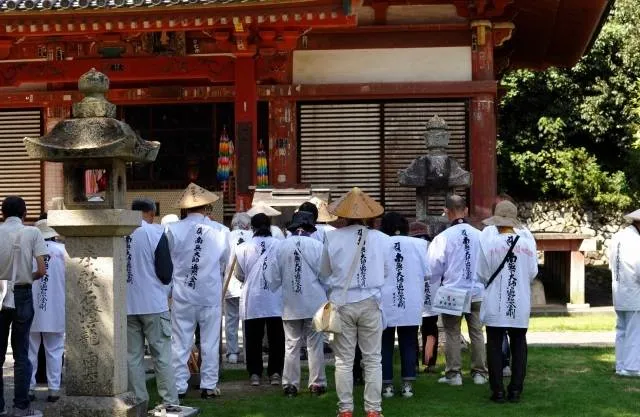
To be honest, there is not any strict rule regarding what kind of clothes pilgrims should wear. However, traditionally, a pilgrim wears a white shirt, a conical Asian hat, a wooden staff, a ceremonial stole, and carries a bag containing name slip, prayer beads, a booklet to collect stamps or seals, incense sticks, coins used as offerings, a book of sutras and a bell. Nowadays, pilgrims are inclined to wear casual clothing, such as jeans and sneakers, as it is more comfortable for a long walk. Even so, many people still go for a basic set of traditional clothes; a white shirt, a conical hat, and a wooden staff. Some people believe that it helps focus their minds during the long journey.
White represents purity and was used to wrap up a dead body in the past. Wearing white originally signified that the pilgrim is prepared to come across misfortune on the pilgrimage, but that does not normally happen in modern times. Another item, a conical hat is useful for protection against the sun and rain. These hats have the written words “ 同業二人(Dogyoninin),” which means that Kobo Daishi travels with you.
The last item is a wooden staff, which is believed to be the embodiment of Kobo Daishi himself, accompanying you on the entire journey. Bear it in mind, you are not using it when crossing any bridges. Many items are sold at temples on the route and are also available online. They are not expensive. A white shirt costs at least 2,300 yen, a hat and a staff are about 300 yen respectively. If you want to feel an authentic religious experience, why not try them on? It is a chance to savour in full a unique experience in Japan!
A National Treasure, Ishiteji In Ehime Prefecture
The Legend Of Ishiteji
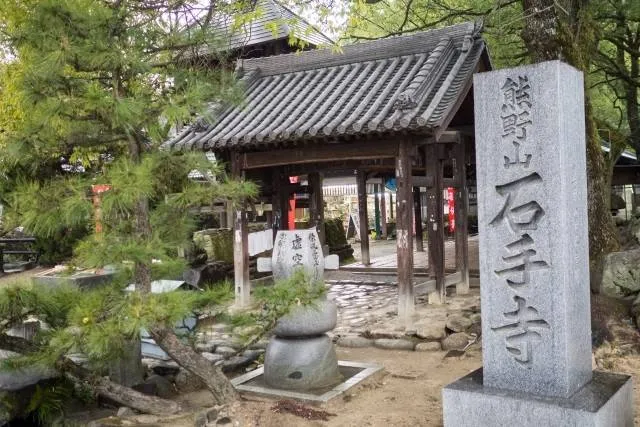
Ishiteji, known as the 55th temple, is the most amazing temple in the 88 Temple Shikoku pilgrimage. Ishiteji is translated as “Stone hand temple” whose name originates an interesting legend of an aristocrat called Emon Saburo. One day, a pilgrim knocked at Emon Saburo’s house, begging many times despite his repeated rejection. Emon, at last, lost his temper and broke the pilgrim’s begging bowl into eight pieces. Shortly after it occurred, every day his eight children died one after another. Emon finally realized the reason and set off on a pilgrimage to find the pilgrim to ask his forgiveness. When he met the pilgrim, he was forgiven and promised to be a good ruler after his rebirth. The pilgrim, who was actually Kobo Daishi, gave him a small stone and pressed into Emon’s hand. Years after Emon died, a baby with a clenched fist was born. Inside his fist was a stone written: “Emon was reborn.” He became the ruler of the Yuzuki castle. The temple was renamed as Ishiteji.
Fantastic View From The Hillside Above View From The Hillside Above
The Ishiteji grounds is full of attractions. Emon’s stone is on display at Homotsukan within the temple grounds. Also, wonderful structures throughout the temple are listed as National Treasures, and Important Cultural Property is sure to amaze you. In particular, Niomon gate, designated a National Treasure, is magnificent, in which you can see enormous straw-made slippers called Waraji. Hondo, Three-story pagoda and Five-story pagoda showcases the stunning Kamakura and Muromachi-Period architectures. Looking at a hillside above where the temple stands, you will be impressed by a huge statue of Kobo Daishi holding a big brush, which is the tallest statue in Japan. Climb up the hill and observe it closely.
Three Stones: A Spiritual Power Spot
Another attraction is the special spiritual power sites. The well-known three stones are housed at three places. The first stone is the one that Kobo Daishi gave Emon. The second Kodakara stone said to help with the delivery of babies, is housed at Kariteimotendo. In Kariteimotendo, you can take a single stone with you, and keep it until your baby is born. After you give birth, return the stone to where you received it after writing your baby’s birthday and name on it. The third is the Genki stone for good health and restoration to life, located on the left side of the Hondo. There, take a single stone with you, and return eight stones one year later. You will be fitter and your life will be better.
Miniature Shikoku Henro And Numerous Unique Shops
After the sightseeing, why not try Miniature Shikoku Henro, “Osunanade”? It stands at the balcony of the three-story pagoda where 88 sand bags are on display. In each bag there is sand from each of the 88 temples. By stroking or rubbing the sandbags in order, you can make a wish.
To explore the temple grounds, it takes about 2 hours. There are numerous unique shops, such as a hand-made broom shop, and tea shops with serve a local speciality, " Ishimochi" Ishimochi is a traditional Japanese sweet made of rice filled with delicious sweet azuki bean paste. It goes with Japanese sweet wine, Amazake. It will boost your strength to go the extra miles in the pilgrimage.
To explore the temple grounds, it takes about 2 hours. There are numerous unique shops, such as a hand-made broom shop, and tea shops with serve a local speciality, " Ishimochi" Ishimochi is a traditional Japanese sweet made of rice filled with delicious sweet azuki bean paste. It goes with Japanese sweet wine, Amazake. It will boost your strength to go the extra miles in the pilgrimage.
Last Remarks

During the Shikoku pilgrimage, you will discover many more interesting aspects of Japanese religious culture, such as a complimentary tea and accommodation for pilgrims. Why not try the unique experience in Shikoku? Here is the best place you should visit and enjoy!
Related Tour
Ishite-ji Temple | WOW U
Shikoku island is well-known for the 88-Temple Pilgrimage. Its origin dates back to over 1200 years. Motives of making a pilgrimage differ depending on the
Information
◼ Shikoku Pilgrimage, No 51 Temple, Ishiteji in Ehime Prefecture
◼ Access
From Tokyo(HND) to Matsuyama city in Ehime Prefecture
2 hours by airplane.
From Matsuyama city to Ishiteji
Ride the Iyotestudo Jonan Line from Matsuyama city station to Dogo Onsen station (16 minutes). From Dogo Onsen station, walk to Ishiteji (20 minutes).
Bus: Ride the Iyo Line bus from JR Matsuyama city station to Ishieji (30 minutes)
Take No 8 line for Dogo onsen or No 52 line for Yunoyama New Town.
From Matsuyama Airport to Ishiteji
Car: Takes 30 minutes
◼ Address
2-9-21 Ishiteji, Matsuyama, Ehime Prefecture 790-0852, Japan.
◼ Tel
+81-89-977-0870
*Please note that English may not be spoken in some tourist spot facilities.
◼ Date
All year around
◼ Admission Fee
Homotsukan (Treasure Hall)
¥200(for adults)
¥150 (for secondary school students)
¥100 (Primary school students)
◼ Open Hours
8:00AM to 5:00PM
The information is current as of the time the article was published