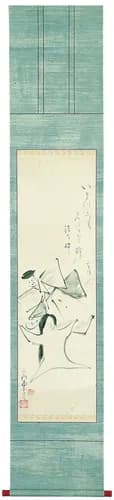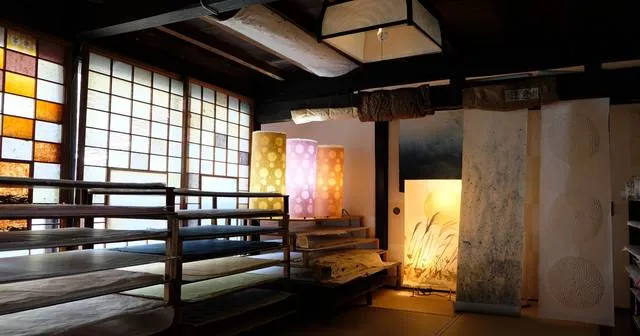
“Nao Washi” is traditional Japanese paper produced in Saga with 300 years of history. Visiting the Nao Washi factory is one of the best things to do when you are in Saga!
Summary
“Nao Washi” is traditional Japanese paper produced in Saga with 300 years of history. Its strong and yet delicate features are brought out brilliantly when used for fans and other crafts. As the last remaining producer of Nao Washi, a family-owned small factory “Hizen Nao Washi” introduces innovative ideas to their manufacturing while preserving the tradition. Visiting the Nao Washi factory is one of the best things to do when you are in Saga!
What is Nao Washi?
Traditional handcraft with 300 years of history
Nao Washi is the traditional Japanese “washi” paper produced in the Nao District of Yamato Town, which is located in Saga City of Saga Prefecture on Kyushu Island. Nao Washi is known for its premium quality, strength, and elegance, and was primarily produced in the formerly flourishing Nao District. The paper is a traditional handcraft with over 300 years of history and has been designated an important intangible cultural property of Saga Prefecture.
Last remaining factory to inherit the tradition
In the past, people in the Nao District used to almost all be engaged in the manufacturing of Nao Washi, as it was a mountainous area and there were few farms to work on. It was one of few industries available in the district. With abundant mulberry trees and clear water, which are the raw ingredients of Nao Washi, the environment in this area is perfect for washi paper making. When the industry was at its peak, there were more than 100 factories in the district. However, in the 1960s, the market rapidly shrank due to the emergence of machine-made paper from the West and many manufacturers went out of business. Today, “Hizen Nao Washi Factory” in Yamato Town, Saga City is the only remaining factory to continue the long-established tradition.
via editors-saga.jp
Preserving the artisan over 7 generations
“Hizen Nao Washi Factory” is a small family-run business tucked away in a peaceful mountain village. Susumu Taniguchi, the 5th generation heir of the Taniguchi Family has been in this industry for about 50 years, and his son, Yujiro Taniguchi, who has proudly inherited the advanced skills of his father, is the 6thgeneration heir of the family to produce Nao Washi. Susumu’s grandson, Gen Taniguchi, of the 7thgeneration heir is a 27 years old craftsman who decided to leave his previous career a few years ago to take over this traditional family business. With the world shifting so rapidly towards new technology today, this newly-debuted craftsman is full of innovative ideas and different approaches to revalue Nao Washi and present it in more accessible forms to the public than ever.
Made All By Hand! Elaborate Manufacturing Process
via editors-saga.jp
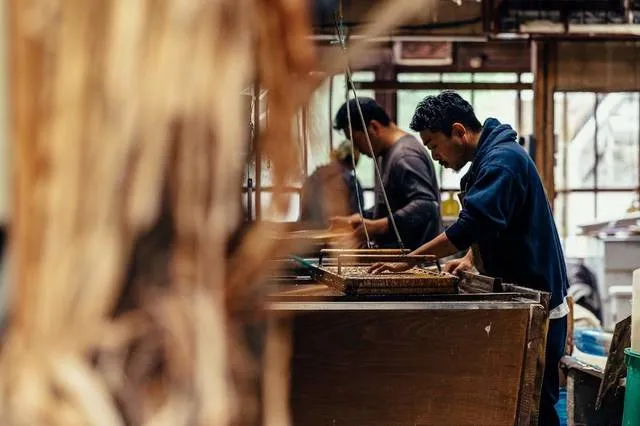
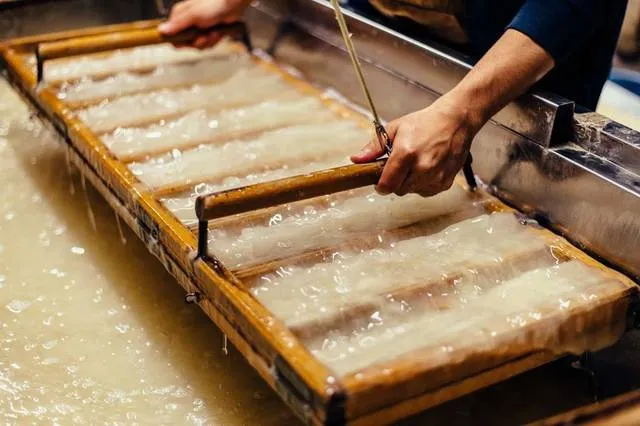
Premium quality Nao Washi is created through a long elaborate process and astonishingly, every step of it is done by hand! The raw ingredient, mulberry trees are grown and harvested by the manufacturer and this single process alone takes over a year. The mulberry trees are then steamed, peeled and dried for storing. They prepare a year’s worth of mulberry trees at one time, and stop manufacturing during winter. When spring comes, mulberry trees are washed and stewed to make them softer. After that, they are mashed into fiber form and molded into the paper making apparatus. Paper is pressed for a full day to remove the water before being dried on a drying board.
More commonly, different kinds of trees are used in manufacturing other washi papers in Japan. However, Nao Washi uses mulberry trees in particular as their fibers are longer than other trees, and those long fibers inter-tangling with each other makes the paper stronger and more durable. Thus, Nao Washi has always been the ideal paper for making lanterns and Japanese Shoji sliding doors, as it lets light pass through but does not break easily. In fact, Hizen Nao Washi Factory’s papers are proudly used for lanterns and paper amulets in famous Shinto shrines across Kyushu.
Beautiful Products Made of Nao Washi
Nao Washi can be enjoyed in various forms of everyday items; paper displays for interior decoration, fans, lamp shades, pen cases, card cases, memo pads, post cards and so on. They are also used for graduation certificates of local schools and labels for Japanese Sake bottles. The warm handmade feeling of Nao Washi certainly gives a sense of uniqueness to anything it is used for.
via tucurite-saga.jp
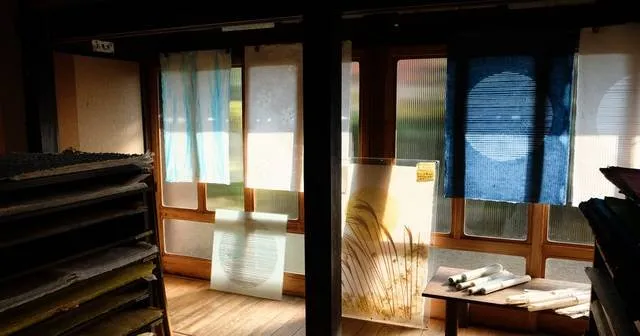
The gallery at Hizen Nao Washi Factory, a renovated 200 year-old house, welcomes you with the infinite potential of Nao Washi! Just inside you will be amazed by the number of beautiful, elegant and yet tranquil works. You can purchase them on site if you find one that you like, or they can ship it to your overseas address to save space in your luggage!
Paper You Want to Keep Forever - “mile paper book” –
via editors-saga.jp
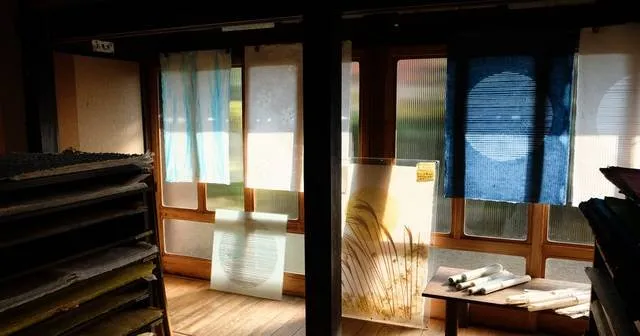
Today, the world is filled with mass-produced items and standardized products where paper is used and soon disposed of. There is even paper manufactured large scale outside Japan under the false name of “Japanese washi paper”. “What is it that only myself, the new generation can create with Nao Washi?” – the 7th generation heir Craftsman Gen Taniguchi, the president’s oldest son searched for ideas while respecting the traditions of his family, and then created a new brand called “PAPER VALLEY”, born with the concept of “paper you want to keep forever”.
The brand’s first product is a “mile paper book”, which is wholly manufactured from the planting of mulberry trees and paper making processes in the Nao District. The products concept is “paper you want to keep at milestones of life” - there are 4 types of books to celebrate a special event in life; “giving birth”, “coming of age”, “marriage” and “kanreki” (60th birthday)”. These little book shaped products contain 3 pages inside to use for anything you can think of, such as to keep the footprint of a newborn baby or a letter of proposal. Instead of disposable mass-produced papers we use every day now, the young craftsman wanted to create paper you will want to keep, to store feelings and special stories with your loved ones within. Nao Washi, being stronger than normal paper, is perfect for this! It also has a small space to enclose pictures and little items, making it a perfect gift to send a message to someone important. It is a delightful, little product reminding you of the importance of taking time and celebrating important moments in your life, even in the fast paced modern life.
The brand’s first product is a “mile paper book”, which is wholly manufactured from the planting of mulberry trees and paper making processes in the Nao District. The products concept is “paper you want to keep at milestones of life” - there are 4 types of books to celebrate a special event in life; “giving birth”, “coming of age”, “marriage” and “kanreki” (60th birthday)”. These little book shaped products contain 3 pages inside to use for anything you can think of, such as to keep the footprint of a newborn baby or a letter of proposal. Instead of disposable mass-produced papers we use every day now, the young craftsman wanted to create paper you will want to keep, to store feelings and special stories with your loved ones within. Nao Washi, being stronger than normal paper, is perfect for this! It also has a small space to enclose pictures and little items, making it a perfect gift to send a message to someone important. It is a delightful, little product reminding you of the importance of taking time and celebrating important moments in your life, even in the fast paced modern life.
via www.naowashi.com
Factory Tour and Paper Making Workshop
Hizen Nao Washi Factory welcomes you to pop in for a self-guided tour weekdays from 9:00 to 17:00. The factory does not operate on weekends and national holidays; however the gallery is open for viewing and purchasing products.
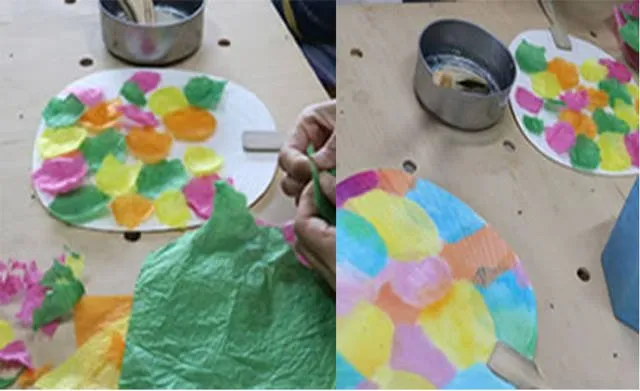
There is a fun workshop where you can hand-cut colorful Nao Washi paper to decorate your own fan at a charge of 1,500 yen. It is open from 10:30 to 16:00 and no advanced booking is necessary. You can also try the paper making workshop to create your own fan at a charge of 2,000 yen. This workshop is offered only when there are more than 10 people participating, and advanced booking is necessary by telephone (see the number below). Why not create a memorable, one of a kind fan to bring back home to remind you of your trip to Japan?
There is a fun workshop where you can hand-cut colorful Nao Washi paper to decorate your own fan at a charge of 1,500 yen. It is open from 10:30 to 16:00 and no advanced booking is necessary. You can also try the paper making workshop to create your own fan at a charge of 2,000 yen. This workshop is offered only when there are more than 10 people participating, and advanced booking is necessary by telephone (see the number below). Why not create a memorable, one of a kind fan to bring back home to remind you of your trip to Japan?
Information
From Tokyo to Saga
It takes about 75 – 120 minutes by airplane from Narita / Haneda Airport to Saga Airport.
How to Get to Hizen Nao Washi Factory
By Car
It is about a 50-minute drive from Saga Airport to Hizen Nao Washi Factory.
Unfortunately, there is no convenient public transportation to get to the factory. You can rent a car at Saga Airport or when you get into the city center of Saga.
Hizen Nao Washi Factory
Address: 4754 Yamatocho Oaza Nao, Saga, Saga 840-0205
Tel: +81 952-63-0334
Website: http://www.naowashi.com/