While enjoying visiting temples and shrines, you can also enjoy Japanese art and paintings in those buildings. By knowing Japanese art, you can enjoy temples even more from a different point of view. Buddhism and Shintoism have a huge influence on Japanese art.
Summary
One of the main attractions when traveling in Japan is visiting temples. Historical architecture and buildings attract many tourists from all over the world. Most people enjoy visiting temples and seeing their structures and designs. However, Japanese art displayed there or paintings in temples are also a charm. If you know about Japanese art even a little bit, you can enjoy visiting temples from a different point of view. Japanese art was influenced by Chinese art during the time Buddhism was introduced to Japan from China. Japan started creating its own style of art during the Muromachi period (1336~1573). Therefore, both Buddhism and Shintoism have a huge influence on Japanese art.
Unique Styles Of Japanese Art
Japanese art was influenced and developed differently in each period with its own uniqueness. Japanese art represents political messages and backgrounds of each period, so you can understand a part of Japanese history by learning Japanese art.
Originally, Japanese art was influenced by Chinese art. As time went by, “Yamato-e” was created as a unique Japanese art. The lifestyle of the townspeople, stories, songs, landscapes and natural features were painted in “Yamato-e”.
During the end of the Heian period to Kamakura eperiod(~1333), the style of Yamato-e painting by using only black ink called “Haku Byo” became popular. In Muromachi period, ink-painting was still very popular, and mainly nature landscape, wild plants and animals were drawn.
In the Edo period, a woodblock printing technique was developed and painting art became more familiar to townspeople. During this period, townspeople’s life or people were drawn mainly. Also, from around this period, Japanese art was seen in temples and castles as well as houses owned by nobles.
Yamato-e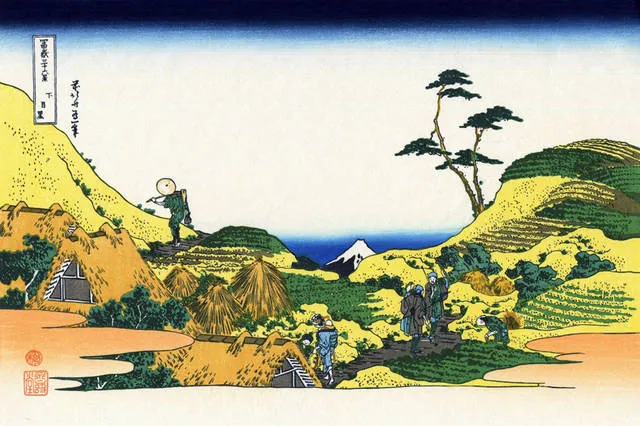 Yamatoe is one of the genres of Japanese art. It prospered during the Heian period (794~1185). “Yamatoe” means “Japanese painting”, and this genre was created to distinguish paintings from Chinese arts. Yamato-e’s subjects were Japanese tales, seasonal activities and sceneries.
Handscroll (Emaki)
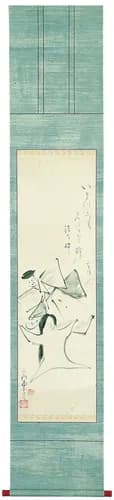
One of the formats of Japanese paintings is hand scroll. It was used especially for narrative paintings or stories just like books. There is also hanging scrolls which is normally displayed on a wall.
Japanese screens
Another format of Japanese painting is large screens. It is used not only to divide a room but also as a decoration since beautiful pictures are drawn.
Hanga (Woodblock printing)
Hanga is a picture made by using the woodblock printing process. The woodblock printing process was developed for mass productions.
How to create a woodblock print
- An artist draws an image on Washi paper, a very thin paper. Then, the Washi paper is glued to a block of wood which the image was carved by using the drawing outlines.
- The artist applies ink to the relied, and a piece of paper is placed on top of it. The artist uses a flat tool called “Baren” to transfer the ink to the paper.
Ukiyo-e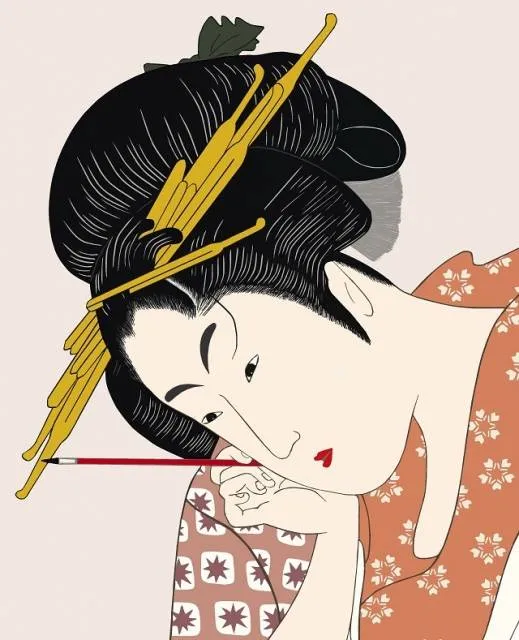 Ukiyo-e is another genre of Japanese art. Ukiyo-e means “picture of floating world”. The subjects of Ukiyo-e have a wide variety such as Kabuki actors, female beauties, sceneries of landscapes and folktales. Each Ukiyo-e was created by four experts: a publisher, an artist, a carver, and a printer.
Temples With Great Japanese Art
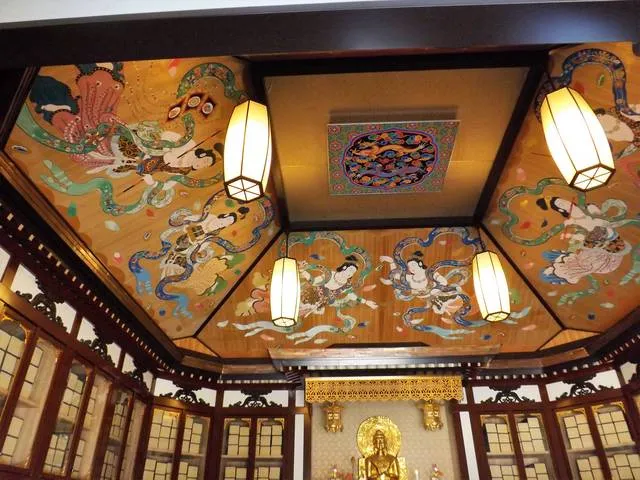
You normally don’t look up when you go into a building. However, there are many temples that have great artworks on the ceilings. Sometimes, it is a painting and sometimes it is a carving. Each temple has its unique art and has its unique history.
Kawasaki Taishi Kanagawa
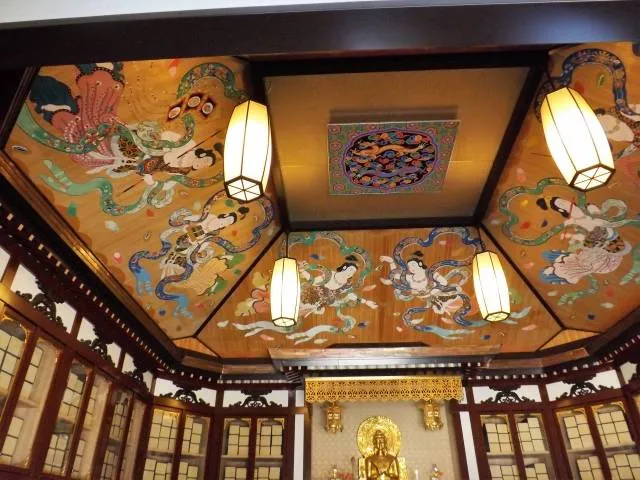 Kawasaki Daishi is one of the most popular temples where people visit on new years. Especially in “Kyozo” where a statue of Buddha is worshipped, there is a gorgeous painting on the ceiling with shining gold color.
Eiheiji Temple
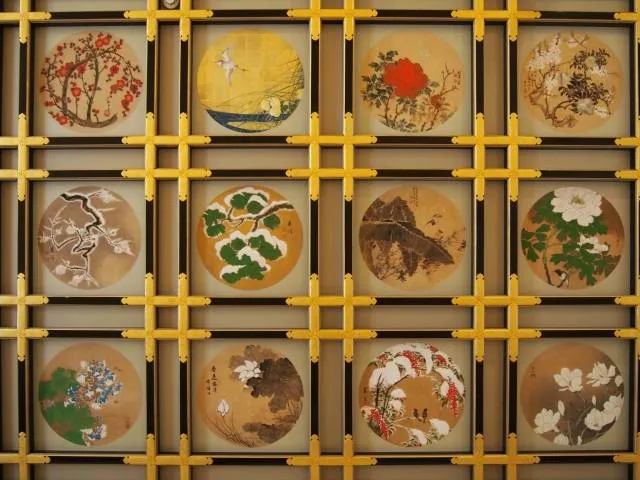 This temple is known as “the temple of eternal peace”. It is said that if you can find a squirrel, a blue lion, white lion, two white carp fish, and a black carp fish from the ceiling pictures, you’ll have good fortune. It is not easy to find all of them since there are tons of pictures and also since you have to look up to find them.
Tachibana Dera
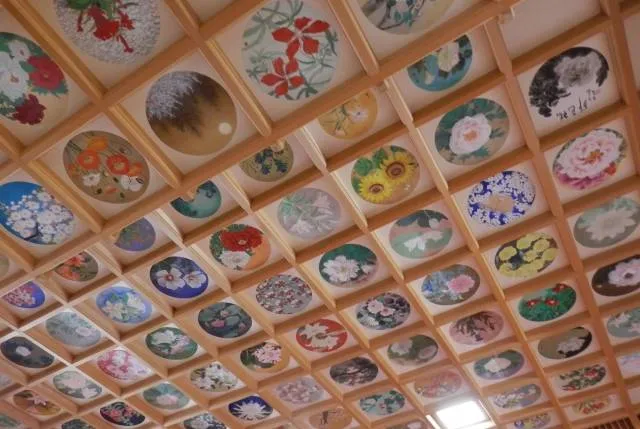 There are 260 pictures of flowers are displayed on the ceiling. You can lay down and look at those beautiful pictures quietly.
Sensoji Temple
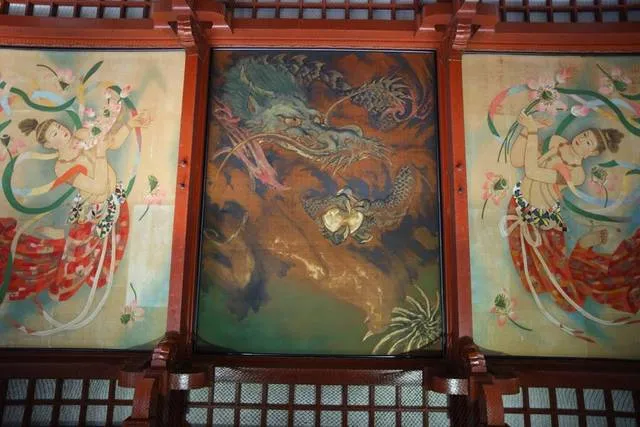 Another spectacular painting of a dragon is displayed in Sensoji Temple. It is beautifully colored and the contrast between the powerful dragon and two beautiful heavenly maidens is very interesting.
Yutoku Inari Shrine
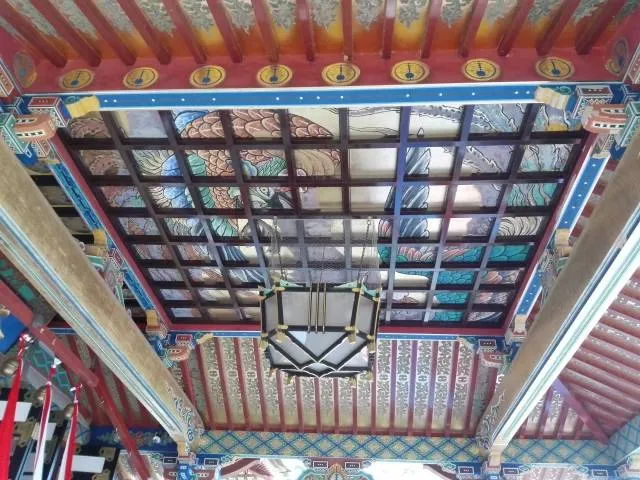 A phoenix with vivid colors is painted on the ceiling. It is huge and magnificent. This is the second most popular shrine in Kyushu region. More than three million people visit this shrine every year.
Mondo Yakujin Tokoji
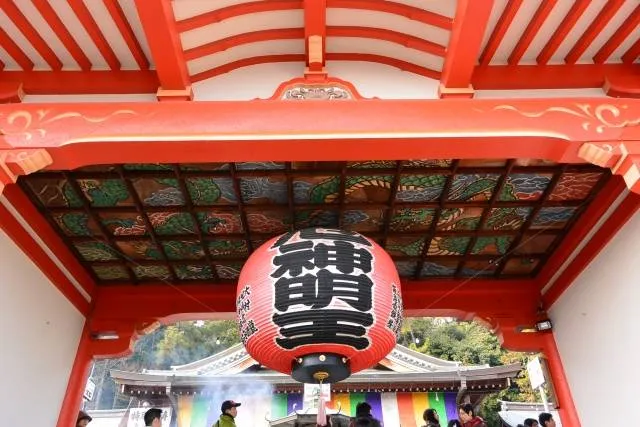 The painting of the dragon on the ceiling and the huge red lantern makes a great scenery. People often visit this temple to get rid of bad spirits.
Information
Kawasaki Taishi
Address: 4-48 Daishimachi, Kawasaki, Kanagawa Access: By train: Keikyu Kawasaki station, take Taishi line to “Kawasaki Taishi station”, and 8 minutes’ walk from there. By bus: From JR Kawasaki station East exit, Take Kawasaki Tsurumi Rinko bus #23 to “Taishi bustei” stop. 8 minutes’ walk from the stop. Hours: April ~ September: 5:30 AM ~ 6:00 PM October ~ March : 6:00 AM ~ 5:30 PM Fee: Free Website: http://kawasakidaishi.com/index.html ### Eiheiji temple Address: 5-15 Shihi, Eiheiji, Yoshida District, Fukui Access: By Train&bus From “Eiheijiguchi Station” on Katsuyama Eiheiji line, transfer to Keifuku bus bound for Eiheiji Monzen Mae, Get off at the last stop. 5 minutes’ walk from the stop. By Express bus: There is a direct express bus, “Eifukuji Liner” from Fukui station. It takes about 30 minutes. Hours: From May to October: 8:00 AM ~5:30 PM From November to April: 8:30 AM ~5:00 PM Fee: Adult ¥500, Elementary to Middle school student: ¥200 Website: https://daihonzan-eiheiji.com/ ### Tachibana Dera Address: 532 Tachibana, Asuka, Takaichi, Nara Access: From Kintetsu line Asuka station, Take Nara Kotsu bus to “Kawahara” or “Okahashimoto” stop. 3 minutes’ walk from the stop. Hours: 9:00 AM ~5:00 PM Fee: ¥350 Website: https://tachibanadera-asuka.jimdo.com/ ### Sensoji Temple Address: 2 Chome-3-1 Asakusa, Taitō, Tokyo Access: By train: Take ●Tokyo Metro Ginza line, Get off at Asakusa station, 5 minutes’ walk from the station ●Asakusa line, Get off at Asakusa station, 5 minutes’ walk from exit A4 Hours: 6:00 AM ~5:00 PM Fee: Free Website: http://www.senso-ji.jp/ ### Yutoku Inari Shrine Address: 1855 Furueda, Kashimashi, Saga Access: By Train: From JR Nagasaki line “Saga station”, take an express train to Hizen Kashima station for 20 minutes. From Hizen kashima station, take a taxi to Yutoku Inari Shrine for 10 minutes. Hours: 8:30 AM ~4:30 PM Fee: Adult: ¥300, High School Student: ¥200, Elementary ~ Middle School Student: ¥100 Website: https://www.yutokusan.jp/ ### Mondo Yakujin Tokoji Address: 2-26 Mondo Nishimachi, Nishinomiya, Hyogo Access: By Train: Take Hankyu Imazu line to Mondo Yakujin station. Take a taxi for 10 minutes to Mondo Yakujin Yokoji Hours: 9:00 AM ~5:00 PM Website: https://mondoyakujin.or.jp/ ### Referencehttps://matome.naver.jp/odai/2144860235440495801
http://souda-kyoto.jp/travel/life/ceiling_paint.html
https://www.metmuseum.org/toah/hd/edop/hd_edop.htm
https://www.metmuseum.org/toah/hd/plea/hd_plea.htm