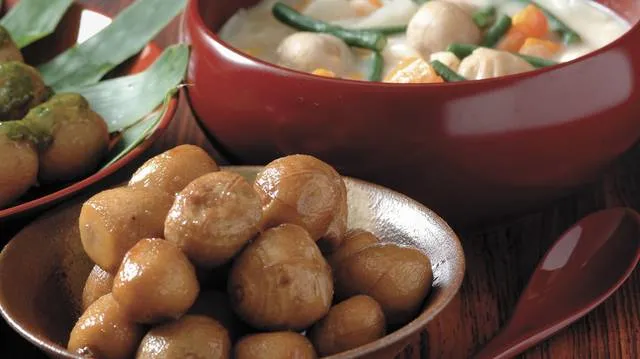
Fukui Prefecture has some remarkable food, especially known for its taro called “Kamisho Satoimo” from Ono City. Here are some Fukui food you should try and home recipes with Kamisho Satoimo!
Summary
Fukui Prefecture has some remarkable food, especially known for its taro called “Kamisho Satoimo” from Ono City. Here are some Fukui food you should try and home recipes with Kamisho Satoimo!
Taro (“Satoimo” in Japanese) is widely enjoyed in Japanese cuisine. Kamisho Satoimo is a well-branded special kind of Satoimo only from Ono City. What makes Kamisho Satoimo special is its characteristic density and firmness. The most typical and traditional way to cook taro is “Nikkorogashi” (simmered satoimo). Also, the soy sauce based vegetable soup “Noppeijiru” is recommended by locals.
Taro (“Satoimo” in Japanese) is widely enjoyed in Japanese cuisine. Kamisho Satoimo is a well-branded special kind of Satoimo only from Ono City. What makes Kamisho Satoimo special is its characteristic density and firmness. The most typical and traditional way to cook taro is “Nikkorogashi” (simmered satoimo). Also, the soy sauce based vegetable soup “Noppeijiru” is recommended by locals.
10 Fukui Food You Should Try!
1. Echizen-Gani (Echizen Crabs)
Among Fukui’s fresh seafood from the Sea of Japan, Echizen-gani, a type of snow crab caught at the ports of Echizen, are particularly famous. It has a rich, intensive sweet flavour. It is also known as a tribute to emperors since the Meiji era.
2. Sauce Katsudon
“Sauce Katsudon” is a bowl of pork cutlets with brown sauce on rice. It’s a popular specialty of Fukui Prefecture. You’ll enjoy its juicy and tender texture.
3. Heshiko
Heshiko is a traditional soul food in Fukui. It’s a dish of pickled fish (sardines and mackerels are common to use) in a fermented rice bran and brine.
4. Kamisho Satoimo Nikkorogashi
Simmered Taro (Nikkorogashi) is a classic home-cooked recipe. It’s a humble dish but you can enjoy the incredible texture and sweetness of Kamisho Satoimo. The recipe is included later in this article!
5. Mikuni Burger
Mikuni Burger is a special burger using local beef from Fukui and pickled shallot. You can taste it in the port town of Mikuni.
6. Yaki Saba Sushi
Yaki Saba Sushi is sushi made of grilled mackerel. It’s a very popular food from Fukui among the tourists, so you can see it in a bento (lunch box) sold at some stations and airports even out of Fukui as well.
7. Boruga Rice
As seen in “Sauce Katsudon” above, pork cutlet with brown sauce is a specialty in Fukui. Boruga Rice is Omurice (omelette over fried rice) with Sauce Katsu spread on top.
8. Sabae Dog
It is a deep-fried rice stick covered with pork and special sauce. It’s been a popular street food in Fukui using locally grown delicious rice.
9. Wakasa Beef
Wakasa beef is a famous beef brand from Fukui. It’s known for its beautiful sashi (marbling) that contains a fatty tender texture and great sweetness. Try it as steak or in Shabu Shabu!
10. Echizen Oroshi Soba
A simple soba (buckwheat noodle) dish with grated radish and soy sauce based soup. Echizen soba is locally produced from Fukui which has been around since around 1500.
Kamisho Satoimo, the Best Brand of Japanese Taro
The Kamisho area in Ono City is located in the Fukui Prefecture. Ono City is a quiet town with a wealth of nature surrounded by mountains, and is famous for having great taro called “Kamisho Satoimo”.
Taro (“Satoimo” in Japanese) is a common ingredient which is widely enjoyed in Japanese cuisine. People enjoy its chewy, sticky and creamy texture.
Kamisho Satoimo is a well-branded special kind of Satoimo only from this area known for its characteristic density, firmness, umami flavour, and great nutritional value. Usually, Satoimo gets tender easily when cooked, so it’s hard to maintain the shape especially when stewed or simmered. On the other hand, Kamisho Satoimo is very firm so it doesn’t get mushy even after being cooked for many hours.
How do they grow this special potatoes?
In Ono City, when the season turns into autumn from late summer, the temperature drop can be greater than in other cities in Japan. Also, in the winter, heavy snow covers the ground, and it prevents the Satoimo from becoming frozen. It’s said that those two environmental elements are key to growing crops with great flavour and nutrition. The Kamisho Area has abundant excellent mild water, and also it is an alluvial fan that helps the ground to drain well.
The Kamisho area has perfect conditions for creating the best Satoimo!
Japanese Traditional Home Recipes with Kamisho Satoimo
Let’s learn some home-cooked recipes using this delicious Kamisho Satoimo.
Before starting to cook, you need to prepare the taro by peeling the hairy outer skin!
After washing it under running water, boil or put it in a microwave. As long as the surface is cooked, you can peel it off very easily only with your hands without using a peeler. If you want to peel it with a knife, cut off the both ends and put some salt on the Satoimo first. This helps to remove its sliminess, and helps to prevent any itchiness that the skin of the Satoimo can cause on sensitive skin.
Recipe 1 -Nikkorogashi (Simmered Satoimo)
Simmered taro (Nikkorogashi) is a classic home cooked recipe (the picture above is this dish). It’s a humble dish but you can enjoy the incredible texture and sweetness of Kamisho Satoimo.
Things you’ll need (for four)
500g Satoimo, 1 cup water, 2 tbsp soy sauce, 1 tbsp mirin, 1 tbsp cooking sake, 1 tbsp sugar
Steps and tips
Peel off the outer skin, then simply simmer with all the things listed above. First, cook it over a strong fire. When you see the sauce boil and cover all the satoimo, it’s time to turn it down to medium heat. After this, simmer the ingredients until the satoimo becomes tender and the soup becomes condensed.
Recipe 2 - Noppeijiru
Noppeijiru is a soy sauce-based homemade soup using only vegetables (no meat, no fish). It’s a simple dish, but it brings out the remarkable sweetness of root vegetables!
Things you’ll need (for four)
80g satoimo, 20g atsuage (deep-fried tofu), 20g carrots, 30g radish, 20g burdock, 40g shiitake mushrooms, 600cc Japanese soup stock, 60cc soy sauce, 60cc cooking sake, 12g sugar
Steps and tips
Cut all the vegetables. For satoimo, it is best is to try and cut 4-6 pieces out of one. As for carrots and radish, cut into quarter-rounds shapes (this cut is called “ichogiri” in Japanese). For atsuage, before cutting it to 2cm-thick, remove its oil by boiling it for a couple of minutes. Once all the ingredients are ready, combine them and soup stock in a pot together and heat it up. When you remove the scum after boiling, add the seasoning (soy sauce, sake and sugar) to taste. You can adjust the quantity of the seasoning as you like! Once the tastes settle down in the soup, turn off the gas.
Enjoy the taste of Japanese food at home!
Information
To get to Ono City in Fukui Prefecture, you’ll need to fly to Ishikawa Prefecture first. The plane ride from Tokyo (Haneda Airport) to Ishikawa (Komatsu Airport) takes approximately 1 hour. Take bus to get to Komatsu Station (about 10 min). From there, ride the JR line (express Thunderrbird or Shirasagi) for 30 min to go to Fukui Station. Echizen Ono Station is 1 hour by JR Kuzuryu line from Fukui Station.
Address: 10-23 Motomachi, Onoshi, Fukui Prefecture 912-0081
(Ono City Tourism Association)
Tel: +81-779-65-5521 (Ono City Tourism Association)
Address: 10-23 Motomachi, Onoshi, Fukui Prefecture 912-0081
(Ono City Tourism Association)
Tel: +81-779-65-5521 (Ono City Tourism Association)











