Koyasan in Wakayama, Japan, is the center of Shingon Buddhism, and a UNESCO World Heritage Site. Make sure to visit Koyasan to experience the 1,200 years of history and culture of this ancient pilgrimage spot.
Summary
Koyasan in Wakayama, Japan, is the center of Shingon Buddhism, and a UNESCO World Heritage Site. Make sure to visit Koyasan to experience the 1,200 years of history and culture of this ancient pilgrimage spot. You can even stay at a temple and experience the simple life of a Buddhist monk!
Koyasan and Shingon Buddhism
via unsplash.com
What is Koyasan?
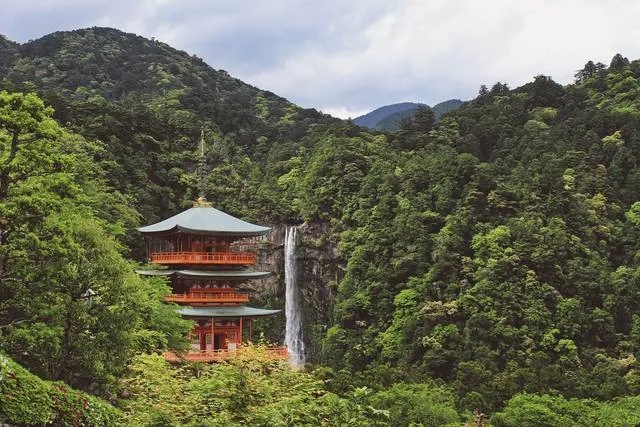
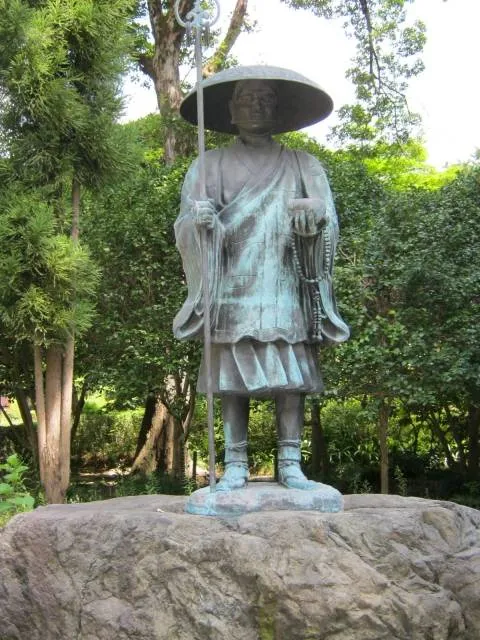
Koyasan is located in Koya Town, Wakayama Prefecture on the main Honshu Island south of Osaka. Koyasan (Mount Koya) is considered to be the center for Shingon Buddhism, an important Buddhist sect which was first introduced to Japan in 805. Shingon Buddhism was introduced to Japan by the monk Kūkai in 805, known posthumously as Kōbō-Daishi.
Kūkai settled in Koyasan in 819 and opened the Kongobu-ji Head Temple. Koyasan has prospered for over 1,200 years as a critical monastic center since then. Today, Koyasan is home to 117 temples and creates a spiritual atmosphere for both believers and non-devotees alike.
Kūkai settled in Koyasan in 819 and opened the Kongobu-ji Head Temple. Koyasan has prospered for over 1,200 years as a critical monastic center since then. Today, Koyasan is home to 117 temples and creates a spiritual atmosphere for both believers and non-devotees alike.
via www.photo-ac.com
Grand Master Kūkai
Kūkai was a Buddhist monk who lived from 774 – 835.He was an accomplished calligrapher and engineer, and amongst the many achievements attributed to him is the development of kana, which makes up 2 of the 3 types of lettering used in the Japanese language, hiragana and katakana.
Upon his death, he received the posthumous name Kōbō-Daishi, meaning “The Grand Master Who Propagated the Buddhist Teaching” by the Emperor Daigo.
Upon his death, he received the posthumous name Kōbō-Daishi, meaning “The Grand Master Who Propagated the Buddhist Teaching” by the Emperor Daigo.
Birth of Shingon Buddhism in Japan
Kūkai became a Buddhist monk at age 20 and left for China when he was 30 to further pursue his study in esoteric Buddhism. He trained in an esoteric Buddhist temple in Chang’an under a high priest named Huiguo and became a master of the esoteric lineage. Then he went back to Japan to introduce esoteric Buddhism. Kūkai founded the Shingon or "True Word" school of Buddhism to spread esoteric teachings in Japan.
Settlement in Koyasan
After wandering the country for many years spreading esoteric teachings and looking for the perfect location to build his temple, Kūkai finally settled on Koyasan. This is said to be a special location because the 8 peaks resemble the shape of a lotus. It was isolated from the bustles of cities and surrounded with peaceful nature, making it a perfect place to concentrate on prayers for the peace of the country and education of his apprentices.
Must-See Attractions of Koyasan
via www.photo-ac.com
via www.photo-ac.com
Kongobu-ji Head Temple
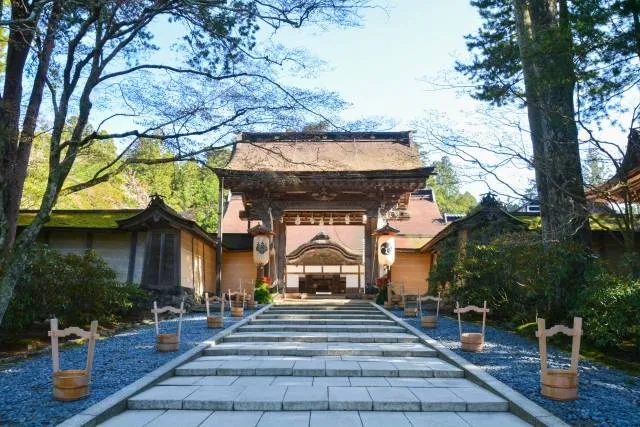
Kongobu-ji is the head temple of Koyasan Shingon esoteric Buddhism. Established by Kūkai in 816, it has about 3,600 branch temples throughout the country. To have a look inside the temple, you will have to pay an admission fee but it is well worth it! Be ready to have your breath taken away by the stunning sliding screen doors painted by the famous painter Kano Tanyu, in the large Ohiroma Room. As you go further along the long corridor, you will find a large tatami room in a wing added in 1984 where some tea and cookies are offered to visitors as well as a sermon by the monks. It is a perfect place to rest, relax and enjoy the portraits of Kūkai and Buddhist mandala pictures.
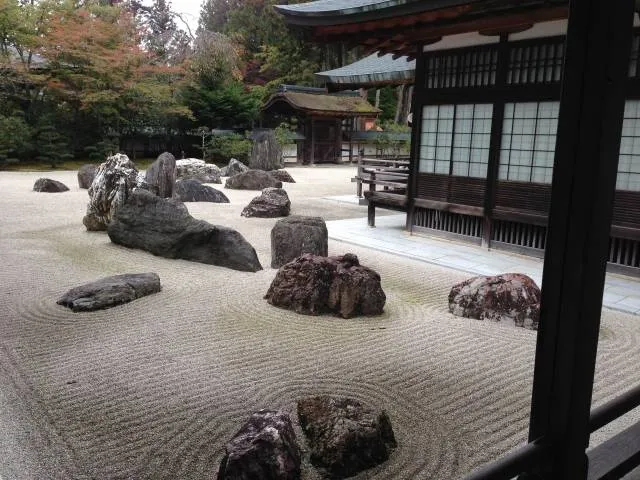
At Koyasan, you will also find Japan’s largest rock garden, Banryutei. The Banryutei Rock Garden is 25,187 square feet (2,340 square meter) and was made with 140 stones procured from the Shikoku Region, the birth place of Kūkai. The stones are placed to imagine a pair of dragons emerging from a sea of clouds to protect the temple.
At Koyasan, you will also find Japan’s largest rock garden, Banryutei. The Banryutei Rock Garden is 25,187 square feet (2,340 square meter) and was made with 140 stones procured from the Shikoku Region, the birth place of Kūkai. The stones are placed to imagine a pair of dragons emerging from a sea of clouds to protect the temple.
via www.photo-ac.com
DanjoGaran (Konpon Daito)
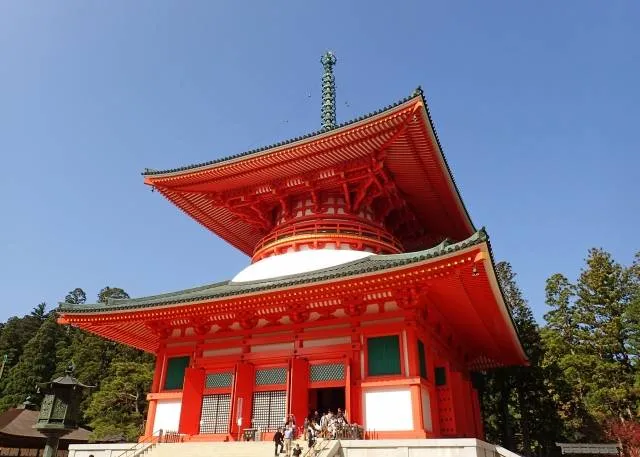
A 10-minute walk from the Kongobu-ji Head Temple, and you will find the stunning DanjoGaran (Konpon Daito). It is a 160ft (48.5 m) tall pagoda marking the center of Koyasan. It was built to perform secluded ascetic training and is believed to be the first square two-story pagoda in Japan. The magnificent Konpon Daito in vivid vermilion colors is definitely not to be missed.
via www.photo-ac.com
Okuno-in
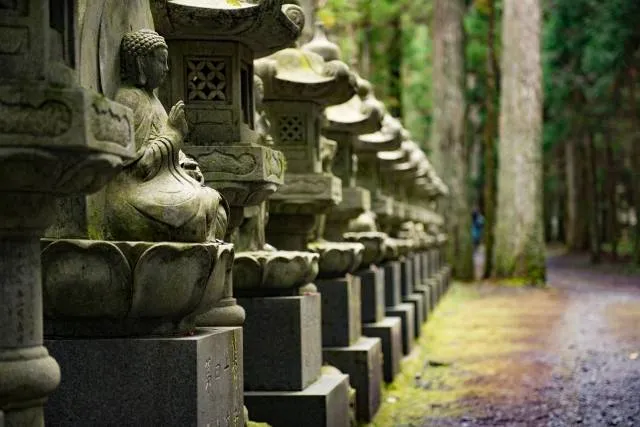
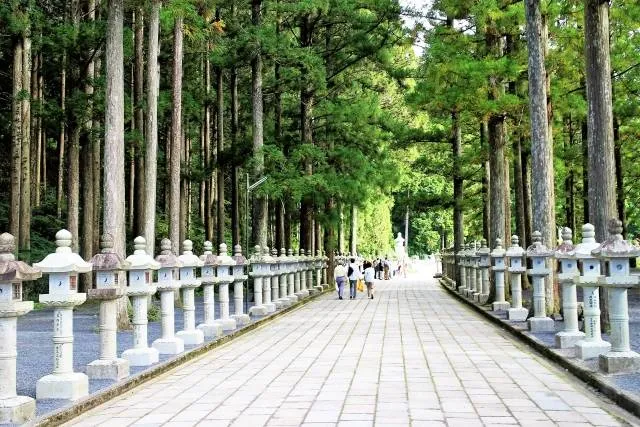
A 1.2 mi (2 km) path leads to Okuno-in, the site of mausoleum where Kūkai rests. The path is surrounded by many trees that are hundreds of years old and over 200,000 memorial towers, including ones dedicated to the famous samurai warriors Nobunaga Oda and Hideyoshi Toyotomi. Okuno-in is said to be the holiest place in Koyasan and you can feel why as soon as you enter. People believed that Okuno-in is the “other world” where souls of the deceased come together. This path was formed because many people who wished to rest in peace next to Kōbō-Daishi wanted their graves to be built here. Also, it is believed that Kōbō-Daishi continues to live in Okuno-in in his enlightenment, and he continuously prays for the peace and happiness of the people. Therefore, monks serve Kōbō-Daishi food twice a day 365 days a year, and the food is even poison-checked by the monks every time before it is served to the Grand Master.
via www.photo-ac.com
Kumano Kodo: World Heritage Pilgrimage Routes
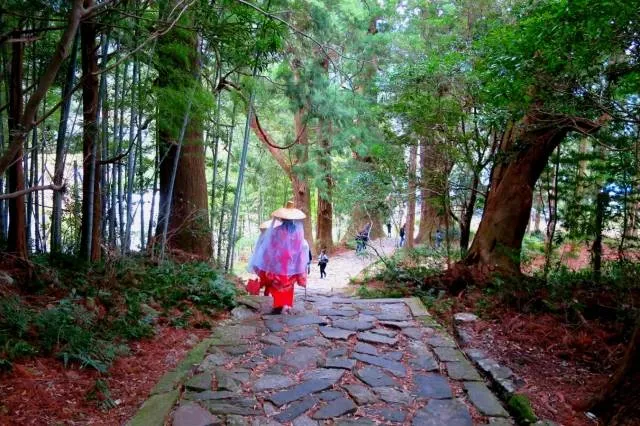
Kumano Kodo is a series of ancient pilgrimage trails through the mountainous Kii Peninsula. These trails have been walked by people of all levels of social status for over 1,000 years. Pilgrims come to worship at the three Grand Shrines of Kumano, Kumano Hongu Taisha, Kumano Hayatama Taisha and Kumano Nachi Taisha - collectively known as Kumano Sanzan. In 2004, the Kumano Kodo pilgrimage routes were designated UNESCO World Heritage Site. Since there are various routes for people of all fitness levels, it will be a great opportunity to set your foot on one of those sacred roads to when you visit Wakayama!
via www.photo-ac.com
Shukubo Experience: Staying in a Buddhist Temple
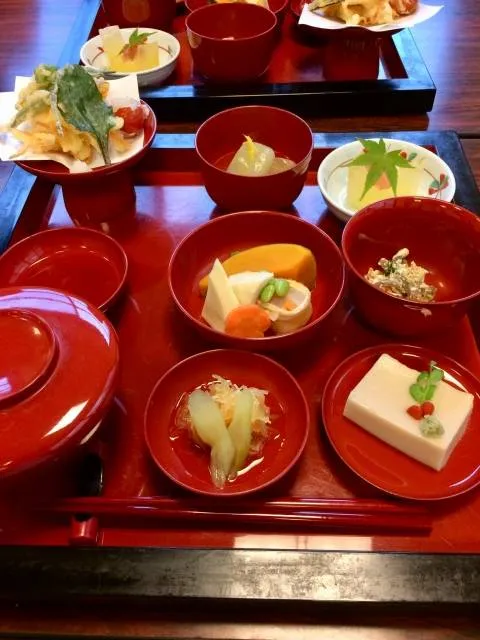
In Koyasan, there are over 50 temples offering accommodation for pilgrims and visitors. By eating shojin ryori (the vegetarian food eaten by the monks) and sleeping on a futon in a traditional tatami room, you will be able to experience the humble life style of the Buddhist monk. This will absolutely be one of the highlights of your stay in Japan!
Things to Bear in Mind for a Pleasant Visit to Koyasan
via www.photo-ac.com
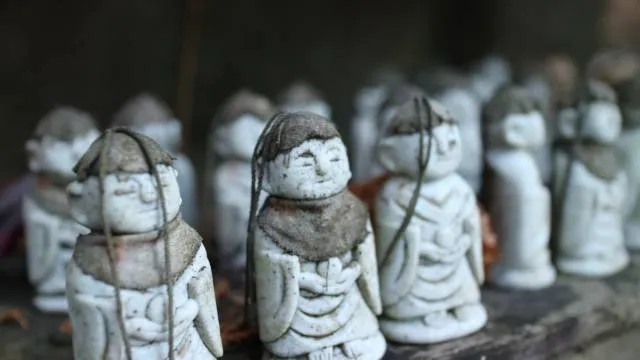
Koyasan is a very special, sacred place and there are some things you might want to know in advance to avoid any possible troubles. Here are some of them:
・Put your phones on silent mode – It is a holy place where Kōbō-Daishi rests and the monks train themselves. Please be respectful by turning off your ringtones and talking loud on the phone.
・No eating / drinking – Generally it is forbidden to consume food and drinks when you visit temples. Chewing a gum is also considered impolite.
・No photos at Okuno-in – Okuno-in is a mausoleum of Kōbō-Daishi. Please refrain from taking photos and making loud noise.
・Bring warm clothes– Koyasan is an area about 2,625 mi (800 m) high surrounded by mountains. It is usually colder than other areas at the same time of year and the weather might change suddenly. Please bring warm clothes and comfortable shoes.
Discover the Charms of Koyasan
via www.photo-ac.com
Koyasan is a very special place for both religious devotees and non-worshippers. Why don’t you escape the hustle of the city and take some time to refresh your mind and soul in Koyasan? It will truly be an unforgettable experience!
Related Tour
Stunning world of Shingon Esoteric Buddhism | WOW U
Tour the historical Koyasan of Wakayama with a local private guide and learn about all the magnificent spots: Daimon, Danjo Garan and Kongobuji Temple!
Information
How to Get to Koyasan from Tokyo
By Plane & Bus
1. Take a flight from Haneda Airport or Narita Airport in Tokyo to Kansai Airport in Osaka (about 1 hour and 25 - 50 minutes).
2. Take a Kansai Airport Limousine Bus bound for Koyasan (Please note that there is only one service a day at the time of writing.) You can get off at either Daimon Minami Parking or Okuno-in (about 2 hours).
By Shinkansen (Bullet Train) & Train
1. Take a Tokaido Sanyo Shinkansen train from Tokyo Station and get off at Shin Osaka Station (about 2 hours and 30 minutes).
2. Take a Midosuji Line train bound for Tennoji. Then get off at Namba Station (about 15 minutes). Change to a Nankai Limited Express* train for Gokurakubashi. Get off at Gokurakubashi Station (about 1 hour and 20 minutes). Then change to a Nankai Koyasan Cable train for Koyasan. Get off at Koyasan Station (5 minutes).
(*Express train services might require additional fee for an express ticket. Please check at the ticket counter at the station.)
Reference List
http://www.koyasan.or.jp/kongobuji/jinai.html
http://www.koya.org/about-koyasan.html
https://en.visitwakayama.jp/destinations/koyasan/
http://www.hongu.jp/kumanokodo/
Thumbnail image:
高野山 壇上伽藍 © Yudai_photography クリエイティブ・コモンズ・ライセンス(表示4.0 国際)https://creativecommons.org/licenses/by/4.0/
http://www.koya.org/about-koyasan.html
https://en.visitwakayama.jp/destinations/koyasan/
http://www.hongu.jp/kumanokodo/
Thumbnail image:
高野山 壇上伽藍 © Yudai_photography クリエイティブ・コモンズ・ライセンス(表示4.0 国際)https://creativecommons.org/licenses/by/4.0/