Travel off the beaten track and visit the sacred pilgrimage trails of Kumano Kodo, a World Heritage Site. Take a mindful hike. Walk under the largest Torii in the world. Visit the tallest waterfall in Japan.
Summary
Travel off the beaten track and visit the sacred pilgrimage trails of Kumano Kodo, a World Heritage Site. Take a mindful hike. Walk under the largest Torii in the world. Visit the tallest waterfall in Japan. Here we explain what the Kumano Kodo is and introduce the three Grand shrines in the Kumano area.
What Is The Kumano Kodo?
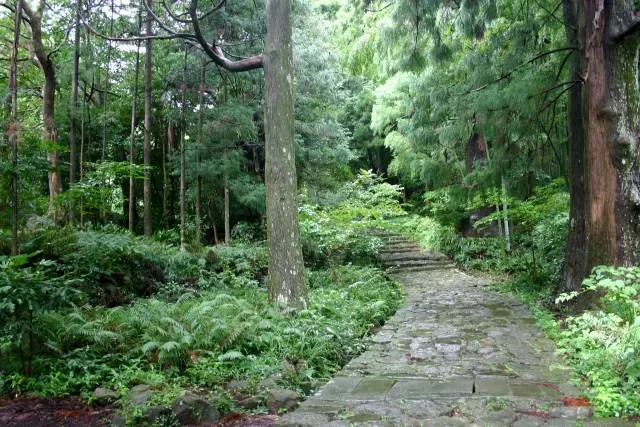 Kumano Kodo is a network of ancient pilgrimage trails that stretch across the mountains of the Kii peninsula, the three prefectures of Wakayama prefecture, Mie prefecture and Nara prefecture. In 2004, Kumano Sanzan or the three Grand Shrines of Kumano, together with the sacred mountains Mount Koya, Yoshino &Omine, and the pilgrimage routes that connect them were registered as a UNESCO World Heritage site "Sacred Sites and Pilgrimage Routes in the Kii Mountain Range." Although it is gaining global recognition, the Kumano Kodo still remains low profile compared to the Camino de Santiago, the only other pilgrimage that has been designated as a World Heritage.
For more than 1,000 years, the Kumano area has been considered a “spiritual ground where gods dwell.” The foundations of the pilgrimage route were established after the imperial family made the journey from the ancient capital city of Kyoto to the Kumano area in the 10th century. It became common practice for them to take 30 to 40 days to hike up the 60 mi (80 km) trail. In this area the Kumano Sanzan was established. With time, the Kumano faith was passed down to all levels of society and today there are about 3,000 Kumano Shrines in Japan.
There are six major historic trails to choose from which often take between three to six days. This may sound intimidating to someone who’s not used to hiking so much, but buses run between major points of the network so that you can decide to walk as little or as much as you like.
Kumano Sanzan, The Three Grand Shrines
 The main destinations of Kumano are the Kumano Sanzan or the three Grand Shrines: Kumano Hongu Taisha, Kumano Hayatama Taisha and Kumano Nachi Taisha.
Kumano Hongu Taisha
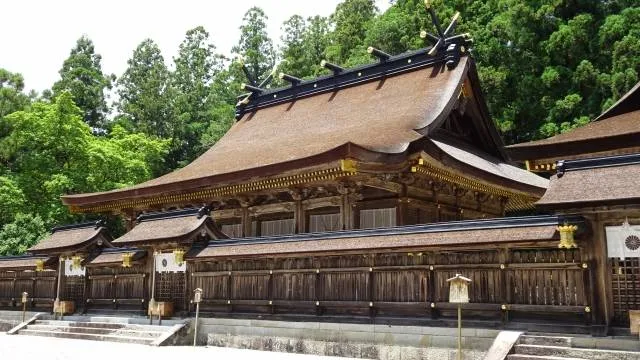
Kumano Hongu Taisha stands at the center of the Kumano Kodo as the head shrine of all 3,000 Kumano shrines in the country. It’s where the gods of all three Grand Shrines are enshrined along with the sun goddess Amaterasu. It was moved 1 kilometer away from its original location after a catastrophic flood in 1889.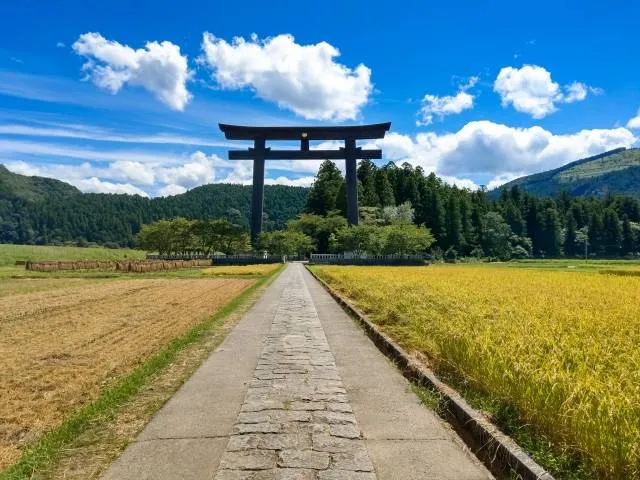 A giant Torii gate that is 109 ft (33 m) tall remains at its original site at Oyu No Hara. This Torii gate is the largest in the world.
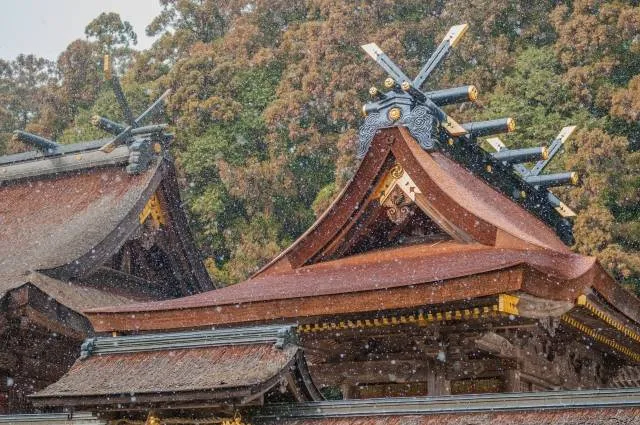 All the buildings inside the Shrine’s grounds were built using ancient techniques of joining the wood together like a puzzle, without using nails. It is impressive in its austere simplicity, and blends with the towering cedar trees. Kumano Hongu Taisha was named an Important Cultural Property in Japan in 1995.
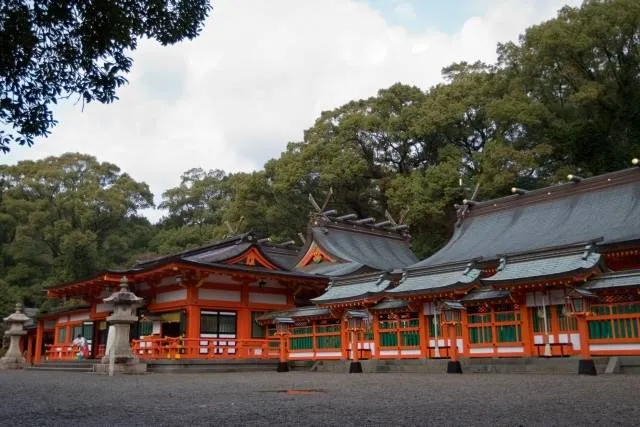 Kumano Hayatama Taisha
 is situated next to the Kumanogawa river. The buildings are painted a vermillion red, which stand out in the middle of rich lush nature. The main gods enshrined are husband and wife: Kumano Hayatama no Ohkami, and Kumano Fusumi no Ohkami. The sacred treasure museum displays over 1,000 treasures, most of which were offerings made to the shrine.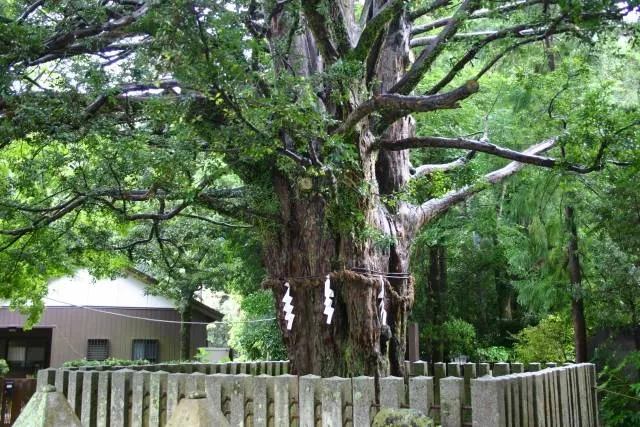 Aside from the fact that it is an important destination along the pilgrimage trail, this shrine is most known for its sacred 800 to 1,000 year old Nagi (conifer) tree, a designated Natural Monument. Since the tree’s strong leaves do not fall off, it is believed to bring good luck to couples.
 Kumano Nachi Taisha
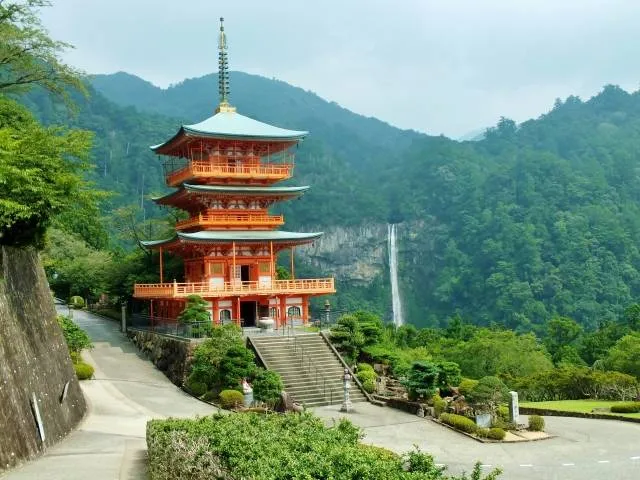
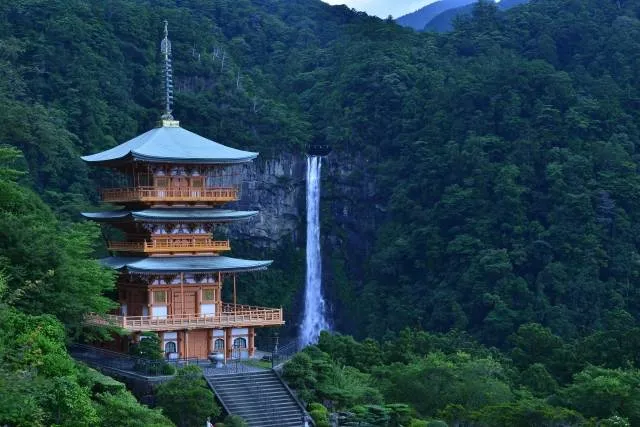
 is located inside the cedar forests of the Kii mountains. Buddhism, which was introduced to Japan in the mid 6th century, blended into Japanese culture without competing with Shintoism, which is why many shrines and temples used to be built next to each other (until the government forced them apart in the late 1800’s to early 1900’s). The Kumano Nachi Taisha is a good example of this religious mix that still exists. The shrine is located side by side with Seigantoji temple, and for a long time they were under the same control. In the premises of Seigantoji temple, there is a stunning three-story pagoda. 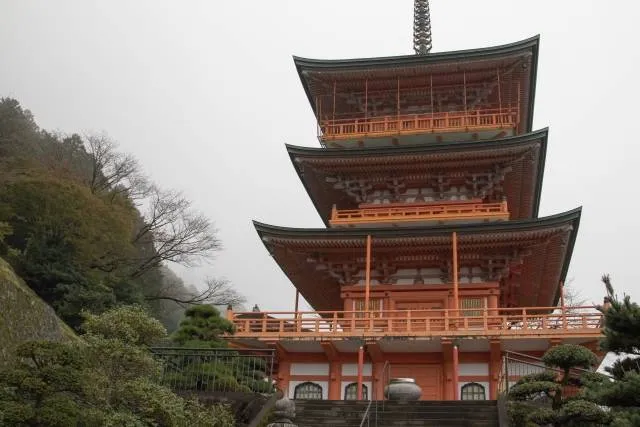 The red pagoda fits in perfectly with the lush greenery. The dynamic waterfall in the background makes the whole scenery especially scenic and unforgettable. It’s considered to be one of the most impressive sights in Kumano Kodo.
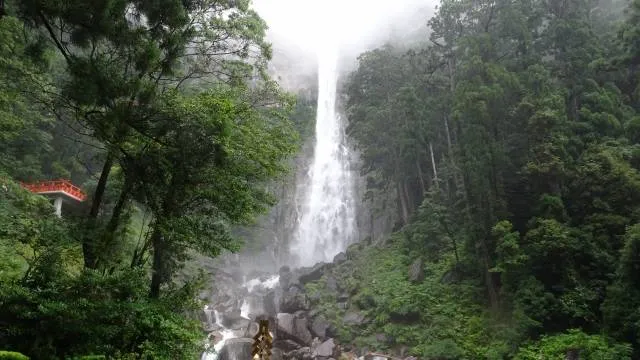 The waterfall is a short walk from the temple. At 436 ft (133 m), the Nachi No Taki waterfall is the tallest waterfall in Japan. It’s also one of the three greatest waterfalls in the country.
Planning Your Trip To This World Heritage Site
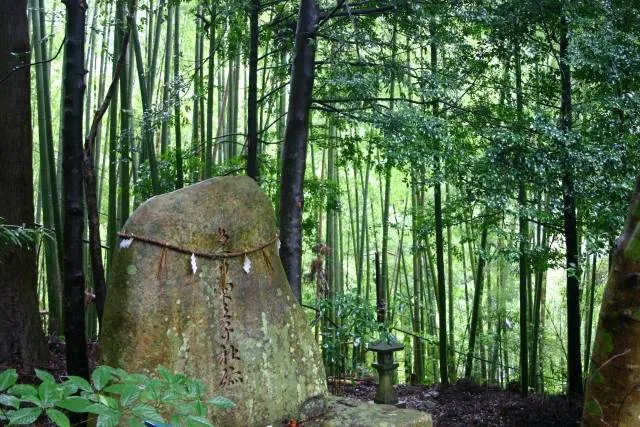 Plan how long you want to stay, and how much walking you want to do at the Kumano Kodo. Most of the hiking is below 2,000 ft (600m) and is easy to walk if you have a trekking pole. There are hot spring villages with small traditional B&B’s, which is part of the charm if you want to spend several days there.
If you have time constraints but would like to experience hiking the sacred mountain, use the buses wisely. A popular course is to walk the 2000 ft (600 m) up Daimon-zaka, a beautiful stone-paved path to Kumano Nachi Taisha. You can do everything on your own or have someone give you a tour.
Consider visiting the sacred Kumano Kodo on your next trip to Japan.