Japan is known as a place of many earthquakes. Tohoku Earthquake, a large quake that caused both economic impact and natural disaster, occurred on March 11th, 2011. More than 150,00 deaths have been confirmed and 2,537 people have been reported missing. The natural disaster caused many people to lose their homes, family members,and their own lives. Therefore, “Millennium Hope Hills” was constructed as a symbol of recovery from the Great East Japan Earthquake.
Summary
6 parks fill the uninhabitable lands damaged by the March 2011 Earthquake and Tsunami. Known as “Millennium Hope Hills,” this site reduces the impact of future tsunamis and provides shelter. They are built on debris, a reminder of the houses that once stood here. It is a memorial of the tragedy and great loss and offers hope and prayers for the children who will live happily here for another 1,000 years.
View on FacebookThere Have Been 13 Earthquakes Greater Than Magnitude 7.0 Since 1989 In Japan.
Japan island is known for many natural disasters such as earthquakes. Historically, there is one big earthquake every 10 years in Japan. There was Kobe Earthquake in January 1995 which caused 6,000 people to lose their lives and 415,000 injured. Almost sixteen years later, one of the biggest earthquakes hit the Tohoku area on March 11th in 2011. The 15 meters tsunami killed around 20,000 people. A nuclear plant was severely damaged and caused a nuclear accident, resulting in explosions and meltdowns.
The Biggest Disaster After The First World War Was The Tohoku Earthquake And Tsunami.
The Tohoku Earthquake occurred at 14:46 March 11th, 2011. About one hour later, the tsunami came. The Tohoku Earthquake and Tsunami caused massive economic impacts and 15,891 deaths have been confirmed. It is the biggest disaster since War World I in Japan. According to government statistics, the cost of reconstruction is more than USD122 billion. A more serious impact is the Fukushima Nuclear Plant explosion caused bythe tsunami, causing the leak of radiation resulting long-term impact to the environment and human health. The tsunami was about 16.5 meters high. a height ofmore than a 5 story building.
Since the earthquake happened during the day time when the students were at school. More than 78 Inomaki-shi public school pupils perished due to the tsunami disaster.
Even though 17 years has passed, the reconstruction of the area is still on going.
Millennium Hope Hills Is The Symbol Of Recovery From The Great East Japan Earthquake.
Millennium Hope Hills is named to show a wish for children to live happily with a smile for the next 1,000 years.
Tree planting was carried out by volunteers nationwide from 2013. The locals regenerate forests that are self-sustaining and naturally culled by using super-dense planting and multiple types of mixed planting (Miyawaki method). They expect that the planted trees will be splendid forests in about 15 to 20 years and become a "green embankment" which disperses the power of future tsunami.
Millennial Hope Hills Is A Memorial Park Symbolizing Reconstruction, Utilizing The Land That People Cannot Live On Anymore, Caused By The Tsunami Of The Great East Japan Earthquake.
"Millennial hope Hills" utilizes the lands where people cannot live because they were destroyed by the tsunami of the Great East Japan Earthquake. The area combines six different parks together, the name of the parks is as follows: "Aino Aisho Park", "Fujisone Park", "Ninakura Park", "Haseka Kaen Park "," Kamasaki Park "and" Shin-hama Park."
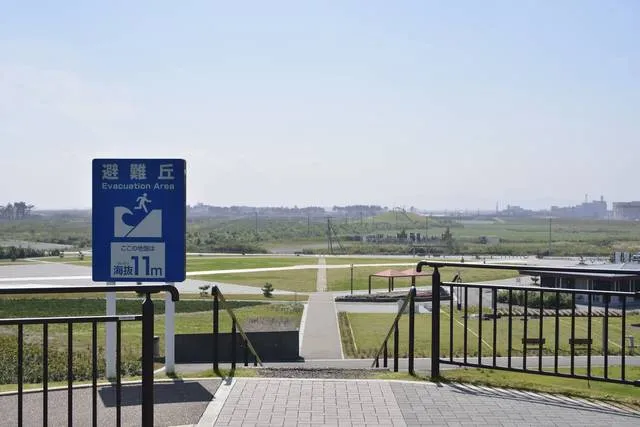
Connecting the surrounding hills with a sanctuary (green embankment) can serve as a method of attenuating the power of future tsunamis, and it also becomes a place of evacuation in case of emergency.
In addition, the base of the hill consists of earthquake garbage, by which t a message is told that it isthe rements of the great tsunami and the a symbol of the feelings of the victims to future posterity, a message to be passed down to future generations of the effects and history of the great disaster on March 11th, 2011.
Millennial Hope hill performs as a memorial park and disaster prevention education site to disseminate memories and lessons of disaster both domestically and internationally.
Millennial Hills Hope Exchange Center Exhibits The Efforts of Reconstructions.
Located in the suburbs of Sendai Airport, "Millennial Hills Hope Ainokama Park" has a monument built as a memorial and a " Millennial Hills Hope Exchange Center" opened in April 2016 where you can learn about the efforts toward reconstruction from the Great East Japan Earthquake through panel exhibits and brochures, as well as screenings of videos aimed at disaster relief and disaster prevention education. In addition, in the merchandising space, you can purchase hill-related goods of Millennial Hills Hope. Furthermore, it also functions as a planting experience, tree-breeding (seiju) activity, based on the storytelling division as a base facility for exchanging ideas about the earthquake disaster and environmental conservation activities.
It will take about one hour to visit Millennial Hills Hope Exchange Center, the Millennium Hope Hills Logo and some other important sites. In addition, many remains of the disaster are preserved next to the parking lot. By seeing the disaster area preserved from the great Earthquake, you can take a glimpse at the great natural disaster.
The Six Areas That Were Destroyed By The Great East Earthquake Relocated To A New Town Called “Tamamuranishi”
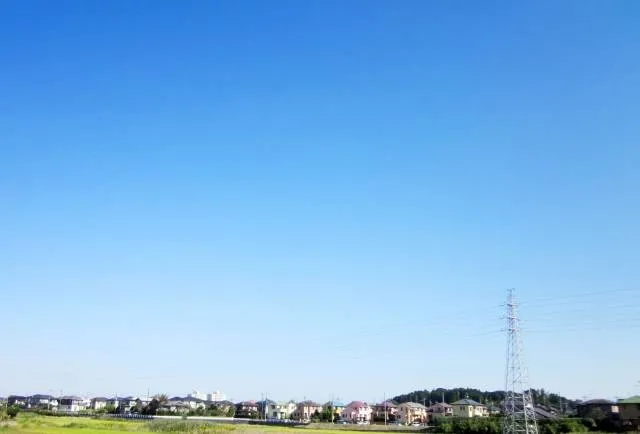 There are six different areas around the coastal part of Iwanuma-City: "Aino no kami", "Fujisone", "Ninokura", "Habasaki" and “Shinbama." In fact, before the Great East Japan Earthquake, there were about 1784 people and 515 households around this area. Due to the Great Tsunami of the Great East Japan Great Earthquake, people relocated themselves to a disaster prevention center about 3 kilometers away from the coastal area. They moved to a new town called "Tamamura".
“Tamura" is a disaster prevention group relocation area which was created in the spacde adjacent to the area with the wishes of regeneration of "Tamaura".
Various Events Are Held In The Millennium Hope Hills During The Year.
#### 千年先へ 宮城県岩沼市公式チャンネルvia www.youtube.comIllumination event on 2nd December 2017Millennium Hope Hills held an illumination event on 2nd December 2017. It was done as a part of a joint volunteer effort by both the SDF (Self-Defense Force, Japanese military) and US military officers to deepen friendship between Japan and the United States. There were about 400 units of Electronic lanterns lit up at the second hill and at the square.2. Iwanuma-City Millennium Hope Hills’Arbor Day Festival In 2018 FallThere were about 350 participants who attended the event. It was organized by representatives of the Agriculture & Innovation of General Iwanuma corporation, divided into each block area and cleaning the weeds.Unfortunately, it was raining on that day. However, the passion of the participants was not defeated by the rain and everyone worked very hard to pull out the weeds.
What You Can Do to Contribute To Millennium Hope Hills?
Planting trees experience:In Iwanuma City, they are making efforts to boost Millennium Hope Hills as a site of exchange for communication and a gathering place.
Millennium Hope Hills is the symbol of reconstruction from the great earthquake. They are always looking for volunteers who can cooperate with their "forest building activity". You can be part of it just by doing!Iwamu City earthquake guideThey provide the "Iwamu City earthquake guide." You can walk around Millennium Hope Hills where they will guide you through the parks.
You need to make a reservation for the guided tour, and it takes about one hour.
Information
By plane From Narita airport, take the domestic flight to Sendai Airport which takes about 1 hour And then from Sendai airport, you can walk to the Millennium Hope Hills in about twenty minutes.By Shinkansen
Depart from Tokyo Station and take the Hayabusa Shinkansen bound for Sendai Station. It takes about one hour and half. After arriving at Sendai Station, transfer to Sendai Airport on the local train. It takes about another twenty-four minutes.
Address: Hama Shimonogo, Iwanuma 989-2421, Miyagi Prefecture
Phone: +81 022-234-5327