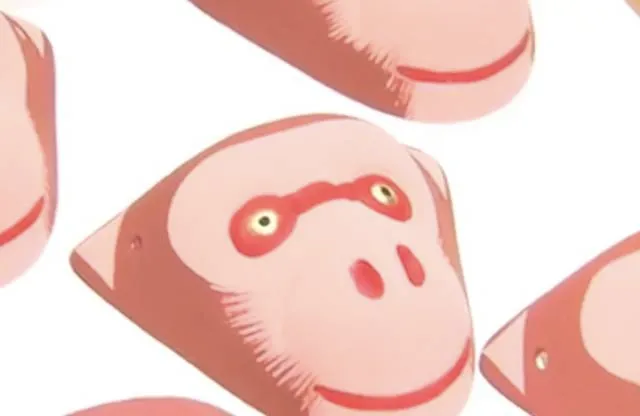
Let the misfortune "saru" (leave) with the "saru" (monkey) masks.Monkey masks will blow away any misfortune coming your way if you place Sarutahiko Shrine's monkey mask by your front door.For this reason, many Fukuoka locals have had a monkey mask on their front door for generations.Go check it out yourself- but beware- they are only sold at the Shrine 6 to 7 times a year.
The Meaning of Monkey Masks
Locals and tourists line up in a long line at the Sarutahiko Shrine in Fukuoka city, Fukuoka Prefecture. We rarely see long lines at small shrines other than New Years so why are people lining up, and what makes it so special?
The answer to the first question is monkey masks. The size of a rice ball, Hakata puppet craftsmen, paint the faces of monkeys onto each, and every one of the masks sold at Sarutahiko Shrine. What makes it special is that it has been believed that these masks will protect people and guide them toward the right path. Many families in the area have had this mask at their door for generations.
“Saru” which means monkey, also means to leave. It is believed that by placing Sarutahiko Shrine's monkey masks by the front door, misfortune will leave the family and instead, fortune will come. The idea is that the monkey will glare at any trouble that tries to enter the home so that the family can spend one year peacefully without worry.
The monkey masks are also popular among students who are preparing for an important exam. “Ochiru” which means fall off, also means to fail (or not pass). Since monkeys almost never fall off trees, it is believed that students with this monkey mask at their homes will not fail to get into their desired school.
It should be noted that this monkey mask is not just a cute mask to put on your wall- it represents a Shinto god. This Shinto god was actually not a monkey, but because the god’s name is, “saru ta hikono kami” and includes the word “saru” or monkey in it, the god is portrayed as a monkey. Since “saru ta hikono kami” served as a guide to another god called “Ninigino mikoto”, “saru ta hiko no kami” is known to guide those who are in trouble to a better path, and to make life less painful for those in pain.
It should be noted that this monkey mask is not just a cute mask to put on your wall- it represents a Shinto god. This Shinto god was actually not a monkey, but because the god’s name is, “saru ta hikono kami” and includes the word “saru” or monkey in it, the god is portrayed as a monkey. Since “saru ta hikono kami” served as a guide to another god called “Ninigino mikoto”, “saru ta hiko no kami” is known to guide those who are in trouble to a better path, and to make life less painful for those in pain.
Only Available on Special Days Called "Kanoesaru"
Available for 1000 yen a piece, these masks are only sold specials days called, “Kanoesaru." The day comes every 60 days, calculated according to the Jikkan (The Ten Stems) and Junishi (the Twelve Signs of the Chinese Zodiac). Usually that means the masks are only sold 6 to 7 times a year.
In the remainder of 2018 and in 2019, the masks will most likely be sold on the following dates and times (but be sure to check with Sarutahiko shrine beforehand):
In the remainder of 2018 and in 2019, the masks will most likely be sold on the following dates and times (but be sure to check with Sarutahiko shrine beforehand):
2018:
➢ November 24th (sat) 8:30AM to 5:00 PM
2019:
➢ January 23rd (wed) 5:30AM to 7:00 PM
➢ March 24th (sun) 7:00AM to 6:00 PM
➢ May 23rd (thurs) 8:30 AM to 5:00 PM
➢ July 22nd- time not available yet
➢ September 20th- time not available yet
➢ November 19th- time not available yet
➢ November 24th (sat) 8:30AM to 5:00 PM
2019:
➢ January 23rd (wed) 5:30AM to 7:00 PM
➢ March 24th (sun) 7:00AM to 6:00 PM
➢ May 23rd (thurs) 8:30 AM to 5:00 PM
➢ July 22nd- time not available yet
➢ September 20th- time not available yet
➢ November 19th- time not available yet
Many repeaters buy the mask every year, and like any charm purchased at temples and shrines, it is returned in a year. People like to buy their masks at the beginning of the year, so the first “Kanoesaru” day of the year is the most popular day to buy masks, and thus, the most crowded.
It is common for people to line up for a couple of hours to purchase a mask, and on the first day of the year, you see people lining up from before sunrise. Parents from within and outside Fukuoka Prefecture line up for their children who are studying hard to score well on their exam, to show their support. Local families that have been traditionally keeping the monkey masks by their front door come to purchase one again for the New Year.
Every year the Hakata puppet craftsmen make these monkey masks, and people say every year the facial expressions of the monkeys are slightly different. For example, after the great Kanto earthquake, the monkeys apparently had an especially hard glare so that no misfortune like that will ever come again. When you see a monkey mask at Sarutahiko Shrine or someone’s house, maybe you could try imagining what the puppet craftsmen were thinking when they made the monkey masks, by reflecting what kind of year Japan experienced in the previous year.
Sarutahiko Shrine is located in Fukuoka city. Although it’s right by the station of a busy city, you climb some stairs and walk into a quiet place. A cute monkey statue welcomes you into the Shrine. Enjoy being away from the city for a while as you walk around the small but meaningful Shrine. Locals believe that Sarutahiko Shrine is a holy place, especially on “Kanoeasaru” day, so breathe in the positive energy that surrounds you.
If you are visiting Fukuoka city around the time of "Kanoesaru," and you are looking to ward off misfortune, the best thing to do is to visit Sarutahiko Shrine and purchase a monkey mask as a souvenir to put on your front door. Have the monkey mask ward off all evil and misfortune, and welcome good fortune too. If it’s by your door, it’ll definitely be a topic of conversation with your first-time guests too.
If you are visiting Fukuoka city around the time of "Kanoesaru," and you are looking to ward off misfortune, the best thing to do is to visit Sarutahiko Shrine and purchase a monkey mask as a souvenir to put on your front door. Have the monkey mask ward off all evil and misfortune, and welcome good fortune too. If it’s by your door, it’ll definitely be a topic of conversation with your first-time guests too.
3 Best Things To Do In Sarutahiko Shrine Area
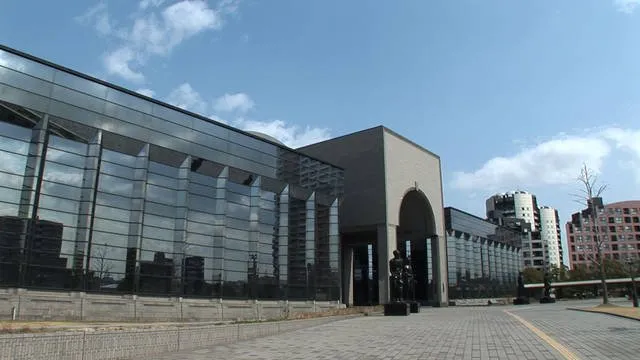
There are interesting places to visit around Sarutahiko Shrine. Here are the three best things you can do in the area.
1. Visit Fukuoka City Museum
This museum introduces you to the history and culture of Fukuoka Prefecture and how Fukuoka and Kyusyu island played an important role in Ancient Japan. Enhancing your background knowledge of the place you are traveling is always a nice way to travel.
2. Shop at Nishijin Shopping District
Do you like going to supermarkets when you travel to check out what locals eat? Then it would be best if you tried going to Nishijin Shopping District because it is an old shopping area with lots of locals roaming around. If you’re lucky, there may be a bargain going on ,and you may be able to purchase some things for a low price.
3. Visit another shrine: Momoji Hachimangu Shrine
Momoji Hachimangu Shrine is also a very tranquil and peaceful place located in the middle of a residential area. It’s the perfect getaway from the crowds in Nishijin Shopping District. There you can enjoy cherry blossoms in spring, and autumn foliage in the fall.
How to Visit
The plane ride is about two hours from Tokyo (Haneda Airport) to Fukuoka Airport. Take the Fukuoka subway from Fukuoka Airport to Fujisaki Station (20 minutes). From Fujisaki Station, it’s a one minute walk.
Address: 1 Chome-1-41 Fujisaki, Sawara-ku, Fukuoka city, Fukuoka 814-0013
Tel: +81-92-823-0089
Address: 1 Chome-1-41 Fujisaki, Sawara-ku, Fukuoka city, Fukuoka 814-0013
Tel: +81-92-823-0089