“Kaz” is an authorized guide interpreter under license of Wakayama prefecture, Japan for those areas registered by UNESCO in 2004. Mt. Koyasan is a unique “religious town” which has a mix of normal facilities like schools and municipal offices alongside 117 temples all in one mountain top basin area. This articles briefly introduces Mt. Koyasan and Kobo Daishi, as well as the nature and cuisines of the area.
Summary
“Kaz” is an authorized guide interpreter under license of Wakayama prefecture, Japan for those areas registered by UNESCO in 2004. Mt. Koyasan is a unique “religious town” which has a mix of normal facilities like schools and municipal offices alongside 117 temples all in one mountain top basin area. This articles briefly introduces Mt. Koyasan and Kobo Daishi, as well as the nature and cuisines of the area.
Welcome To The Mandala World At Mt. Koyasan
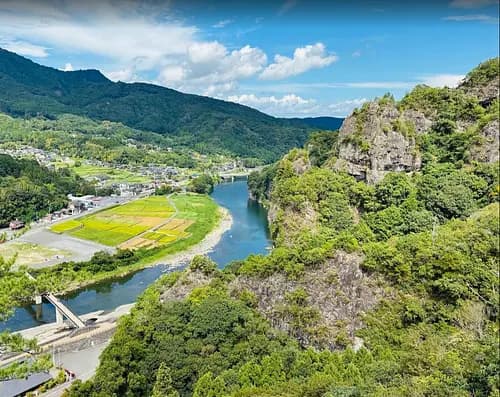
 Surrounded by 3,280ft (1,000m) peaks, Mt. Koyasan is located 2,788ft (850m) above sea level and in north east part of Wakayama prefecture with distance from Haneda airport in Tokyo around 4 hours by air and train.
Mt. Koyasan has been a Japanese world heritage site since 2004 and is registered as a being amongst the “Sacred Sites and Pilgrimage routes in the Kii mountain Range”. This sacred precinct was opened by Japanese monk Kobo Daishi (known as Kukai) in 815 as a monastic training center for Esoteric Shingon Buddhism.
Kobo Daishi has brought two mandalas from China in T’ang dynasty with many important ritual tools and scriptures. Staring at these two mandalas closely while reflecting on “Nyorai” image, I feel more relaxed and gain power to live more positively. “Mandala” is not merely religious art but more like a religious training tool representing how we live a life positively.
It is said that Kobo Daishi’s wish had been to build a mandala world in this whole area.
It’s also fun walking in this sacred land with such imagination.
Over 1,200 years later, Mt. Koyasan still attracts many visitors and travelers from all over the world. I often come here to guide and have been an interpreter for overseas guests since 2017. I would like to guide you briefly around some of the recommended places to visit, whilst providing some useful information.
“Daimon (The Great Gate) At Starting Point
Getting off the bus, it took me around 5-6 minutes to walk to Daimon. Since the cable car connected with “Gokurakubashi” station to mountain top, “Koyasan” station, is now under renovation until February 2019, you need to take the direct bus from Hashimoto station.
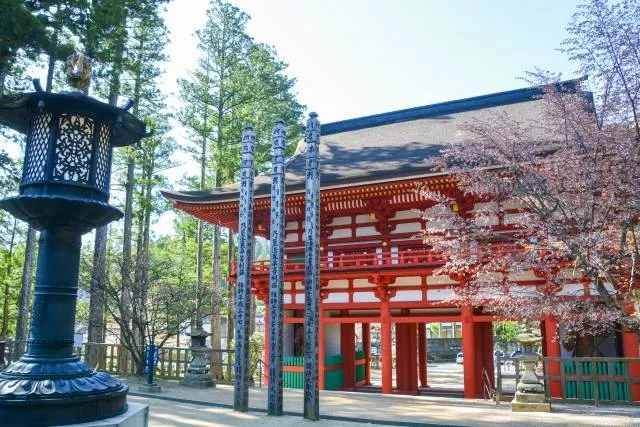
82ft (25.1m) high, Daimon stands quite impressively and can be seen from surrounding areas. Two guardian dieties, Kongo-Rikishi stand staring; one open mouthed “agyo”, the other called “ungyo” are carved by the sculptors Koi and Uncho during the Edo period.
The Japanese word for this being “A-un breath”, meaning to be perfectly matched and harmonized.
Here lies the entry to Mt. Koyasan, around 6 km from east to west and 15mi (3 km) from north to south in basin land surrounded by lotus like eight peaks.
On this sunny day, I overlooked far west to Awaji island of Hygo prefecture. The euphoria of topping the peak brings you to the present moment, looking out over impressive surrounding lands from other places.Some people enjoy trekking and cycling and greeting each other cheerfully. The air feels incredibly refreshing!!
Kobo Daishi was granted this land in 815 by emperor Saga for the construction of a monastery and now, over 1,200 years later, it is said that he is still doing eternal meditation and praying for all human beings from the site. The Chinese character sign hanging on two pillars of Daimon clearly state Kobo Daishi’s desire to come here each and every day to pray for peace over all people.
“Chumon” At Gateway To Garan Monastic Complex
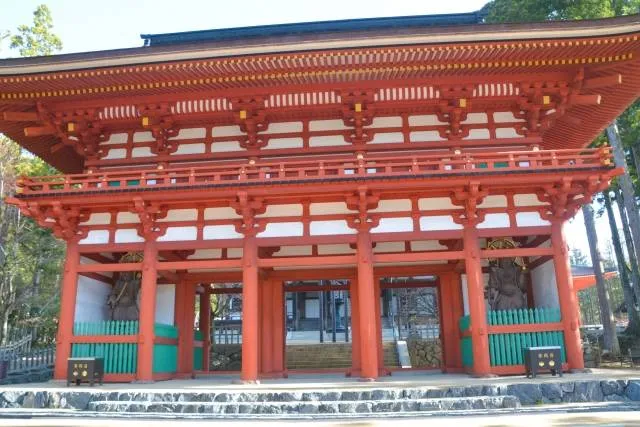 “Chumon” designate the boundary of the sacred site and entrance to Garan precinct. It was burned down in 1,843 by a big fire, only ground stones have remained there since. A vermillion colored gate presents a vivid image and is said to protect humans from evil. Four guardian deities (Si Ten Ou) glared at us fiercely. They are actually Gods of Hindu in India and were recruited to Buddhism to increase its popularity. When I was a child, I was always scared to see those deities and wondered why they looked so strong and a bit exotic! (now realising this is because they are from India!) The current “Chumon” were been built in 2015, just 4 years ago, to commemorate the 1,200 year anniversary of Mt. Koyasan.
Remarkable construction techniques lie on their “Hikaritsuke” which features 18 wooden pillars, which have been standing on circle stones alone without the use of a single nail.
It’s truly based on Japanese “Shokunin's wonderful and traditional work!
I found a cicada and dragonfly on the chest of two newly built deities. You may find who has them on their chest when visiting there.
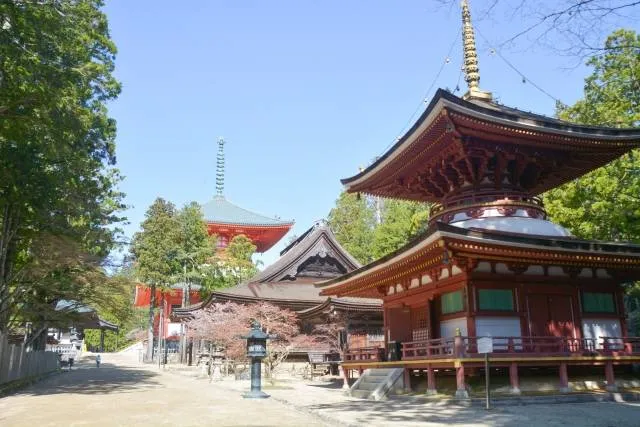
I have endless recommendations for when visiting Garan. Unmissable though is the three Stupas; Great stupa, Western stupa and Eastern stupa. Stupas are an integral part of Mandala world at Mt. Koyasan world heritage site.
The inside of Great stupa is also a must-see to fully experience dynamism and the mandala world of this sect.
“Dainichi Nyorai (cosmic buddha) is surrounded by four buddha images representative of the Golden Realm
Cuisine And Goma-dofu
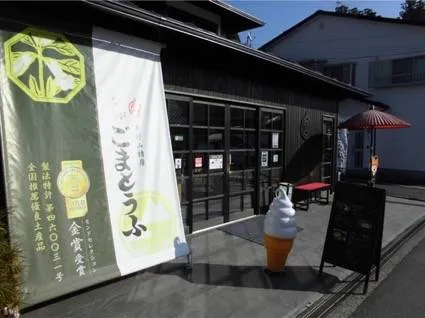 At Mt. Koyasan, there is simply no MacDonald or Starbucks available, but I can find and immerse myself in the local coffee shops and Shojin ryori restaurants laid along the pathway. There is also a convenience store selling Bento, tea and coffee with a selection of tables outside.
If you’ll be looking for a local experience here, like Goma dofu, there are some famous producers here. “Kadohama”, is a chic Japanese house restaurant serving “Kaiseki style” dishes.
This restaurant features both mandala design at around 17 USD per dish. Tofu is bean curd and widely seen in East Asia and Southeast Asia, it’s highly renowned as a healthy food. “Koya-dofu” is frozen and dried tofu and also famous throughout Japan. In Shukubo temple (lodge inn), they serve Shojjin ryori which are essentially veg foods, in five colors, cooked five ways, available in five different flavors. Now 52 Shukubo is available in Mt. Koyasan.
“Okunoin” And Kobo Daish Gobyo (Mausoleum)
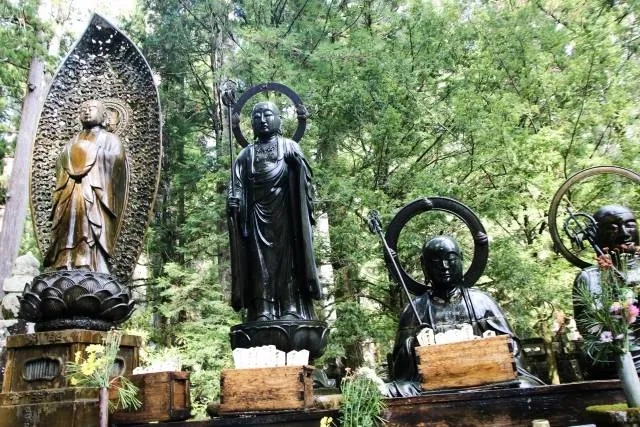 As I cross Ichi-no-hashi, the bridge at the starting point to Okunoin, you will see more than 200,000 tombstone and a memorial pagoda along the way. It’s like a historical showcase of eighth century Japan. In addition to the very popular shogunate family Tokugawa, Lord Oda Nobunaga, my favorite historical hero, Toyotomi family’s mausoleum is standing orderly.
Toyotomi Hideyoshi attempted to attack mt. koysan but stopped due to the sincere request of the monk Ogo-Shounin. Since then, Toyotomi Hideyoshi has been largely donating to koysan for quite a long time.
I have unexpectedly found very tiny stones near the Toyotomi. At the root of cypress trees, it is said that many small stones have been buried there because many people would like to stay as close as possible to the Kobo Daishi mausoleum.
Shingon Esoteric Buddhism’s core value lies on such multi-national big thinking!
Lantern Hall is just front side of the Gobyo, I can see a lot of Lanterns by donors including ex-emperors, Shogunate family and ordinary people. Kobo Daishi, is said to still be alive in here and be in kind of eternal meditation and keep praying for world peace. “Shojin-Ku” means meals prepared for Kobo-Daishi twice a day, 365 days a year at 6:00 and 10:00am.
Information
Mt. Koyasan ◼ Address Kōya, Ito District, Wakayama Prefecture 648-0211◼ Tel
+81-736-56-2015 (Mount Koya Taishi Kyokai)
*Please note that English may not be spoken in some tourist spot facilities.
◼ Admission Fee
Depend on the spot
More Detail Is Here (Japanese)
◼ Open Hours
8:30AM to 5:00PM
- Last entry 30 minutes before closing time.