Just like the rest of Tohoku, Akita is well-known for its long and snowy winter, a feature also shared by our destination city, Oga. Oga, located in the Oga peninsula and bordered by the sea to the north, west and south, is nationally known for the Namahage Sedo festival, a unique traditional celebrationheld every February, when in spite of Akita's cold weather people gather to enjoy the festival's colorful performances and attractions.
Summary
Just like the rest of Tohoku, Akita is well-known for its long and snowy winter, a feature also shared by our destination city, Oga. Oga, located in the Oga peninsula and bordered by the sea to the north, west and south, is nationally known for the Namahage Sedo festival, an unique traditional celebration designated as one of the Intangible Cultural Heritages held every February, when in spite of Akita's cold weather people gather to enjoy the festival's colorful performances and attractions.
What Is The Namahage?

via www.photo-ac.com
The Namahage festival is one of the most famous traditional events in Japan, and the terrifying appearance of the Namahage is commonly recognized among people of all ages. The existence of these mysterious gods in their horrific representation is not only associated with the town of Oga, but with the region of Akita as a whole. Their famous phrase “Are there any crybabies around?” and the evocative rituals associated with the festival often feature in the media all around the country. While Akita, just like many other areas in Japan, is suffering from the effects of a steadily declining birthrate, the Namahage tradition is being kept alive. Almost half of the local communities still hold their yearly festivals, which unlike the Namahage Sedo festival usually take place on new Year's Eve.
The city of Oga gathers more than 140 local communities, end even though the common traits of the Namahage costumes and rituals share some basic similarities, each community developed its own peculiar traits. Often represented wearing outfits made out of straw and frightening masks, armed with Japanese Deba-knives or wooden hand pails, the participants look exactly like ogres, and their gruesome looks certainly add to the festival's dark folkloristic image.
The city of Oga gathers more than 140 local communities, end even though the common traits of the Namahage costumes and rituals share some basic similarities, each community developed its own peculiar traits. Often represented wearing outfits made out of straw and frightening masks, armed with Japanese Deba-knives or wooden hand pails, the participants look exactly like ogres, and their gruesome looks certainly add to the festival's dark folkloristic image.
The Most Famous Festival In Akita: Oga's Namahage Sedo Festival
Located in Tohoku, the northeastern region of Honshu, Japan's main island, Akita is a popular destination for visitors interested in exploring nature, food and cultural heritages.
In winter, snow and low temperatures can often make it difficult to find an appropriate destination for one's travelling wishes, but for anybody visiting Akita a stop in Oga should be considered a must. With its peculiar geographical position and its rough, dotted coastline, Oga is home to spectacular maritime landscapes. Oga’s population, taking advantage of the features of the peninsula, managed to develop a strong economy based on commercial fishing, thus overcoming the challenges poised by the local climate.
Originally scheduled in early January and meant to be held at the Hoshi-Tsuji shrine in front of the Oga hotsprings, the Namahage Sedo festival is currently held annually on the second weekend of February at the Shinzan Shrine, a shrine located in the mountainous area of the city. Shinzan Shrine was designated as an Important Intangible Cultural Asset in 1978 and since then it has been drawing lots of attentions, both nationally and internationally. Since 2018 Namahage rituals are approved as UNESCO Intangible Cultural Heritage.
The Namahage, after whom the festival was named, are visiting gods who come to bring protection and good luck while warning the local population against laziness. During the length of the festival the inhabitants of the city perform rituals accompanied by traditional dances and music in order to welcome them and receive their messages. The highlights of the festival are its fire rituals, which only take place after the sunset. Visitors can find detailed schedules on Oga's tourist information website.
How To Visit?
From Tokyo to Akita : 1 hour by airplane or 4 hours by bullet train
From JR Oga station : 20 minutes by car
From Oga peninsula IC : 1 hour by car
From JR Oga station : 20 minutes by car
From Oga peninsula IC : 1 hour by car
Oga Quasi-National Park And The Oga Peninsula-Ogata Geopark

via www.photo-ac.com
About one third of Oga city's surface was appointed to the status of Quasi-National Park in 1973, while in 2011 the whole city area and the neighboring village Ogata have been joined as part of the Oga Peninsula-Ogata Geopark, each park sporting its own peculiarities and offering a variety of natural sights. One of the most popular attractions in the area is the craggy coastline with its cliffs and caves, whose unique shapes were formed by a slow natural process of erosion. Here both the coastal area and the caves are easily accessible all-year round. For those wanting to enjoy the majestic beauty of Akita's nature, trekking around Mt.Kampu and Oga's three mountains (Mt.Honzan, Mt.Shinzan and Mt.Kenashiyama) makes for a good one-day excursion, with a variety of impressive landscapes the possibility of enjoying the splendid view of Lake Hachirogata from above. Also worth a visit is the Nyudosaki lighthouse. Located on the northwest edge of the Oga peninsula and jutting out into the Sea of Japan, it offers its visitors an exceptionally beautiful panoramic view of the sunset.
Those visiting Oga in Summer will find in Toga bay and Unosaki beach – chosen as one of Japan's most beautiful beaches – two perfect options for a relaxing day. The area is well-known for its clear waters and shallow shores, which make it perfectly suitable for families with small children.
For those interested in exploring the mainland, beautiful prairies and volcanic lakes can be found throughout the area, and nature lovers certainly won't be disappointed. Although one of the simplest ways to wholly enjoy the beauty of the park is by following the itineraries designed by Geopark council, seasonal route tips and recommended routes -including some designed for families with children- are also available on the official website.
How To Visit?
From Tokyo to Akita : 1 hour by airplane or 4 hours by bullet train
From JR Oga station : 1 hour by car
From Oga peninsula IC : 30 minutes by car
From JR Oga station : 1 hour by car
From Oga peninsula IC : 30 minutes by car
From Tokyo to Akita : 1 hour by airplane or 4 hours by bullet train
From JR Hadachi station : 50 minutes by bus and 5 minutes walk
From Oga peninsula IC : 1 hour by car
From JR Hadachi station : 50 minutes by bus and 5 minutes walk
From Oga peninsula IC : 1 hour by car
Oga's Iconic Dish: Ishiyaki

If you have a passion for food, Oga's trademark cooking style is not something you can miss out on. It's called Ishiyaki, and it was fishermen on their boats who initially came up with the idea. Ishiyaki consists of adding super-heated rocks to a pot filled up with broth and fish right in front of the guests. To help keep the temperature high even after the immersion, Ishiyaki specialists use a volcanic stone that can be heated up to 800-1000 degrees Celsius, which releases its heat it accumulated relatively slowly when compared with other materials. By using these volcanic stones, the fishermen and chefs ensure that the ingredients cooked in this bath retain their moisture and freshness.
Ishiyaki dishes are nowadays recognized as one of the culinary specialties from Oga, and they are served in various places all over the city: visitors can enjoy witnessing the uniqueness of this cooking technique while tasting the simple flavour of local fresh ingredients.
Ishiyaki dishes are nowadays recognized as one of the culinary specialties from Oga, and they are served in various places all over the city: visitors can enjoy witnessing the uniqueness of this cooking technique while tasting the simple flavour of local fresh ingredients.
Akita's Winter Attractions In Beautiful White Snow
via www.photo-ac.com
Needless to say, for people wondering about what to do in this area, Akita is not just Oga and the Namahage festival. In fact, there are many other winter attractions worth experiencing, like Yokote's Kamakura festival. With a tradition running for 450 years now, the festival makes Yokote city a great destination for anyone travelling around Akita in February. The display is famous for its picturesque snow sculptures and igloos (called Kamakura), and it is very popular among visitors from all around Japan.
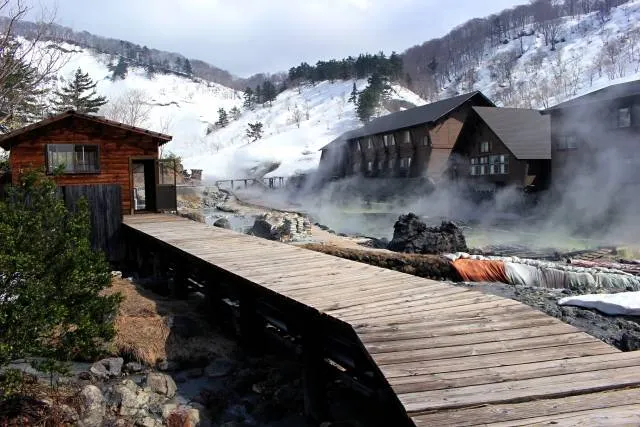
Akita also has a number of ski and snowboard resorts all throughout the prefecture offering high quality snow and a diverse range of courses. The combination of winter sports and hot spring baths is one of the best ways to enjoy the Japanese winter. If you are looking to have a nice, quiet holiday, you will have a great time visiting hot spring towns. Nyuto Onsen, Tamagawa Onsen and Doroyu Onsen are just the first names that come to mind for places where visitors can immerse themselves in delightful landscapes and appreciate the beauty of Akita's nature.
Akita also has a number of ski and snowboard resorts all throughout the prefecture offering high quality snow and a diverse range of courses. The combination of winter sports and hot spring baths is one of the best ways to enjoy the Japanese winter. If you are looking to have a nice, quiet holiday, you will have a great time visiting hot spring towns. Nyuto Onsen, Tamagawa Onsen and Doroyu Onsen are just the first names that come to mind for places where visitors can immerse themselves in delightful landscapes and appreciate the beauty of Akita's nature.