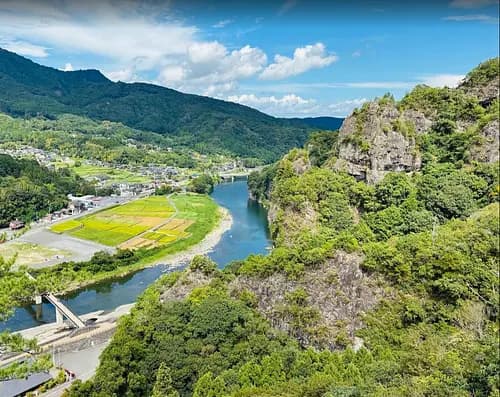
content: Since the Edo period (1603-1868) the city of Ozu has flourished as a castle town, and even today its historic district has maintained its original beauty. Ozu's architectural features and historical sites are the reason why it is often referred to as “little Kyoto”, and just like its bigger sister, Ozu can reward its visitors with a great variety of attractions and things to do.
Summary
Since the Edo period (1603-1868) the city of Ozu has flourished as a castle town, and even today its historic district has maintained its original beauty. Ozu's architectural features and historical sites are the reason why it is often referred to as “little Kyoto”, and just like its bigger sister, Ozu can reward its visitors with a great variety of attractions and things to do.
The Best-known Cormorant Fishing In Ozu
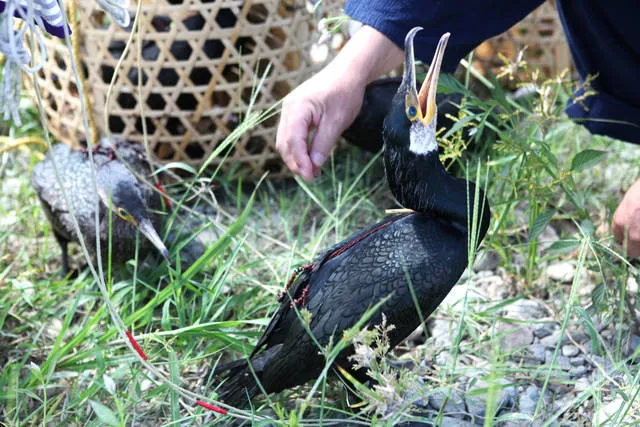
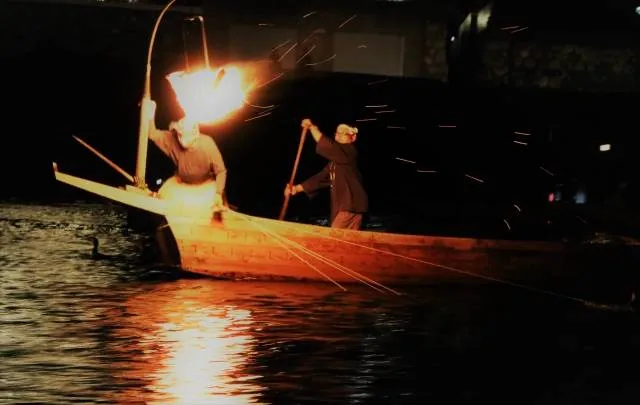 via www.photo-ac.comThe Japanese island of Shikoku is split in four different prefectures, each one of them characterized by different customs and traditions: they are Kagawa, Kochi, Tokushima and Ehime. The city of Ozu is located in the southern region of Ehime called Nanyo. One of Ozu's distinctive features is its traditional cormorant fishing. Called Ukai in Japanese, it is a river fishing method originally developed in this area over 1300 years ago. Fishermen are aided by trained cormorants which swallow their preys once only in order to spit them out later, under the trainer's supervision. By using cormorants, no hooks or other kinds of equipment are necessary, as opposed to conventional fishing methods. Nowadays, Ukai fishing has lost all of its commercial significance, and it mostly survives as an attraction for tourists and visitors of the area. There are about 10 well-known cormorant fishing spots all throughout Japan, and Ozu is listed as one of the top 3 places to witness this unique fishing practice.
What makes Ozu's cormorant fishing special is a method called Awase Ukai, according to which the fishing boat and passenger vessel go down the river in a parallel formation at the same time, so that the tourists can assist to the whole process from a privileged position. The whole trip is 2.7km long journey through the city along the Hijikawa river, and takes about two hours to complete. While taking a look at the fishermen doing their job, visitors can also admire Ozu's beautiful landscape. Anybody with a liking for short trips should seriously consider making some space for this wonderful experience. The boat trip leaves from the Ukai rest plaza and arrives near Ozu's castle.
Visitors can choose among private and shared boat tours, and there are several meal options available. Tours are conducted both at lunch and at dinner time, all through the summer, with the Ukai season starting in June and ending in September. Sometimes local firework festivals take place around the are, however changes might affect the demonstration schedules, so please check out the official information beforehand.
How To Visit?
From Tokyo to Ehime prefecture : about 2 hours by airplane, 7 hours by bullet trainFrom JR Iyo-Ozu station : 10 minutes by car or 40 minutes walking
From Ozu IC : 5 minutes by car
Strolling Through History In Ozu
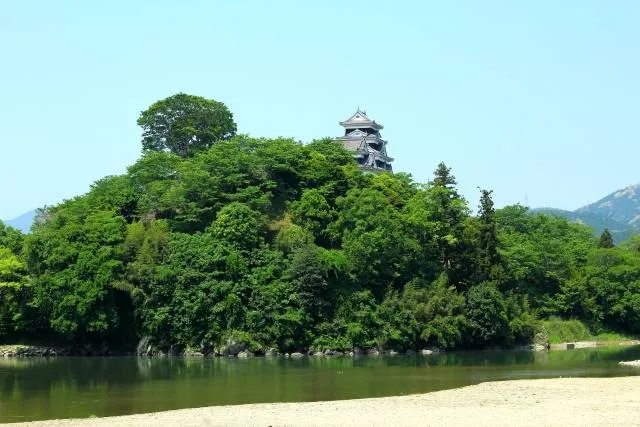 via www.photo-ac.comStarting from the Edo period (1603-1868) Ozu developed as a castle town under the control of the Kato clan, and still retains a number of architectural traits from its past. The old town spreads southeast of the castle and it is accessible from the JR Iyo-Ozu station.
Visitors can easily enjoy Ozu's attractions just strolling through the town. The castle was originally constructed in 1331. Once destroyed in 1888, the city managed – with the help of the citizen's contributions – to fully rebuild the castle in 2004. Meticulously sculpted wooden frames and fine architectural details, combined with the panoramic sight from the main keep (Tenshukaku) make for an exceptional visual experience. Due to its historical relevance and aesthetical features, Ozu castle has been ranked among Japan's National Important Cultural Properties since 1957.
Anybody visiting one of Ozu's centrally located cobblestone alleys or Samurai residential quarters will certainly be taken away by the city's historical charm. Still, classic Japanese architecture is not everything Ozu has to offer. Ozu's red brick hall located in Ohanahan street is a must see sight that differs from the traditional architecture that surrounds it. Built during the Meiji period (1868-1912), it is a very rare sight in Japan's architectural landscape. Japan's geological situation and seismic history make the maintenance of brick constructions extremely challenging, and only few of the many structures built this way in the years going from the Meiji to the Taisho period (1912-1926) are still standing today. If you're visiting Ozu on Sunday, make sure you do not forget to pay a visit to Pokopen street, with its wide array of vintage goods and old-fashioned Japanese snacks from the Showa period (1926-1989).
Anybody feeling like moving away from the city center for a short excursion should consider visiting the Iyo-Ozu Sukunahikona shrine. Originally constructed in 1928 and listed as a World Heritage in Danger in 2014, the shrine was fully restored a year later thanks to the support provided by an American foundation. Consequently in 2016 Iyo-Ozu Sukunahikona shrine received the UNESCO Asia-Pacific Award for Cultural Heritage Conservation, becoming once again one of Ozu's main architectural features. The shrine's massive wooden framework and the way its majestic presence merges in the surrounding will certainly leave a deep impression in tourists interested in exploring the beauty of one of Japan's hidden gems.
How To Visit?
From Tokyo to Ehime prefecture : about 2 hours by airplane, 7 hours by bullet trainFrom JR Iyo-Ozu station : 30 minutes walking
From Ozu IC : 10 minutes by carFrom Tokyo to Ehime prefecture : about 2 hours by airplane, 7 hours by bullet train
From JR Iyo-Ozu station : 50 minutes walking
From Ozu IC : 15 minutes by car
A Mountain Villa In Little Kyoto
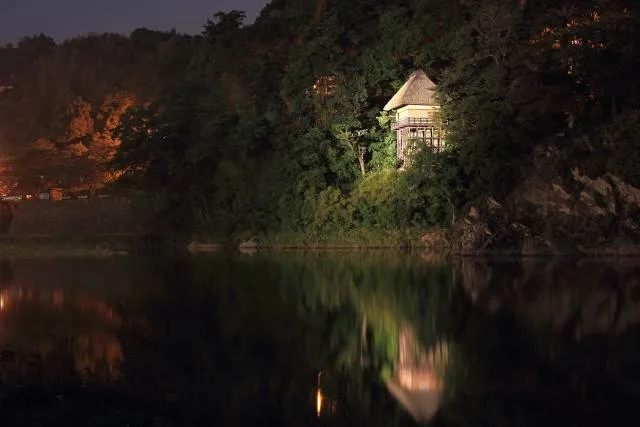 via www.photo-ac.comOne of the best things to do in Ozu's old town is visiting the Garyu Sanso, a mountain villa located right in front of the beautiful Hijikawa river. Garyu Sanso was designed with Kyoto’s well-known imperial villas in mind, and it’s construction lasted from 1901-1907. During this time, the construction of the villa was mandated to a group of artisans from Kyoto, Kobe, and other areas, who have all contributed to Ozu’s reputation as Ehime’s Little Kyoto.
The villa consists of three main pavilions (Garyuin, Chishian and Furoan) and a Japanese-style borrowed scenery garden (shakkei). All around the property visitors can admire all kinds of refined architectural details, such as the delicately crafted transom windows, the cedar ceiling and the skillfully set Tatami mats.
Still, Garyu Sanso's main feature is without a doubt the Furoan pavilion. Erected on a cliff, the Furoan pavilion replicates the shape of a boat, and its unique design is very rare even among Japanese villas. Among the pavilion’s many peculiarities, one must mention the way it has been integrated with the natural scenery surrounding it, a delicate process brought forth keeping in mind the influence of sunlight and moonlight on the building's aesthetics. To clearly understand the extent of the interactions between landscape and architecture, visitors exploring the the Garyu Sanso should not miss the splendid panorama of the river that can be seen from the pavilion's main room.
Tourists interested in Japanese traditions will be glad to know that a tea ceremony is held every Sunday at the Furoan from April to October, excluding the month of August. Participation in the ceremony is very accessible at 400 yen per person, and includes a serving of matcha green tea together with a traditional Japanese sweet.
The villa, designated as a National Important Cultural Property in 2016, is open to visitors all-year long, presenting different aspects of its beauty in each of the four seasons.
How To Visit?
From Tokyo to Ehime prefecture : about 2 hours by airplane, 7 hours by bullet trainFrom JR Iyo-Ozu station : 30 minutes walking
From Ozu IC : 10 minutes by car
Reference List
http://www.oozukankou.jp/ukai-top.html
http://www.city.ozu.ehime.jp/site/kanko/
https://www.visitehimejapan.com/en/features/Uchiko_Ozu
http://www.garyusanso.jp/