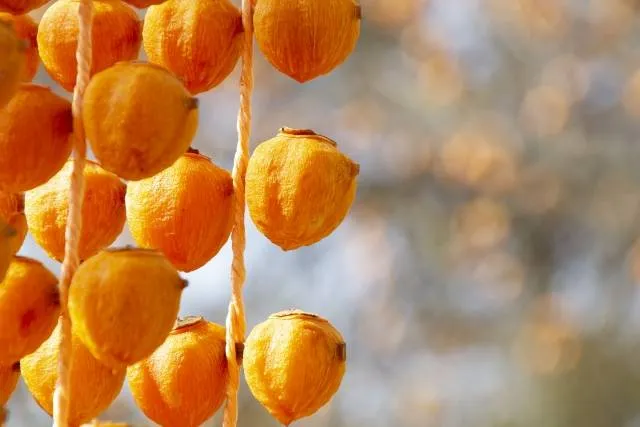
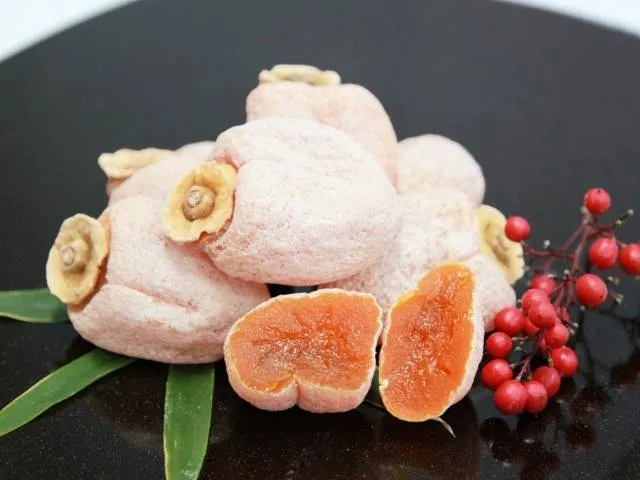
In Japan, dried persimmons are traditional sweets made throughout autumn to winter. They are called “Hoshigaki” or “Tsurushigaki,” and it takes plenty of time to air-dry the persimmons to develop a natural sweetness. By visiting Minami Echizen, you can experience the delicate makings of dried persimmons, and have a sample of it as well.
Summary
The tradition of making dried persimmons in Minami Echizen, a town in Fukui Prefecture, is said to have a history of over 400 years. In Japan, dried persimmons are traditional sweets made throughout autumn to winter. They are called “Hoshigaki” or “Tsurushigaki,” and it takes plenty of time to air-dry the persimmons to develop a natural sweetness. By visiting Minami Echizen, you can experience the delicate makings of dried persimmons, and have a sample of it as well. If you are interested, keep reading to find the recipe and how to visit!
Minami Echizen: A Town Full of Nature and History
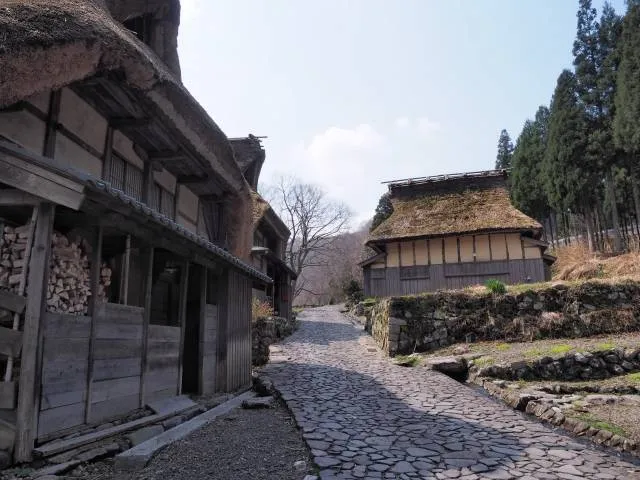
Minami Echizen is a town in the middle of Fukui Prefecture, located to the northwest of Kyoto. Facing the Sea of Japan, Minami Echizen’s landform consists of mountain ranges (accounting for 92% of the total area), ocean, and villages, giving a rich variation to its abundant nature.
In the Heian Era, a path was made to connect Hokuriku district to Kyoto capital, with Minami Echizen being its gateway. Headquarters were set in Minami Echizen, and the town prospered as a post town.
In the Heian Era, a path was made to connect Hokuriku district to Kyoto capital, with Minami Echizen being its gateway. Headquarters were set in Minami Echizen, and the town prospered as a post town.
About Imajo Tsurushigaki
What is Hoshigaki?
Hoshigaki, a Japanese-style variety of dry persimmon can also be called Tsurushigaki (Hanging persimmon), depending on the location where it is produced. This is because being tied to strings for hanging dries most persimmons.
An astringent type of persimmon is used to make Hoshigaki. These persimmons can’t be eaten raw, but when dried, it becomes sweet. Astringent persimmons have high sugar content, tacky flesh with fine texture, which makes it the best pick.
As for nutrients, Hoshigaki is rich in vitamin A, fiber, and Potassium. Persimmons are estimated to gain around 3 times as much vitamin A when dried. It is healthy and sweet, and Japanese people often enjoy them with green tea.
What Makes Tsurushigaki Special from The Other Hoshigaki?
One of the major areas in Minami Echizen, which is still carrying on the likes of the good old days of its post town, is Imajo. Of all the Hoshigaki made in Japan, the ones made in Imajo are exceptionally named Imajo Tsurushigaki, due to the following reasons.
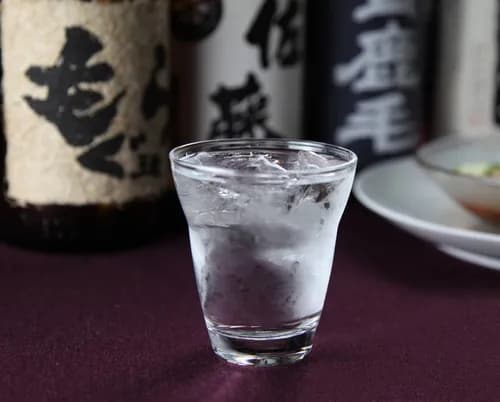
First and most importantly, the process of making one involves a distinct step of smoking the dry persimmons over a fire or so-called “irori” a traditional Japanese hearth. Second, involving a special process of smoking as explained earlier, Imajo Tsurushigaki has a pleasant smoky scent, which goes well with sake.Lastly, there is a brand of persimmon used especially for Imajo Tsurushigaki, called “Nagara-gaki”, which is known for its rich sweetness that develops from being hanged and dried. Its smooth and refreshing flavor is sure to please many tourists, and the people of Imajo takes pride in making them with persistence, one by one.
Imajo Tsurushigaki is made around the end of November to the middle of December each year. As travelers of the past in Imajo used to say, “Eat one to walk a mile, eat three to walk three”, Imajo Tsurushigaki is a healthy delicacy, and a long-loved specialty, following a tradition of over 400 years.
Although it is a local specialty of Minami Echizen, it is sad to say that the numbers of farmers who make Imajo Tsurushigaki is decreasing. As population gets smaller, dried persimmon makers have found it very difficult to find the next generation. Consequently, this brings a serious shortage of people who inherit their traditional skills.
You Can Experience The Delicate Makings of Tsurushigaki in Imajo
During the middle of November to the beginning of December, some groups sponsor a tour where you can take part in making Tsurushigaki. The whole process of making this traditional food takes around 2 to 3 weeks, so it is difficult to experience every part. However, for most cases, you would be able to try what is regarded as the main steps to making Tsurushigaki, which includes peeling, making the string, and tying and hanging the persimmons. You can also sample Tsurushigaki that are prepared in advance.
【公式】地域まるっと体感宿 玉村屋 (Japanese)
A tour where you can take part in making Tsurushigaki.
How to Make Dried Persimmons and How to Eat it
Other than the persimmon itself, you wouldn’t need much to make dried persimmons at home, just a place where you can dangle the fruits, and a bit of time to care for them. You can start by reading these instructions below.
Recipe
Ingredients: 10 astringent persimmons, 10ft kitchen string
1. Cut the top off, leaving the stem.
2. Peel the skin, from top to bottom.
3. Tie the end of the string to the stem of a persimmon, then tie the other end to another persimmon.
4. Holding the string, dip into boiling water for about 5 minutes. This will help to prevent the fruit from getting mold on its surface.
5. Hang each pair of persimmons in a dry environment where it can get some wind.
6. Leave still for about a week.
7. When new skin forms, massage them to make the inside evenly soft.
8. Keep massaging them every 3-5 days to get rid of its pucker taste.
9. After three weeks of this process, finally, Hoshigaki is completed!
How to Eat
Peel its soft skin with your hands to bite directly into sweet squishy luxury. Foreigners, who have enjoyed this delicacy, describe its taste to be close to that of honey, with notes of cinnamon and gingerbread.
In Japan, Hoshigaki is commonly enjoyed at teatime with green tea. Japanese visitors often bring treats to the host when they are invited. For these occasions, a sweet that stays good for a long time (like Hoshigaki), is gratefully accepted.
Other than just eating dried persimmons alone, dairy products such as cream cheese or yogurt, are known to match Hoshigaki. Some persimmon makers roll Hoshigaki with cream cheese inside, like sushi roll or a rolled cake.
How to Visit
.
Route 1: Take a flight from Haneda Airport to Komatsu Airport in Ishikawa prefecture (approximately 60 min). Then take a 12 min bus ride to Komatsu Station. From there, take a train for about an hour to Imajo Station (destination).
Route 2: Take a flight from Haneda Airport to Kansai International Airport in Osaka (approximately 1hr 20min). Then take a 1hr 30min ride on the train to Kyoto Station. From there, exchange trains and ride for 1hr 30min to get to Imajo Station (destination).
Route 2: Take a flight from Haneda Airport to Kansai International Airport in Osaka (approximately 1hr 20min). Then take a 1hr 30min ride on the train to Kyoto Station. From there, exchange trains and ride for 1hr 30min to get to Imajo Station (destination).
Reference List
https://www.town.minamiechizen.lg.jp/machi/p001049.html
http://www.pref.nara.jp/item/184405.htm
http://www.jikei.ac.jp/hospital/sukoyaka/pdf/sukoyaka_49_1.pdf
http://www.minamiechizen.syokokai.com/600/002_3turusigaki.html
http://www.pref.fukui.lg.jp/doc/tan-noso/tyu-san/h27ouendan.html
https://tamamuraya.jp/2018/09/25/005/
http://minamiechizen.com/Default.aspx?TabId=152&EntryID=466
https://www.bonappetit.com/story/japanese-dried-persimmons-hoshigaki