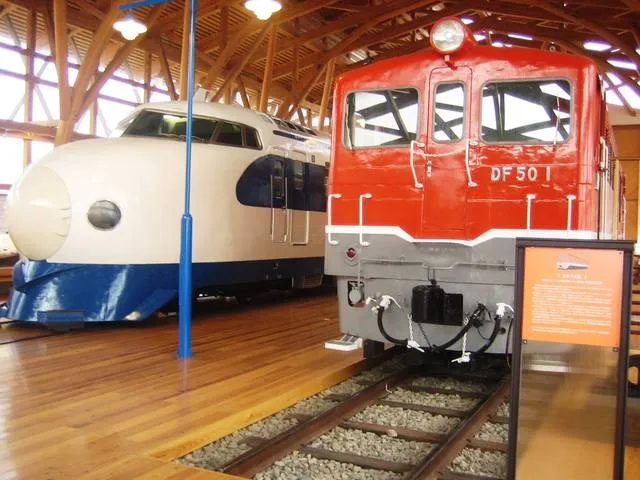
Are you in love with the Japanese railway system?At the Railway History Park in Saijo city, Ehime prefecture you'll find the first generation Shinkansen (Type-Zero Shinkansen) preserved among other trains.Explore the museum that is full with train-related things- from real trains to train signs, signals, and even a museum dedicated to the "father of the bullet train."
Japan’s Hi-tech Achievement: Shinkansen, or bullet trains
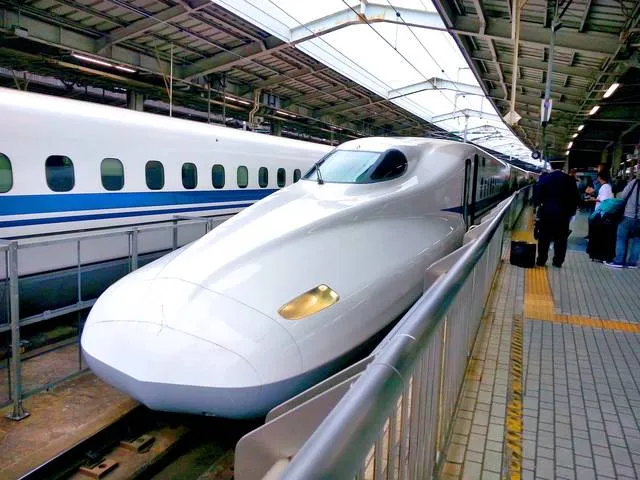 Most people know that Japan’s high-speed railway system is top-notch-- they’re fast, clean, efficient, safe, comfortable and punctual. The king of all Japanese express trains is the Shinkansen, or bullet trains, which is a network of high-speed passenger rail system that connects Tokyo to other parts of the country’s major islands such as Kyushu and Hokkaido. The total length it covers is 3,300 km and has transformed many rural cities into more prosperous areas.
Shinkansen is Japan’s highly regarded technological achievement. The fastest it can run is 320 km/h, which is among the fastest in the world. More importantly however, it is the safest and most punctual high-speed train in the world.
The definition of punctual, in Japan railway system standards means, not even a minute late- and if they are over a minute late, passengers will hear the conductor apologize for the “inconvenience they have caused” with a proper explanation as to why they have run late. So it’s not a surprise to hear that the Shinkansen’s average delay is less than 60 seconds (including times when there were natural disasters such as earthquakes). Shinkansen are safe and they have proved that with their remarkable record of zero passenger deaths and injuries (disregarding incidents that have happened inside the Shinkansen) in its 54 years of operations. Two main reasons the Shinkansen have been able to run safely are because of the tracks and automatic train control (ATC) system. Tracks are used exclusively for Shinkansen, and not shared with other lines. They do not pass by any crossings, eliminating risks of crashing into other trains, vehicles and people. The ATC that is implemented on the Shinkansen regulates the train’s speed in response to the track’s conditions ahead and distance with the train before them. There are also many conductors on the platform and inside the train to make sure all the passengers get on and off smoothly.
The Tokaido Shinkansen Line alone carries more than 446,000 passengers on a typical weekday (in fiscal 2015, according to Central Japan Railway). With this level of punctuality and safety, it’s probably safe to say that the Shinkansen is the world’s most reliable high-speed train transportation.
Railway History Park in Saijo city, Ehime Prefecture
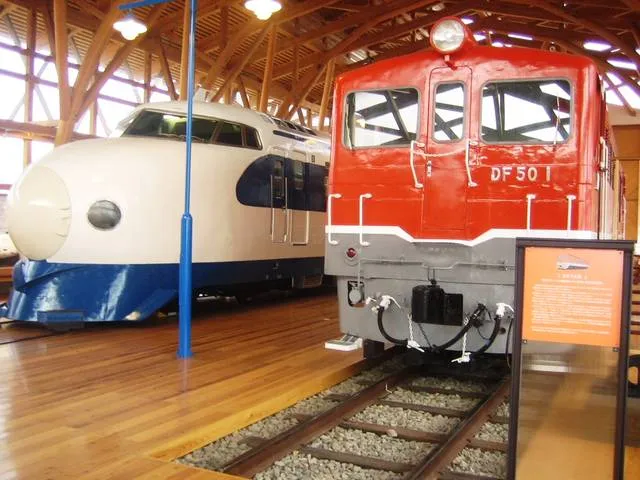 The Shinkansen first made its debut in October 1964, as the world’s first high-speed rail network. It connected Tokyo and Osaka cities just in time for the Tokyo Olympics. Before the Shinkansen, it took 6 hours and 50 minutes to travel between these two cities by train. However, with the first generation Shinkansen or Type-Zero Shinkansen, travel time was shortened to 4 hours. (Today it’s even shorter- it’s just 2.5 hours, and they plan to reduce it to about 1 hour by 2045).
This fascinating first generation Shinkansen, or the Type-Zero Shinkansen, is preserved at the Railway History Park in Saijo, Ehime Prefecture on Shikoku island. It is a great place to learn more about the history of Shinkansen and Japan’s top-class railway system.
The Railway History Park in Saijo is made up of four sections: the Shikoku Railway Cultural Center (north wing), the Shikoku Railway Cultural Center (south wing), the Shinji Sogo Memorial Museum and the Tourist Information Center. 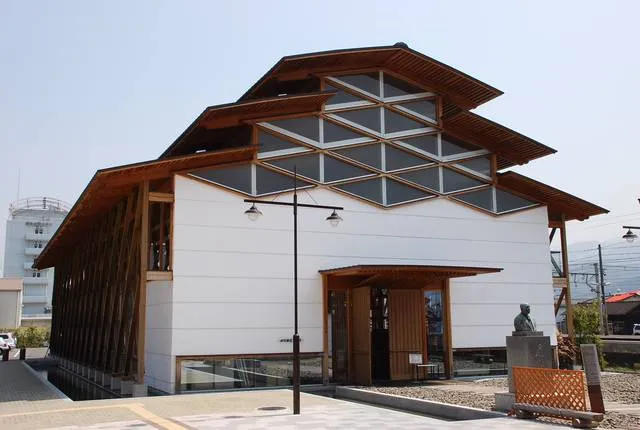 Shikoku Railway Cultural Center (north wing)In this building, you will find the aforementioned Type-Zero Shinkansen along with the DF50 diesel engine #1 car (a train that was mainly used in Shikoku) on display. Here you can also go for a ride on the Rail Gauge Bicycle, which is a 2-seater bicycle used to patrol between stations (they are only open for rides on holidays and Sundays and is not always available). They also have other railway goods on display.Shikoku Railway Cultural Center (south wing)
This is a section of the History park that railway lovers of all ages get excited. There are several trains on display here: a C57 steam locomotive (a locomotive built between 1937 and 1947), a Kiha 65 express train (a diesel engine built between 1969 and 1972), a DE10 electric diesel engine (constructed between 1966 and 1978) and a gauge convertible train. You can go inside some of them and act like a train conductor by taking the wheel. There is a large-scale train diorama that has a ten-minute show several times a day. You can also check out the railway signs and signals up close. If you are a train lover, you’ll be so busy trying to check a million things out.
Shinji Sogo Memorial Museum
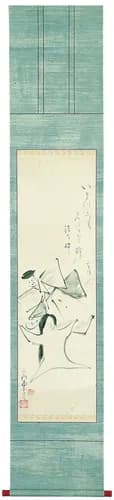
A museum dedicated to Shinji Sogo, known as the “father of the bullet train.” In his lifetime, he served as the fourth president of Japan Railways and also as a mayor of Saijo City. You will be able to see his achievements, a recreation of his study, his calligraphy and possessions.
Tourist Information Center
This is a large sightseeing information center with lots of Saijo city and Ehime prefecture’s souvenirs and local products.
Admission fee for adults is 300 yen and 100 yen for elementary and middle school students. They close on Wednesdays (open if it’s a national holiday and closed the next day). Doors are open from 9 AM to 6 PM.
Other things to do in Ehime Prefecture
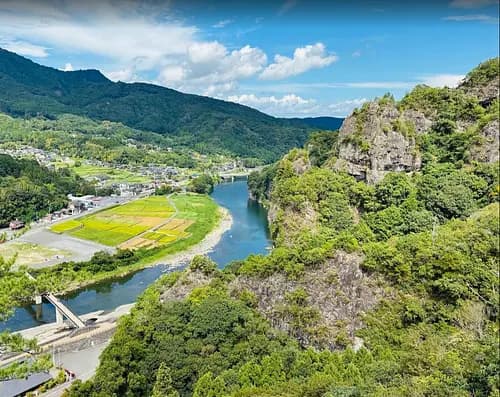
 Ehime Prefecture is located in northwestern Shikoku. There is a lot to do there but here are a few other recommendations. You can enjoy bathing in “Dogo Onsen” a traditional hot spring with a history of 3,000 years. You can enjoy cycling at the Shimanami Kaido is a beautiful cycling or driving route. The total length of the road is 70km, and it consists of 9 bridges and six islands and stunning scenery. Lastly, you can try having some of their delicious mikan or citrus fruit. Delicious Mikan is one of the major things this prefecture is known for!
How to Visit
Ride the plane from Tokyo (Haneda) to Ehime (Matsuyama), which is about 1.5 hours. Fom Matsuyama airport, take the bus to Matsuyama station (15 min), then ride the Shiokaze express train headed to Okayama to Iyo Saijo station (63 min). It’s a 2-minute walk from Iyo Saijo Station.The Railway History Park in Saijo
Address:
798-1 Omachi, Saijo, Ehime Prefecture, 793-0030
Tel: +81-(0)897-47-3855
Reference List
http://s-trp.jp/en/index.html
https://www.gov-online.go.jp/eng/publicity/book/hlj/html/201701/201701_02_en.html
https://www.japanstation.com/shinkansen-high-speed-train-network-in-japan/
https://www.library.city.nagoya.jp/img/oshirase/adult2014/tomida_201409_3_2.pdf
https://www.iyokannet.jp/photo/3307
https://www.iyokannet.jp/photo/3309