Located in the South of Kyushu, the prefecture of Kagoshima had a very important role in Japanese modern history. The Hioki Matchlock Gun Troop's performance has been the fascination for visitors in Kagoshima since 2015. The story of matchlock gun dates back to the Samurai Era, when Kagoshima's vigorous Samurai Shimazu clan had a strong influence all over the area. They were the first clan to bring firearms to the battlefields, and this is not their only achievement to pay attention to.
Summary
Located in the South of Kyushu, the prefecture of Kagoshima had a very important role in Japanese modern history.
The Hioki Matchlock Gun Troop's performance has been the fascination for visitors in Kagoshima since 2015. The story of matchlock gun dates back to the Samurai Era, when Kagoshima's vigorous Samurai Shimazu clan had a strong influence all over the area. They were the first clan to bring firearms to the battlefields, and this is not their only achievement to pay attention to.
The Hioki Matchlock Gun Troop's performance has been the fascination for visitors in Kagoshima since 2015. The story of matchlock gun dates back to the Samurai Era, when Kagoshima's vigorous Samurai Shimazu clan had a strong influence all over the area. They were the first clan to bring firearms to the battlefields, and this is not their only achievement to pay attention to.
Satsuma's Vigorous Samurai and Their Land, Kagoshima
via www.photo-ac.com
Located in the South of Kyushu, the prefecture of Kagoshima has had an important role in Japanese modern history. Without the effort put in by the Domain of Satsuma (Satsuma Han) in Kagoshima, the Japanese Meiji Restoration (1868-1889) would have probably failed, and today's Japan would indeed be different country than the one we got to know. The word “Satsuma” refers to the area we know as Kagoshima, while “Han", or domain, refers to the way Japanese territories were administrated before 1871. In 1871 when the Japanese government reorganized its structure into the prefectural system that is still being used nowadays.
In 1185, the Shogun Minamoto no Yoritomo sent a Samurai clan called Shimazu to Kagoshima in order to take control of the area. From an historical point of view, Shimazu clan's rise to power marks the beginning of the Kamakura period. Kagoshima's ruling clan became more and more powerful as time went by and had a very strong influence on all Kyushu up to Edo period (1603-1868). The Shimazu clan was acknowledged for its exceptional military and tactical skills, and managed to hold a strong dominance on the prefecture for a very long time, aided by the firearms they brought onto the battlefields.
In 1185, the Shogun Minamoto no Yoritomo sent a Samurai clan called Shimazu to Kagoshima in order to take control of the area. From an historical point of view, Shimazu clan's rise to power marks the beginning of the Kamakura period. Kagoshima's ruling clan became more and more powerful as time went by and had a very strong influence on all Kyushu up to Edo period (1603-1868). The Shimazu clan was acknowledged for its exceptional military and tactical skills, and managed to hold a strong dominance on the prefecture for a very long time, aided by the firearms they brought onto the battlefields.
Tsurugane Shrine and the Samurai Clan Shimazu
Tsurugane shrine's history trace back to that Kagoshima's ruling family, the Shimazu. The Shimazu clan was Satsuma's Daimyo (a name for Japanese feudal rulers) and ruled over Kagoshima for more than 700 years since 1185. It had a tremendous power over the whole region, and in its most glorious days -around 1580- it had almost managed to conquer the entirety of Kyushu. The clan rose to exceptional fame for always being able to choose competent successors and managing to keep a steady growth, generation after generation. This seemingly unstoppable progress gave birth to all kinds of popular sayings such as “there is no fool among the Shimazu.”
The 1860s gave birth to an anti-Buddhist movement known as Haibutsu Kishaku. During this time shrines and Buddhist institutions all around the area seriously struggled while trying to survive the movement's surge. Several temples were either severely damaged or throughly destroyed by the riots and in 1869, when the movement started withering away, the Shimazu clan erected the Tsurugane Shrine. This shrine both sent a strong political message to the whole region and to restore their tarnished honor.
Tsurugane shine got its present name only in 1917, when it was relocated to its current position right in front of the entrance gate of Sengan-en, the garden attached to the former Shimazu clan's residence.
Surrounded by nature, Tsurugane is immersed in a tranquil and warm atmosphere and it's open to the public all year long.
Hinawaju, the Guns Changed the Samurai Fights
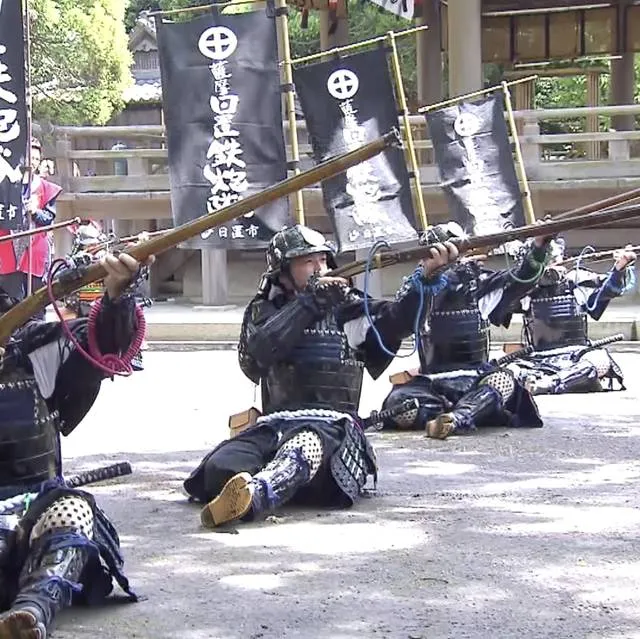
The first arrival of European firearms in Japan dates back to the 1540s. According to the records, the first matchlock gun (Hinawaju) was brought to Tanegashima Island by the Portuguese. Firearms quickly gained popularity among the Samurai and started to appear on the battlefields all over the countr. However several reasons – of both geographical and political nature – stopped the firearm's diffusion from rising as dramatically as it did in other areas, e.g. in the western world.
Kagoshima's Tanagashima is the second biggest of the Osumi Island. It is located in the Pacific ocean, about 40 km from the Sountern edge of Kagoshima's peninsula. Tanegashima's ruling clan and the Shimazu's had strong political bonds ( as granted by the Shimazu's clever marriage politics ) and by the time matchlock guns arrived in Tanegashima the Shimazu clan had gotten their hands on them before any other group on the mainland. This early adoption of firearms is indeed what granted the Shimazu clan's gun fighters their fame all around Japan.
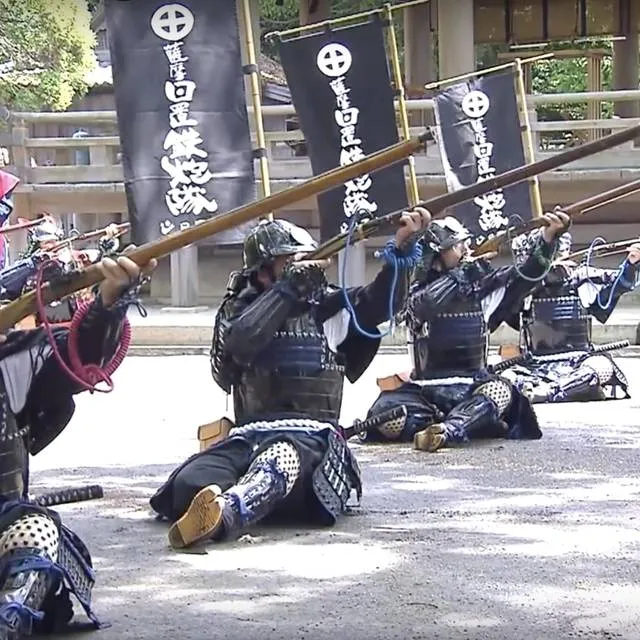
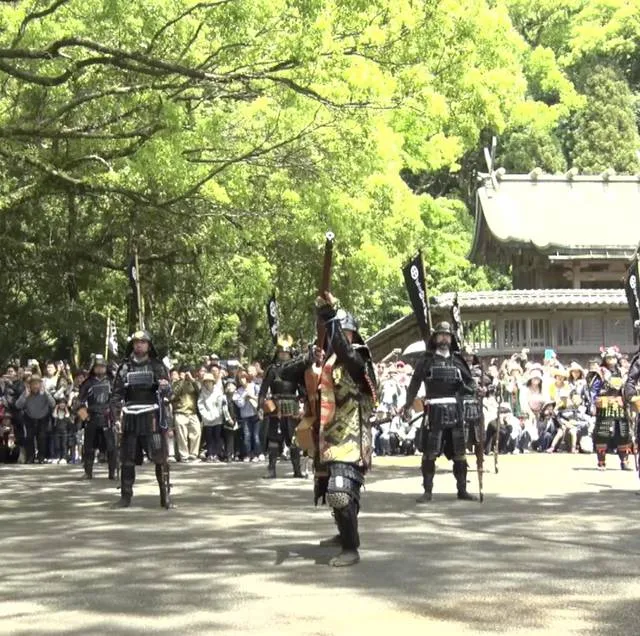
A matchlock gun (Teppou) troop (Tai) from Hioki city was formed in 2015 to perform demonstrations of the actual use and craftmanship of Edo period firearms. Since then, the Hioki Teppou-Tai performance has been taking place at the Tsurugane shrine every year in the month of May. The troops, dressed up in historical costumes, fire a few salvos with their rifles in an absolutely quiet and peaceful atmosphere. As the sound of gunfire resonates through the shrine and its surroundings, visitors have a chance to experience the deep contrast between two different eras, that of the Samurai, and that of modern warfare.
This performance has been attracting more and more visitors since its ideation, and certainly adds to the experience of visiting Tsurugane.
Sengan-en and the Powerful View of Kagoshima Landmarks
via www.photo-ac.com
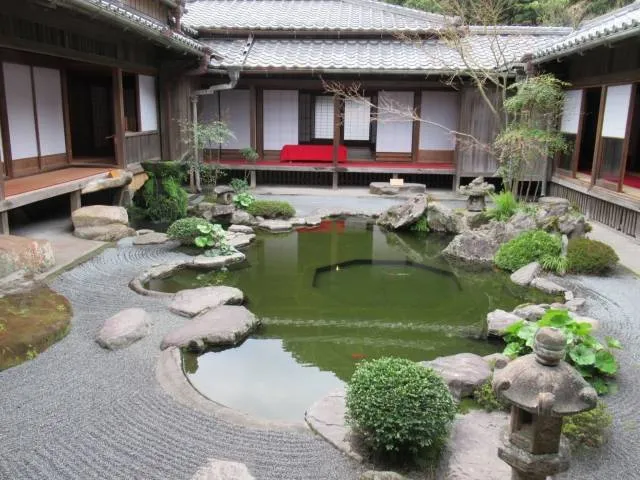
Sengan-en is a garden attached to a former residence of the Shimazu cla. It was biult in 1658 by
Mitsuhisa Shimazu, the 19th head of the clan, and is now renowned as one of the most beautifu Japanese gardens in Kagoshima. Since 2015 it has been designed as one of the UNESCO World Heritage Sites of Japan's Meiji Industrial Revolution.
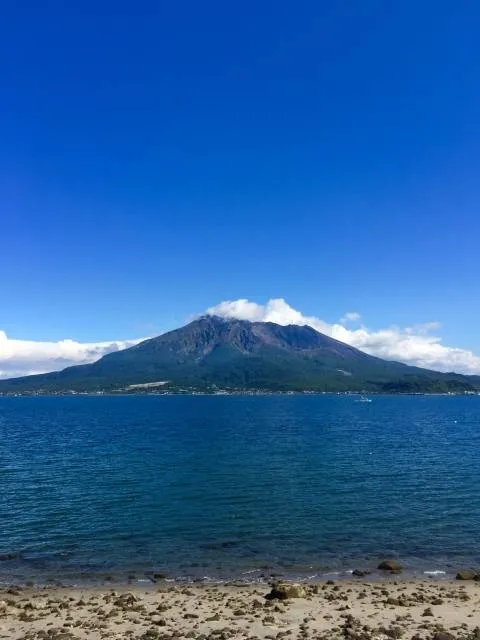
Located on Kagoshima bay's coastline and designed in such a way to incorporate geographical elements as part of its scenery, it is a perfect spot to immerse oneself in the beauty of its powerful surroundings while appreciating the charm of Japanese traditional architecture and garden arts. Two very popular lookouts offer visitors a chance to admire the dynamic view of Mt.Sakurajima across the bay. Mt.Sakurajima is one of the most famous active volcanoes in Japan, as testified by the abundance of ashes all around the bay area. The volcano used to be completely detached from the mainland, but in 1914, a massive eruption created a strip of land that connected it to the Osumi peninsula, Kagoshima's mainland.
Another impressive piece of scenery one can admire from the Sengan-en us a huge rock, located on a hill just behind the garden itself, on which three Japanese characters painted in white seashell ink form the word “Senjingan," literally meaning “huge rock”. Those characters have been painted with the help of 4,000 workers in 1824: the massive writing is still clearly visible, and visitors can easily spot and enjoy the sight of those impressive symbols.
Sengan-en's surface totals almost five hectares, and features several shops, tea rooms and cultural experiences: it is a great spot for a day-trip, or even just a wonderful place to take an afternoon off strolling around in a wonderful scenery.
How to visit?
To Kagoshima from Tokyo : about 2 hours by airplane
To Kagoshima from Fukuoka : about 3 hours by car, about 2.5 hours by train
*Shinkansen itineraries are available, too
From Kagoshima Chuo station : 20 minutes by car
From Kagoshima airport : 40 minutes by car
From Aira IC : 30 minutes by car
To Kagoshima from Fukuoka : about 3 hours by car, about 2.5 hours by train
*Shinkansen itineraries are available, too
From Kagoshima Chuo station : 20 minutes by car
From Kagoshima airport : 40 minutes by car
From Aira IC : 30 minutes by car