Shinjuku is known to be a fun and loud entertainment district in Tokyo but did you know that it’s also a business district, that it has one of the largest parks in Tokyo, and that it also has a Korea-town?
Summary
Shinjuku is known to be a fun and loud entertainment district in Tokyo but did you know that it’s also a business district, that it has one of the largest parks in Tokyo, and that it also has a Korea-town? Learn more about this fascinating area of Tokyo.
Shinjuku, The Sleepless Town
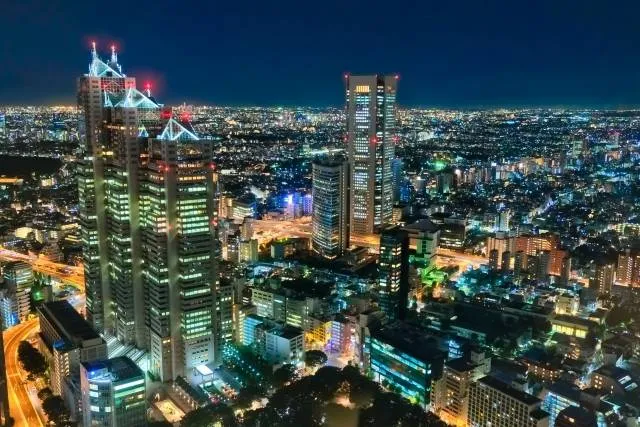 Have you ever seen the film “Lost In Translation” by Sofia Coppola? Most of the film takes place in Tokyo’s Shinjuku and Shibuya areas, which are the fun, loud and crowded areas of Tokyo. Shinjuku’s Park Hyatt Tokyo hotel is where one of the main characters, Charlotte, looks out over the city from her room, and is also where Bob and Charlotte meet for the first time. If you have no idea what I’m talking about, the film is worth checking out before your trip to Tokyo.
As portrayed in the film, Shinjuku, also known as “Sleepless Town,” is widely known to be the crazy entertainment paradise of Tokyo. It has the largest red-light district in Japan called Kabuki-cho in the center where there are many hosts and hostess bars, nightclubs, and aggressive touts (male tourists should especially be careful). But this is just one aspect of Shinjuku. Shinjuku is actually a unique area in Tokyo with a mix of cultures and places to explore. Here are three examples.
West Shinjuku, The Business Center
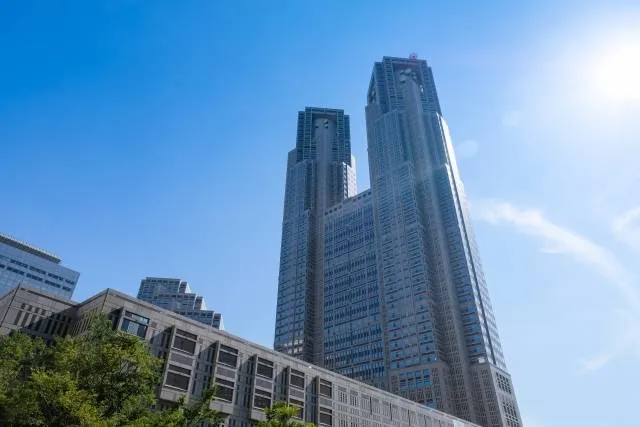 The west side of Shinjuku is full of high-rise buildings. It is one of the most popular business districts in Tokyo due to its great access to other areas of Tokyo. Among those buildings stands the Tokyo Metropolitan Government Buildings.
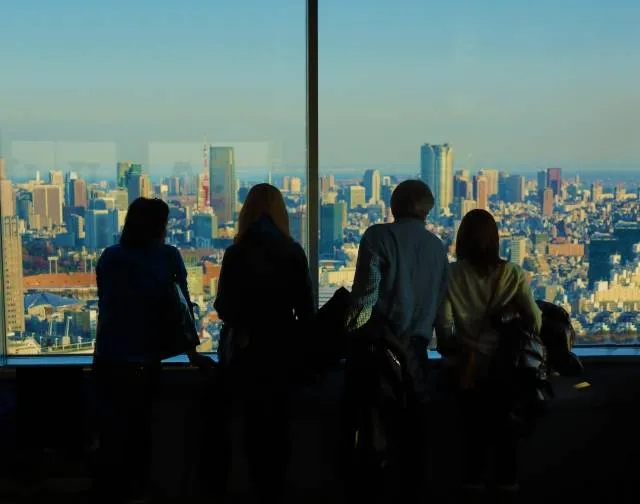
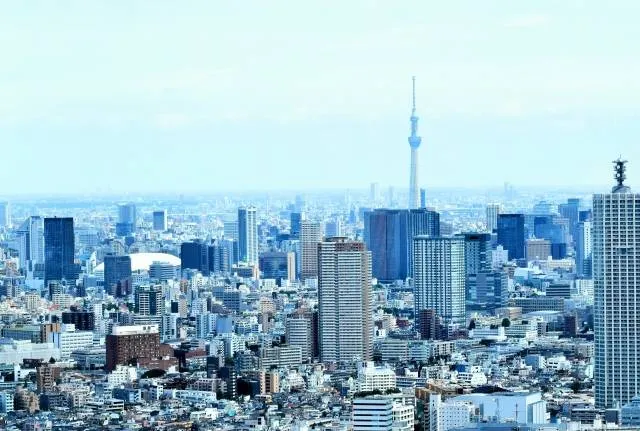 Tokyo Metropolitan Government Buildings consist of three main buildings, and building No.1 has two towers that are 797 ft (243 m) tall, each with a free observatory deck giving a great panoramic view of the city. After a bag-check, visitors can go up the elevator directly to the observation deck on the 45th floor, which is 663 ft (202 m) above ground level. On a clear day, famous landmarks such as the Tokyo Skytree, Tokyo Tower, and Mount Fuji can be seen.
Tokyo Metropolitan Government Building No.1 is also a place where you could do more research on where to visit in Japan. On the first floor of the building, there is a Tokyo Tourist Information Center Promotion Corner where various districts and islands of Tokyo are being introduced through posters, pamphlets, pictures and videos. On the second floor there is a Japanese Prefectural Tourism Promotion Center that introduces the different charms and attractions of the different prefectures in Japan.
Southeast Shinjuku, Shinjuku Gyoen National Park
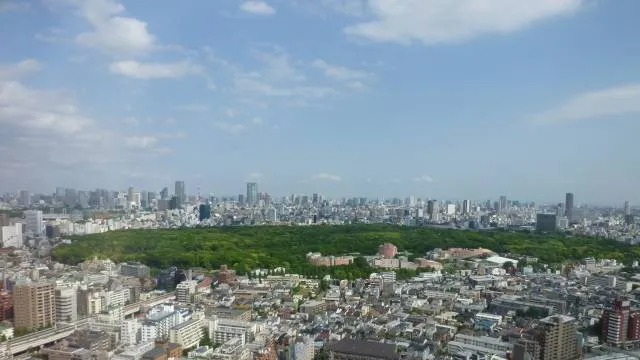 To the southeast of Shinjuku, there is a beautiful garden called the Shinjuku Gyoen National Park. Its entire size is 58.3 ha (144 acres) with a circumference of 2.2 mi (3.5 km), making it one of the largest parks in Tokyo.
Originally the private land of Tokyo’s daimyo or feudal lords, Shinjuku Gyoen National Park was redesigned into a beautiful garden in the early 1900’s for the Imperial family. The Imperial family used it for entertaining guests but the garden was destroyed during World War II. After the war, it was remade into a park and opened to the public in 1949.
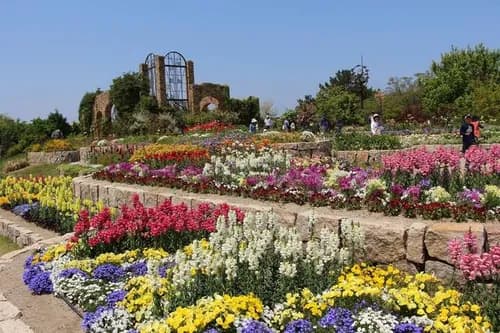
The park is divided into three main sections: the Japanese Traditional Garden, English Landscape Garden and the French Formal Garden. The Japanese Traditional Garden consists of ponds, bridges, tea houses, and the Taiwan pavilion where people sit and overlook the park from the pond area. The English Landscape Garden has a large lawn area where people just sit and relax. It becomes a popular cherry-blossom viewing spot during cherry blossom season in late March to early April. The French Formal Garden has 110 types of roses, and becomes a colorful place to visit in the fall when all the roses bloom. Visitors comment that it’s almost like they are in Europe when they are at the French Formal Garden.
Although it’s a public park, they have strict regulations about what you can and cannot do. Certain types of photography (such as commercial photos) are not permitted, playing catch, climbing trees, jogging in groups are all not permitted. Basically, go there to enjoy the garden, not to do anything active or to have photo shoots. They will give you a pamphlet with a map and instructions at the park’s entrance.
North Shinjuku, Korea-town
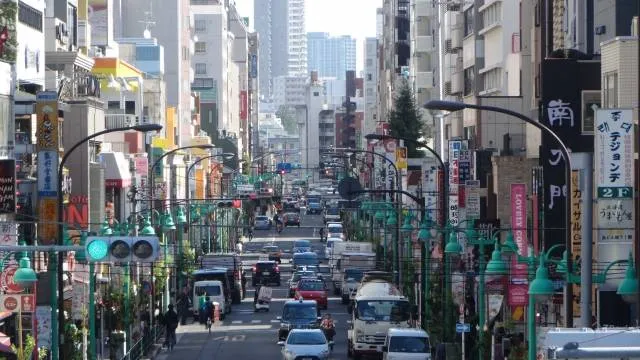 Head northeast of Shinjuku to visit Korea-town. Walk into the area and there are K-pop artist posters, Hangul writing everywhere, shops selling and offering everything South Korean such as Korean cosmetics, kimchi and barbecue.
It’s a relatively new area that only started to develop into Korea-town in the late 1990’s. The town grew rapidly after Korea’s pop culture became popular among Japanese in the 2000’s. Although it is not officially designated as Korea-town, it is widely known as the place to go to purchase anything South Korean. Many visitors comment that it’s like they’re visiting Little Seoul.
From the Tokyo Metropolitan Government Buildings to Shinjuku Gyoen to Koreatown, Shinjuku is a unique area of Tokyo where different cultures mix. All of these areas are walking distance from JR Shinjuku station (although Korea-town’s closest station is JR Shin-Okubo Station). Enjoy the many aspects of this fascinating area of Tokyo by walking around. Getting lost in a big city with friends is fun, but another equally fun way to go around is to have someone guide you through the most remarkable landmarks and spots. Choose the way that makes you and your travel partner/group happiest.
Information
Tokyo Metro Government Buildings Access: From Tokyo Haneda station, ride the monorail to Hamamatsucho station (14 min). From Hamamatsucho Station, ride the JR Yamanote line to Shinjuku station (26 min). From Shinjuku station to Tokyo Metro Government Buildings is a 10 to 15-min walk. Address: 2-8-1, Nishishinjuku, Shinjuku-ku Tokyo Metropolitan Government first central government office building 1F Tel: +81-3-5321-1111 Open Hours: North Tower, South Tower and Tourist Information have different open hours. North Tower Observation Deck- 9:30 AM to 11 PM (closed every 2nd and 4th Monday of the month. If Monday is a national holiday the following day is closed instead) South Tower Observation Deck- 9:30 AM to 5:30 PM (south tower is temporarily closed for renovations until spring, 2019) Tourist Information: 9:30 AM to 6:30 PM All are closed from Dec 29 to Jan 3rd, and some inspection days. Admission: FreeShinjuku Gyoen Access: From Tokyo Haneda station, ride the monorail to Hamamatsucho station (14 min). From Hamamatsucho Station, ride the JR Yamanote line to Shinjuku station (26 min). From Shinjuku station to Shinjuku Gyoen National Park is a 15-min walk. Address: 11 Naito-machi, Shinjuku-ku, Tokyo Tel: +81-3-3350-0151 Open Hours: 9:00 AM‐4:00 PM (closed on Mondays. If Monday is a national holiday, closed the following day) Admission: 200 yen (elementary and middle school students, 50 yen)Korea-town in Shinjuku Access: From Tokyo Haneda station, ride the monorail to Hamamatsucho station (14 min). From Hamamatsucho Station, ride the JR Yamanote line to Shinjuku station (26 min). From Shinjuku station to Korea-town is a 15-min walk. ### Reference Listhttp://www.kanko-shinjuku.jp.e.xm.hp.transer.com/spot/-/article_767.html
https://www.env.go.jp/garden/shinjukugyoen/files/c971cf0857b89cc73f88f4e28711d468.jpg