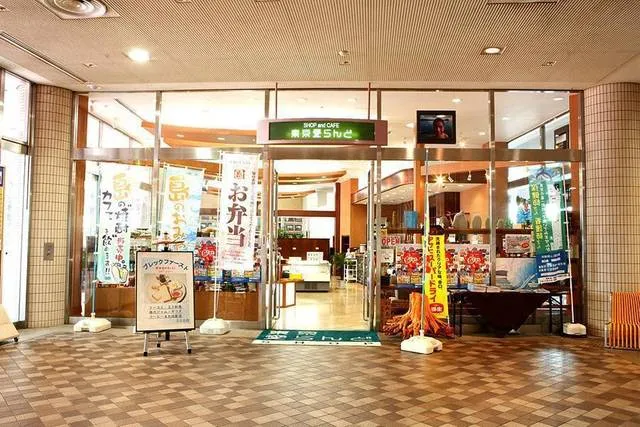
content: Takeshiba Passenger Terminal is the departure point for all the ships directed from the Tokyo Bay to the Izu-Ogasawara Islands. There, an antenna shop called "Tokyo Ai Land" offers a wide selection of top-class culinary specialties and crafts from the islands. Today I will present you with a selection of the best 10 items you can purchase there according to an ULM editorial reporter who is a real expert about the islands and the staff from the store.
Summary
Takeshiba Passenger Terminal is the departure point for all the ships directed from the Tokyo Bay to the Izu-Ogasawara Islands. There, an antenna shop called "Tokyo Ai Land" offers a wide selection of top-class culinary specialties and crafts from the islands. Today I will present you with a selection of the best 10 items you can purchase there according to an ULM editorial reporter who is a real expert about the islands and the staff from the store.
A Rare Antenna Shop Gathering Specialties and Unique Products From Tokyo’s Islands
Among the travelers heading to the islands of Tokyo or to the Izu and Ogasawara Islands, many stops by at the Takesaki Passenger Terminal, home to the antenna shop "Tokyo Ai Land". In 2014, after the handover of its ownership, the shop was renovated, and the assortment of products was considerably expanded. Visitors coming back after several years will certainly be surprised by the impressive variety of local product that the shop managed to gather from all around the islands.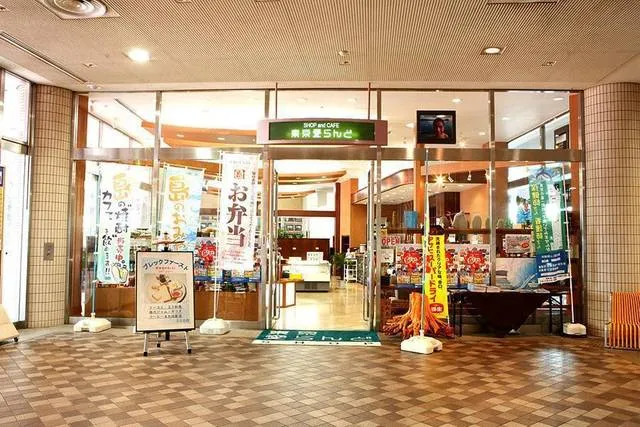 Takeshiba Passenger Terminal's antenna shop and cafe Tokyo Ai Land (Photo by Tokyo Ai Land).
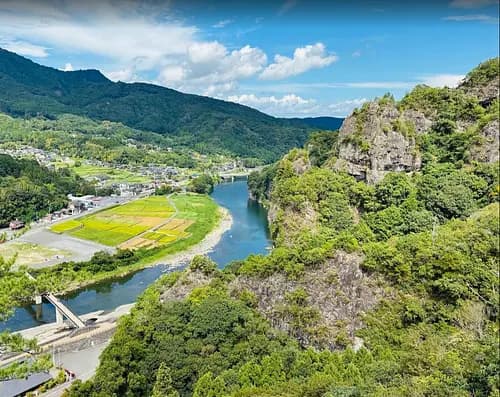
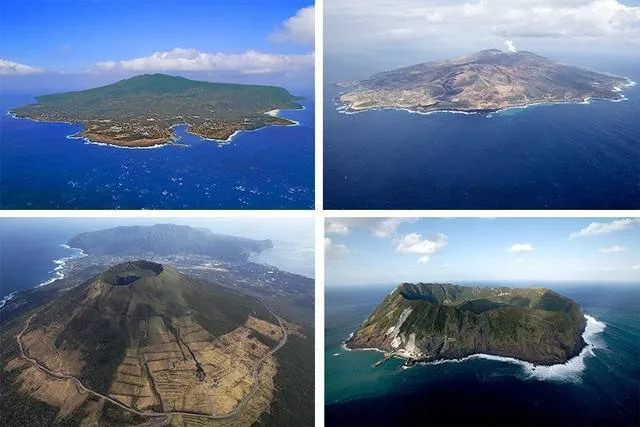 There are many volcanic islands in the Izu archipelago, many of them having very dynamic geographical features. Clockwise from the upper left: Izu Oshima, Miyakejima, Hachijojima and Aogashima (Photos by Tokyo Ai Land – Tokyo Island Promotion Public Corp.)In the Tokyo archipelago, a variety of local specialties owe their peculiar characteristics to the unique geographical environment which is typical for remote islands, and to their temperate climate and their history of sinking islands. Many cooking ingredients peculiar to the islands have started attracting more and more attention, and the variety of processed products the islands can offer is also steadily on the rise. Many of these products cannot be mass produced because of the limited natural resources and lack of manpower in such a remote environment, naturally averse to the needs of mass-production.
Even though in recent years the number of local products available for purchase via mail order has noticeably increased, Tokyo Ai Land offers its customers also items that can't be purchased by mail order, but only right on the spot. The shop is very close to the pier – so there's no need to pay for any ground transportation fee – and the prices are also cheaper than the ones one can get through the mail order system.
Therefore, an ULM editorial reporter who has until now visited more than 100 Japanese islands (including the Tokyo islands) and the staff of the same store same store selected the best island special products and processed goods to be bought at Tokyo Ai Land. We introduce the top 10 below.
10. Ogasawara Island Lemon Chu-Hai
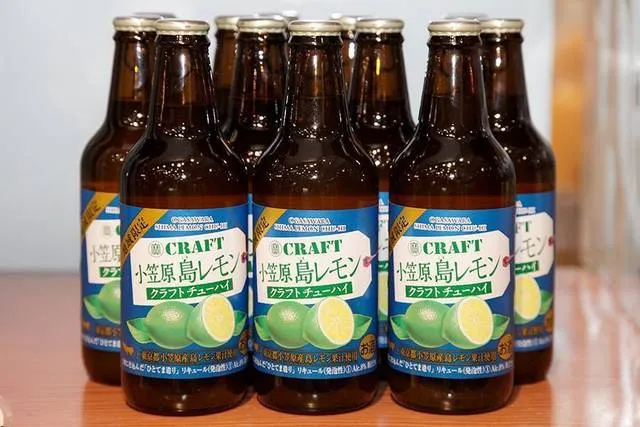 Ogasawara Island Lemon Chu Hai: 300 yen for a 330 ml bottle, 9% alcohol (November 27th, 2018. Photo byKayoko Miyazaki).A luxurious craft-brewed shochu highball (fruit flavored alcohol) made of the famous green lemons from Ogasawara Hahajima Island, freshly squeezed and mixed with lemon paste and carefully selected barrel-aged shochu. It is a refreshing drink, that gracefully combines its slightly sweet flavor and a mildly acidic note. It is not bitter at all, has a nice aftertaste and is an ideal drink to serve with a meal. You can buy single bottles at Tokyo Ai Land, where they are available on a limited regional sale.
9. Matsumi-oba-chan (Grandma Matsumi) Homemade Secret Island Sauce (made in Aogashima)
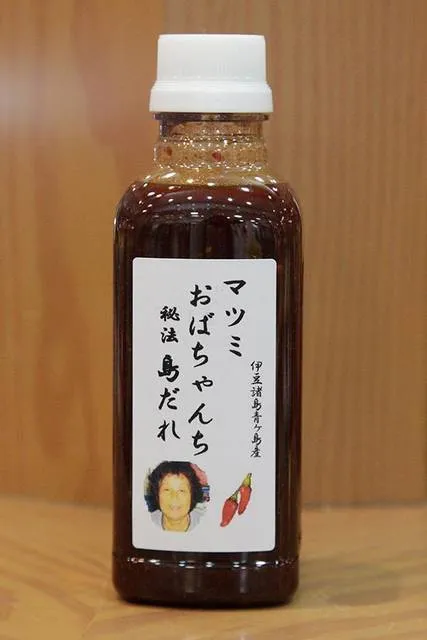 Matsumi-oba-chan Secret Island Sauce: 900 yen (tax included) for a 300 ml bottle (November 27th, 2018. Photo byKayoko Miyazaki ).A soy sauce, brewed miso, chili and ginger based seasoning, which is often used as a dip for sashimi, and very common in Aogashima, where each family has its own recipe for this Island Sauce. The Secret Island Sauce is the commercialized version of the sauce which was originally made by the salesman Mr. Sasaki Hiroshi´s wife (Matsumi-oba-chan) at the Matsumi Manor.
Matsumi-oba-chan passed away about six years ago, but Hiroshi still produces the Secret Sauce following the recipe she left him. According to Mr. Hiroshi, the secret is all about the way the ingredients are mixed together. On top of being used for sashimi (you can add a bit of soy sauce to make it milder), it can be used to prepare a simple soup by mixing it with hot water, and just by adding some green onions you will have a dish good enough to be served on its own. It also comes handy if you want to add a spicy rich note to some of your recipes. Unless you are buying it directly in Aogashima, Tokyo Ai Land has the best deals on this fantastic sauce.
8. Gyo-san
 Gyo-san: available in many different colors, all priced at the same 1000 yen. Adult sizes only (November 27th, 2018. Photo by Kayoko Miyazaki)."Gyo-san" is a word used in the Ogasawara archipelago to refer to fisherman sandals. Originally designed to be used by fishermen on their boats because of the strong grip of their soles, it did not take long for people on the islands to start adopting them as an everyday footwear. They have become a popular item among tourists, too!
They offer great comfort, grip and durability, they are available in many different colors. Over the last few years the sandals were sold on the Izu Islands, but Tokyo Ai Land's store manager says they can get them for you for a better price than anyone else.
From dream-like gourmet experiences to the perfect souvenir
7. Ogasawara Passion Fruit Canned Chu-hai
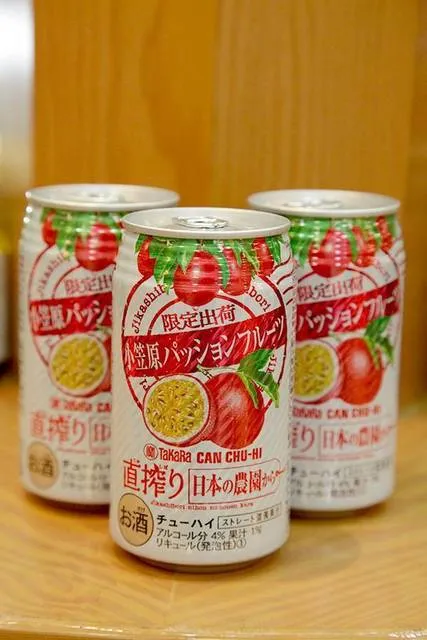 Limited stock Ogasawara Passion Fruit Canned Chu-hai. One 350 ml can is sold for 160 yen (November 27th, 2018. Photo by Kayoko Miyazaki).Here we have a canned chu-hai made with non-filtered fruit juice extracted from passion fruits cultivated in Hahajima. According to the manufacturer, Mr. Takara Shuzo, it is exclusively produced in limited quantities in summer, during the harvest season, and it is only available until depletion of stocks. It packs all the sweet aroma of Hahajima's passion fruits, and its flavor reminds of the hot, blazing sun of the southern islands. It is also a popular drink among women, with just 4% alcohol. Since cans are sold individually, it is perfect for people looking for local souvenirs to bring back home.
6. Kozushima's Specialty: Handmade Salted-spicy Fish With Red Squid
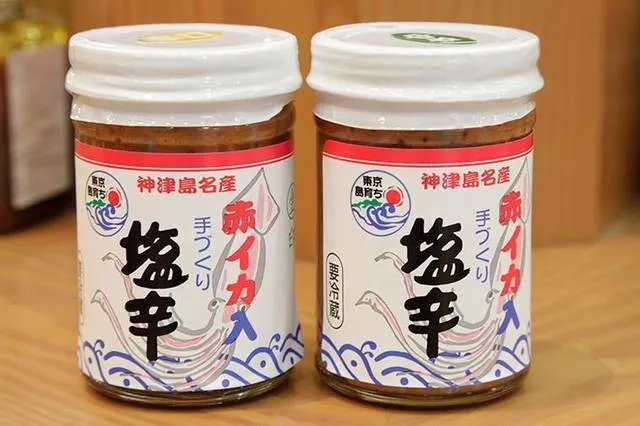 Kozushima's Specialty Handmade Salted-spicy Fish with Red Squid. The sweet, medium spicy and spicy versions is sold for 900 yen, while the super spicy one is 1250 yen, and the the extremely super spicy has a price of 1450 yen for a180 g jar (November 27th, 2018. Photo by Kayoko Miyazaki).
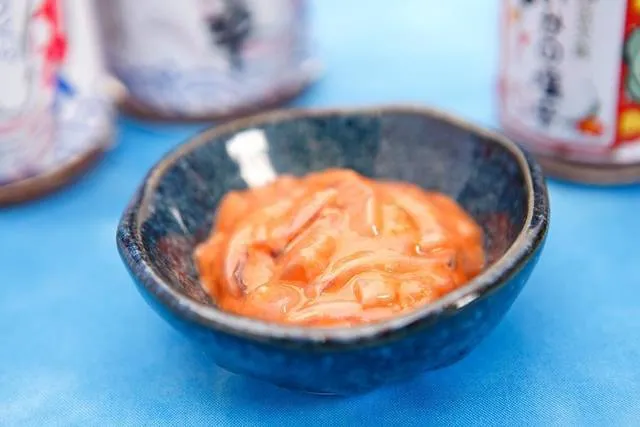 Despite the steady decrease in fish catch around the islands, Kozushima's Special Handmade Salted-spicy Fish with Red Squid is still made of as much local fish as possible. Above is a picture of the product (November 27th, 2018. Photo by Kayoko Miyazaki).This preserved, hand-salted fish, which is popular in the whole country is made of hand-salted fish and a very prized kind of squid, the red squid (kendo squid), commonly referred to as "the king of the squids". According to the manufacturer, Marukin Shouten in Kozushima, great attention is put on selecting ingredients and raw materials: only Rishiri Konbu (Japan's finest kelp) for the soup stock, and sea water from Izu Oshima as a coagulant are used, all according to the traditional methods.
The umami and sweetness typical of the red squid are very easy to recognize, and its rich, thick texture is a perfect pairing for alcoholic drinks. It is delicious with hot white rice, and it will certainly convince you if served on hot, oven baked potatoes.
This preserve can be enjoyed all over the year, but the best period to eat it is from April to May, when the red squids become bigger and juicier. If you happen to be around there in spring, this is your must-buy!
5. ORGANIC Raw Camellia Oil × AROMA MIST KIT
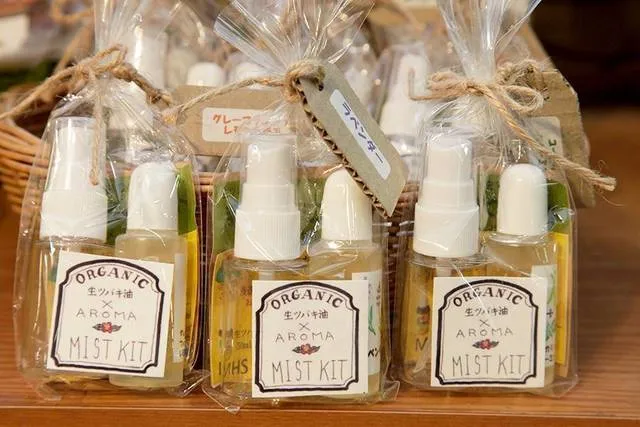 ORGANIC Raw Camellia Oil × AROMA MIST KIT. 500 yen for a 20 ml bottle and a nebulizer (November 27th, 2018. Photo by Kayoko Miyazaki).Izu Oshima has long been famous for its camellia oil production, and their aroma mist kit is the perfect present for women of all ages. The product is available in four distinctive scents, and if you apply it on a disposable surgical mask, just one spray will bring out all the camellia's peculiar scent. Each individual scent has unique attributes, ranging from bactericidal to anti-viral effects. Tokyo Ai Land is the only re-seller outside of the islands and the price is more than affordable with just 500 yen!
4. Oshima Butter
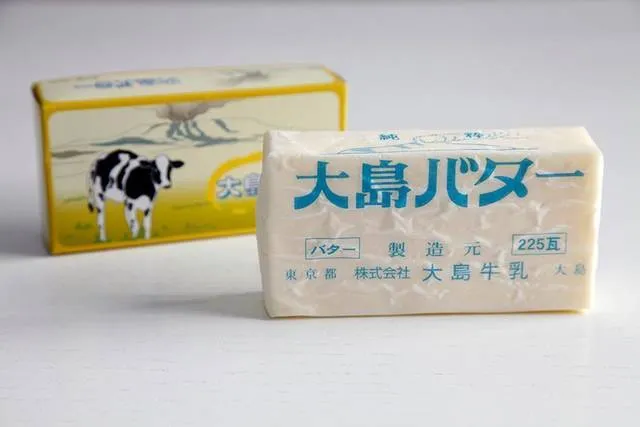 Oshima butter, priced at 1350 yen for 225g. Its old-fashioned packaging will certainly bring out nostalgic feelings (November 27th, 2018. Photo by Kayoko Miyazaki)In Izu Oshima, Holstein cattle breeding has been thriving for a long time, and in its peak period (around 1925), more than 1200 cows were raised on the island. Oshima milk and Oshima butter made from local cows are some of the island's most special and appreciated products. The production of butter is very limited, since it all comes from Oshima's surplus milk, and it cannot be purchased via mail order. It is important to keep in mind that to produce 1 pack of butter you need 6 whole liters of milk! It is a 100% hand-made, aromatic butter, very rich in minerals and prepared exclusively using salt extracted from Oshima's seawater.
Under The Spotlight: Rare Items From The Ogasawara Islands
3. AO-CHU (Shochu)
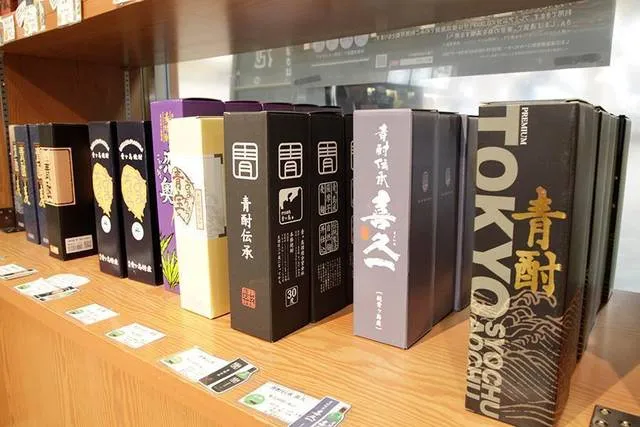 AO-CHU, or Aogashima produced Shochu. The price depends on the liquor choice, with 2000 yen as an average for the more mainstream oriented products (November 27th, 2018. Photo by Kayoko Miyazaki).Aogashima is a solitary island, far away from the coastal area. Surrounded by cliffs, its impervious bay is the main cause of an impressive (40 to 50%) cancellation rate for ships directed there. While helicopter flights have a much lower cancellation rate (10 to 20%), it is still difficult to get a seat because of both the limited number of seats which are available and because Aogashima is right in front of Oshima, and vessels going there are often fully booked. Therefore, there is no other choice than to plan if you want to go to Aogashima, and many people cannot go there despite their best intentions.
The village does not have more than 160 inhabitants, but among them there are ten chief brewers, and all of them are independently brewing Shochu. Their products are generally labelled as AO-CHU (Shochu), but the taste of each one of them is unique and bound to the individual brewer's choices and techniques.
The main reason behind the presence of so many brewers in Aogashima is that until the taxation laws on alcoholic products changed, it was very common to brew liquors at one's home. Since the liquor was 100% home-brewed, scaling towards mass production was pretty much impossible, and the consumption of the product was essentially limited to the islands themselves. The quantities available for purchase outside of the islands were so small that it literally gained a legendary status. Despite its limited availability, it is currently possible to purchase liquor via mail order. Tokyo Ai Land has an abundant line-up of AO-CHU: it also offers several liquors that are not available through the mail order system because of their very limited production, such as the Kikuichi and the Ao-chu Denshou.
2. Miyakejima's "Tomorrow Leaves" (Ashitaba)
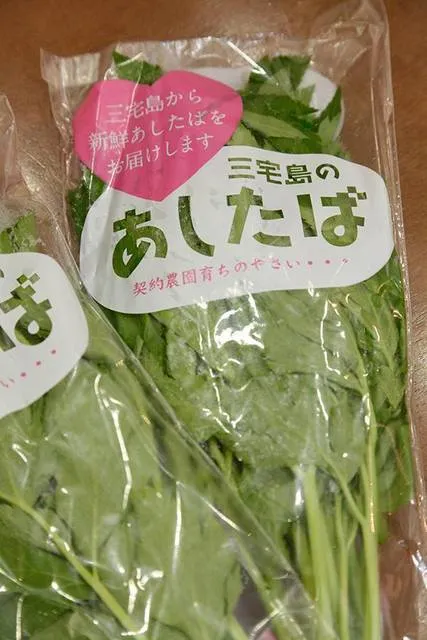 Tomorrow leaves from Miyakejima can be purchased for about 250 yen. The main season is in January and February (November 27th, 2018. Photo by Kayoko Miyazaki).A very strong, vital plant, which has earned its curious name out of the idea that "even if it is picked today, it will grow again by tomorrow". It has very high nutritional values, and it is often served freshly to travelers crossing the Izu Islands. When used for tempura it has a wonderful crispy texture, and its distinctively bitter note gives it a delicious additional flavor. It also tasted well combined with alcoholic drinks and it can either be enjoyed boiled and garnished with soy sauce, or in a vegetable stir-fry. According to the Tokyo Ai Land store manager, Tomorrow leaves from Miyakejima have a unique softness compared to the ones produced in other areas, and they can be used for several different recipes. The main season is from January to February, so if you have a chance, try them out in this period.
1. Ogasawara Islands Lemons
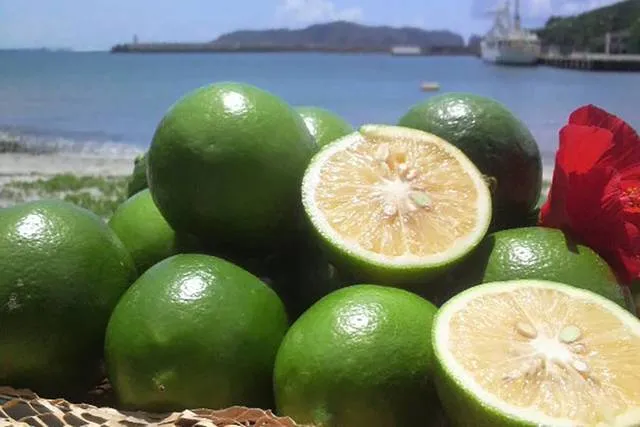 "Island lemons" from Hahajima in the Ogasawara Islands. Hahajima is located about 50 km south of Chichijima (Photo bythe Ogasawara Village Tourism Bureau).A special product of the Ogasawara Islands, is only available from September to October. Even in this period it might be hard to find it in shops, as it is transported from the Ogasawara Islands through a naval freight service that only operates one day out of six.
The origins of this fruit date back to 1973, when the first seedlings were brought to Chichijima, in the Ogasawara Islands, directly from from Hachijojima. It is currently cultivated both in Chichijima and Hahajima. The lemons currently sold in shops are the ones from Hahajima. Its distinctive features are a mild and not so sour flavor, a very thin skin, and a luscious juiciness. It is a delicious lemon that can be eaten as any other citrus, and people having a chance to buy them are lucky.
On top of the 10 items we listed above, when visiting Tokyo Ai Land, you will be able to find many other items that are absolutely representative of the Izu Islands. Places like this, where you can find such a collection of items from all the nearby islands are very rare, even in Japan. Don't be shy and peek at the shop when you pass through the Takeshiba Passenger Terminal while looking forward to the fresh air of the islands.● Antenna Shop Tokyo love Land
· Address: 1-12-2 Coast, Minato-ku, Tokyo Takeshiba Passage Terminal
· Opening Hours: 09: 00 ~ 22: 30 ※ If there is a departure of a large ship, the shop stays open until 23:00
· How to get there: About 1 minute from the Yorikamome Takeshiba station east exit; about 7 minutes on foot from the B2 exit of any of the Toei Subway Daimon station lines; about 7 minutes on foot from the JR Hamamatsucho Station
· Contacts: Phone: 03-5472-6559 (Tokyo Ai Land) FAX: 03-5472-6547 (Tokyo Shimosho Public Corporation)
※ Some of the items above can be purchased at the "Tokyo Ai Land Market" via mail order. For additional details, please contact the numbers above.
- All the information in the article has been last checked in December 2018.Address: Takashiba Passenger sip terminal 1-12-2 Wangan, Minato-ku, Tokyo 105-0022
Access:
JR Yamanote Line: 7 minutes walk from "Hamamatsucho Station" North Exit
Toei subway: 7 minutes on foot from "Daimon Station" Exit B2 of Toei Subway (Asakusa Line, Oedo Line)
Yurikamome (Tokyo Monorail):
1 minute walk from "Takeshiba Station" east exit
TEL: 81-3-5472-6559
Open Hour: 9:00AM〜10:30PM
Supervision
 Provision of Article
URBAN LIFE METRO
ーーーーーーーーーーーーーーー
Tokyo Metro Co., Ltd.
3-19-6, Higashi-ueno, Taito-ku, Tokyo
TEL:+81 FAX:+81 E-mail:
ーーーーーーーーーーーーーーー
© urban life metro 2018