content: Sasa-Harai is an annual cleaning ritual carried out in shrines. Using specially made bamboo tools, this ritual is also meant to purify the shrine’s sacred areas.
Summary
Susu-Harai is an annual cleaning ritual carried out in shrines. Using specially made bamboo tools, this ritual is also meant to purify the shrine’s sacred areas.
Shrines are structures that are the primary locations used to worship the Gods of the Shinto religion. If you are planning to travel to Japan, visiting shrines, especially during event seasons, is highly recommended. At the end of the year, priests and maidens of shrines carry out Susu-Harai. This is a cleaning event of the shrine, but it is also a ritual and has the purpose of purifying the sacred boundaries of the shrine.
View on FacebookWhat Are Shrines?
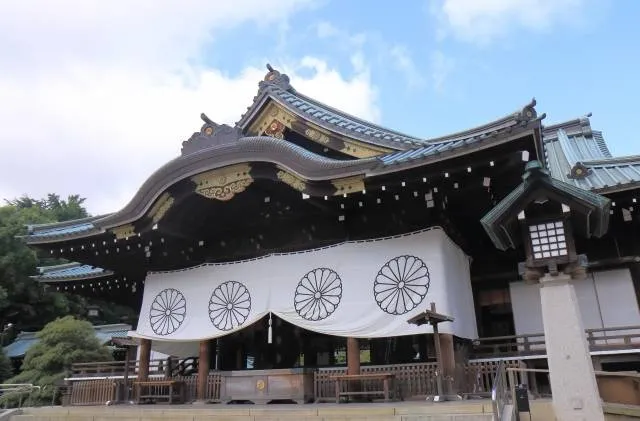 A Shrine is a general term used to describe a building that is used as a place to worship the many gods of Shinto, a religion indigenous to Japan. The area of a shrine is limited to that which is inside the torii ( Japanese traditional arch), and is regarded as a sacred area. All throughout Japan, there are around 85 thousand shrines. If the small shrines that are not registered are add to this number, there are over 100 thousand shrines that can be found throughout the country. There are many similar structures that are built in and comprise most shrines: the torii, honden (main shrine), chouzuya (a pool of water for purifying hands), saisenbako (a box to throw in money), and suzunoo (a ringing bell tied to a thick rope).
Special Events Held In Shrines
If you are planning to visit a shrine, it would be more interesting to visit when shrines are holding events. A special atmosphere is created and compliments to the already spiritual location. You will be able to experience things that you never expect to do in normal life! Listed below are some major events that most shrines hold in common.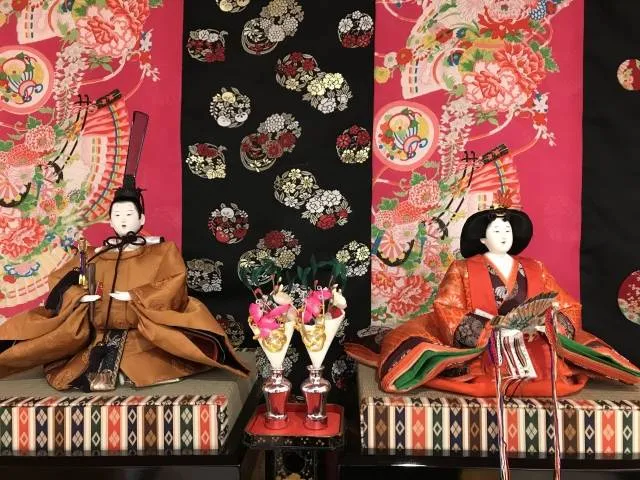 Spring Events
・Hinamatsuri(Girls’ festival): Hina dolls, resembling the ancient emperors and empress’
are displayed on stair-type stands. [March 3]
・Tango (Boys’ festival): In contrast to hinamatsuri, boys’ festival is celebrated with warrior dolls,
and koinobori, tall carp-shaped kites. [ May 5]
For both events, special food is eaten to celebrate Children’s Day in Japan.
 Summer Events
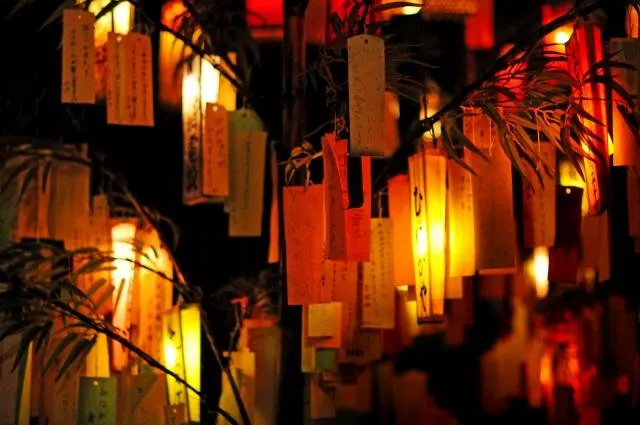
・Tanabata (star festival): Bamboo trees are cut and brought into the sanctuary, and decorated with colorful Japanese paper. Visitors write their own wishes to pray for happiness and love and attach them to the cut bamboo. [July 7]
・Obon (honor of ancestors’ spirits): For four days starting from August 13, according to Buddhist custom, ancestors’ spirits return to theirhomes. A shelf for offering food to them is set in the shrines, as well as welcome fires or lanterns.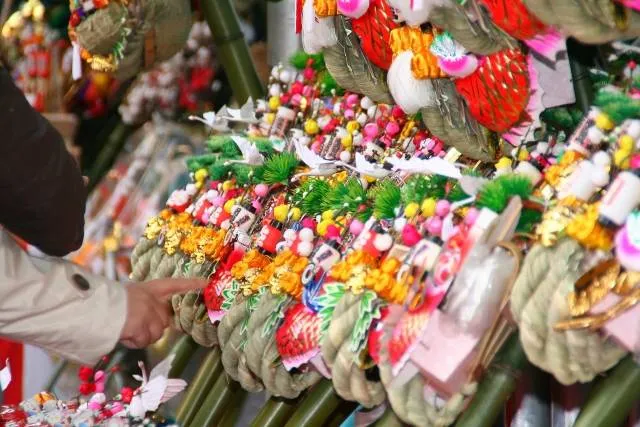 Autumn Events
・Jugoya : Japanese pampas grass stands in shrines, and rice dumplings and taro are offered to God, as people enjoy moon viewing. [Evening of August 15, according to the lunar calendar.]
・Torinoichi: A festival for shrines associated with hawks and birds, mainly held in the Kanto region. A great number of stalls are lined up along the street. The charms, Engi-kumade (traditional decorated rakes) are its specialty, and the cheerful hand-clapping of the sellers livens it up. [ November on the day of the Tori (Rooster)]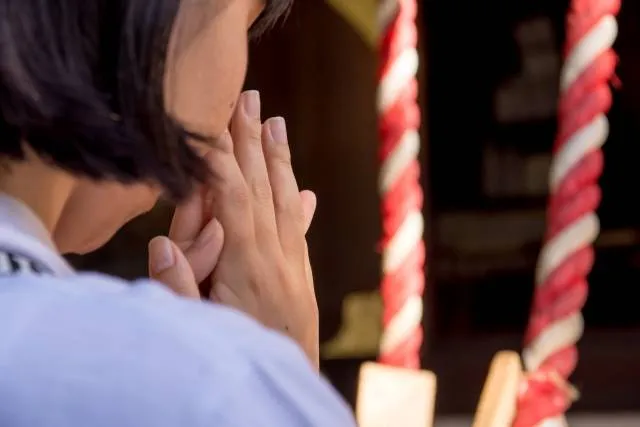 Winter Events
・Oomisoka : At the end of the year, harai (chanting) is done by the Shinto priest to purify the sins of the attendees. The chanting removes all impurity and transfers them to the paper dolls, which are burned and rinsed in water.
・Hatsumode : One of the most famous events held in shrines. People line up to pray to God for a new happy year. Omikuji (fortune papers) a slip of paper that that tells you of your fortune for the year to come, is sold in most shrines.
These are just a few of the many annual events held in shrines. Depending on the region, some events schedule differs.
The Once-In-A-Year Susu-Harai, Is An Important Shrine Event
The word Susu-harai may not be familiar to most foreigners, but it is an important annual event held in almost every shrine in Japan.
Susu-harai, meaning dust cleaning, is done once a year in and outside of homes. Mostly held on December 13, which is close to New Years, Japanese people take this opportunity to clean their homes thoroughly. The same custom remains is also observed shrines, and with the added meaning of purification, has become a year-end tradition. On the same day, some regions cut down pine trees for New Year’s decoration.
You can also see the special traditional clothing of the workers in the shrine during this event. Shito priests wear different colored garments depending on their ranks, whereas miko, female assistants of the Shinto priest, move around in red and white.Susu-Harai Procedure
Cleaning begins with the main Shinto alter, and continues to the kitchen, then the other rooms.
Tools used for cleaning are kept until Koshogatsu (January 15) to burn at the fire festival.
When Susu-harai is completed, some customs hold a Susu-harai celebration to eat rice cakes and dumplings. These procedures help to lift one’s spirits and to welcome the God of the incoming year and look forward to a fresh New Year.
Susu-Harai’s Special Tools And History
Cleaning tools are made specifically for this event.They are made from newly cut bamboo. Leaves and straw are tied to the ends of the Bamboo, each being about 5 yards in length. Some regions call it Kiyome-dake, meaning “purifying bamboo”, meaning that the special tools can be used not only for cleaning but purification.
Susu-harai is said to have started from the Heian Era at the imperial court. Following the Kamakura Era, when cleaning became a Zen Buddhism practice, Susu-harai spread to shrines and temples all over Japan.
In Otogi Zoshi, a classic Japanese tale, drawings show the tools that were used being thrown away at year’s end. Descriptions following the drawings explained, “Tools that are used for more than 100 years transform into tsukumo-gami , an evil spirit .” This is the reason why only new tools are used for Susu-harai.
Worshiping Etiquette At Shrines
 Rituals performed at spiritual places like shrines often come with set rules regarding etiquette. The main parts to this ritual include going through the Torii, washing your hands at the Chouzuya, and the actual worshiping at the main shrine.
How To Go Through A Torii-Entering The Sacred Area
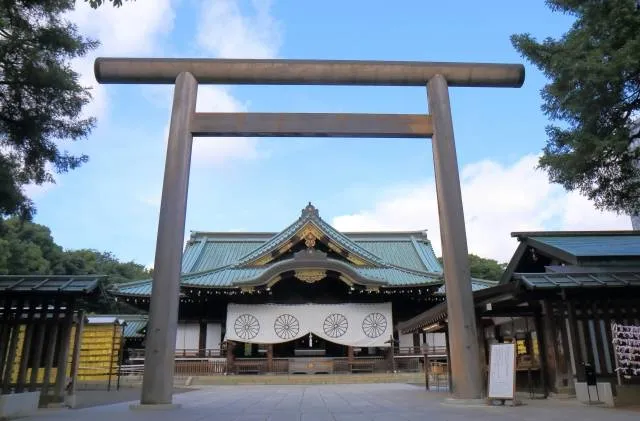
Torii is known as the dividing line between the sacred area and society. Bow once with respect before walking through, as if you are visiting someone you look up to. In Shinto religion, left means God, and right means people. So, to put God first, it is best to start off on your left foot. Also, take care to stay on the left side of the Torii. There are a few reasons for these beliefs, but the most popular theory is that the center of Sandou (entrance path) belongs to the God. Therefore, it is polite to keep to the left to avoid getting in the God’s way. 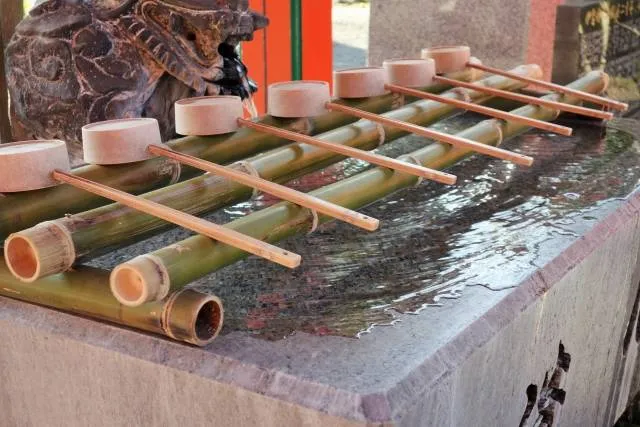 How To Use Chouzuya
The objective of using Chozuya is to wash off all of one’s kegare (impurities) in preparation for worship.
- Rinse your left hand using the hishaku (bamboo ladle) held with your right.
- Change hands and repeat process.
- Return the hishaku to your right hand, pour some water into your left hand. Bring the water to your mouth and rinse.
- Wash the left hand again, the hand that has touched your mouth.
- To finish, wash off the handle of the hishaku by cleaning it with the water left in the ladle.
Worship Procedure
Start with a small bow in front of the Saisenbako (coin box). As proof of sincerity to the God, throw in some change. (Japanese people often donate 5yen coins because they are a homophone to fate, or good fortune) Then, do the following:
- Bow deeply 2 times
- Hands together breast-high, clap 2 times.
- Give prayer sincerely, whilst you hold hands together.
- Lower your hands, bow deeply one last time.
It is useful to know these procedures beforehand, so that you can move smartly and smoothly around the boundaries and show deep respect to the Gods at shrines.
Information
Kushida Shrine ●Access: Take the train from Tokyo Station, and exchange at Kisarazu Station and head for Gion Station. Kushida Shrine is 5 min by foot from there. ●Address: 1-41, Kamikawabatamachi, Hakata-ku Fukuoka-shi, Fukuoka, 812-0026, Japan ●Admission Fees: Free ●Open hours: AM4:00〜PM10:00 ### Reference Listhttps://en-park.net/words/7880
http://kamatahachiman.org/oyashiro/gyoji.html
https://www.jinjahoncho.or.jp/omatsuri/katei/susuharai
https://www.crossroadfukuoka.jp/event/?mode=detail&isSpot=1&id=4000000000369