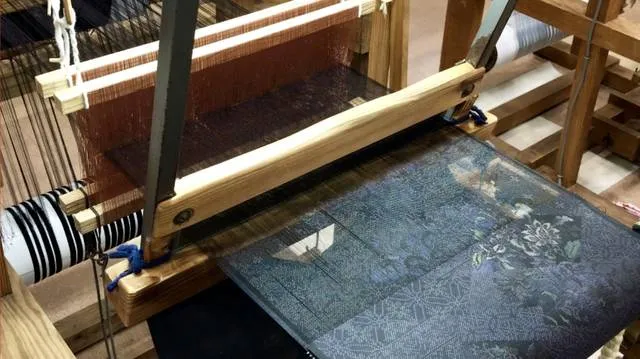
content: The unique silk called Oshima Tsumugi is one of the greatest textiles in the world. It was discovered on a small island in Kagoshima Prefecture in 1878 and continues to be a leading textile for kimono even to this day. The weaving technique is used at Amami no Sato “The Home of Amami” where you can watch the weavers, take a weaving class, walk through a beautiful garden and eat lunch at one of its two restaurants. You can easily enjoy the entire day at this weaving facility.
Summary
The unique silk called Oshima Tsumugi is one of the greatest textiles in the world. It was discovered on a small island in Kagoshima Prefecture in 1878 and continues to be a leading textile for kimono even to this day. The weaving technique is used at Amami no Sato “The Home of Amami” where you can watch the weavers, take a weaving class, walk through a beautiful garden and eat lunch at one of its two restaurants. You can easily enjoy the entire day at this weaving facility.
History of Oshima Tsumugi
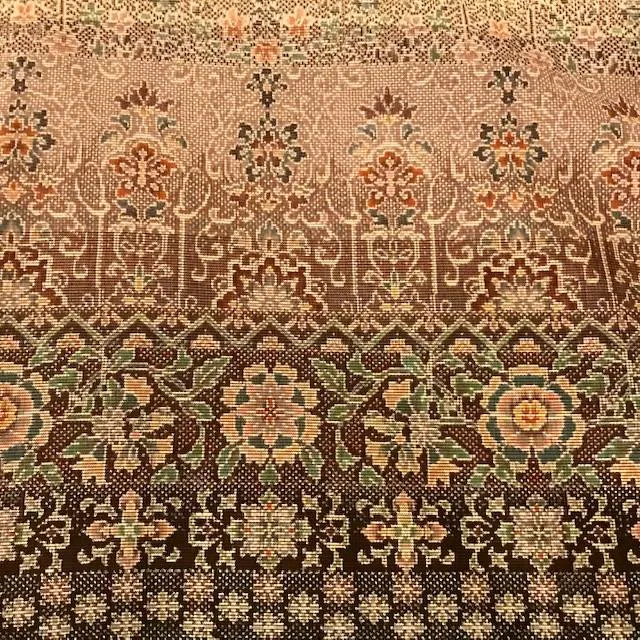 Let me introduce to you one of the top three greatest textiles in the world, Authentic Amami Oshima Tsumugi. This unique form of silk pongee originated on Amami Island in Kagoshima Prefecture about 1,300 years ago. Pongee is a thin, soft fabric woven from raw silk which produces a soft fabric that is difficult to wrinkle.
The history of Oshima Tsumugi dates back to the Yayoi Period (ca. 300 BC-ca. AD 300). This indicates that the people in the Amami Islands have been weaving for a very long time. In the beginning, Oshima Tsumugi was woven with hand spun and hand dyed threads. Here is an interesting fact. All of the Tsumugi were not worn by the general people because the islanders were prohibited from wearing silk clothing. So, what was this unique silk used for? It was woven for the sole purpose of paying taxes to the feudal government.
How Oshima Tsumugi was discovered
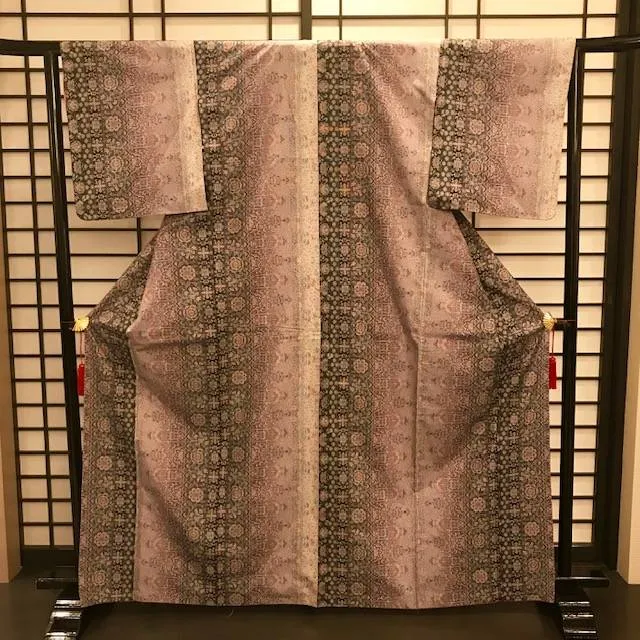
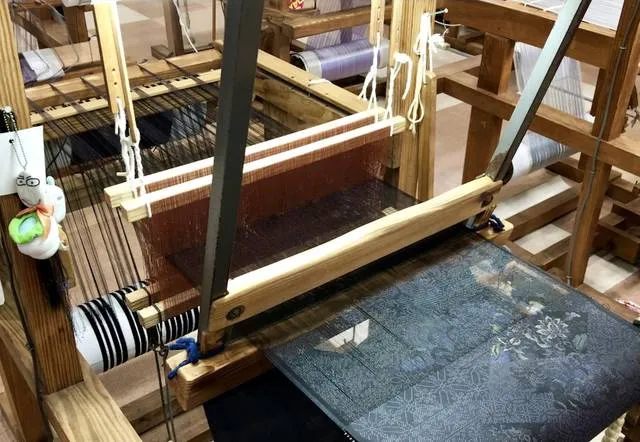 It’s of interest to note how Oshima Tsumugi was discovered. In 1878, a village housewife was doing her washing in a nearby rice paddy. By chance she noticed that the reddish-brown dyed cloth changed to gray while dipping it into the naturally iron-rich, muddy water. This is called Doro(mud) Zome(dyeing). From beginning to end, the dyeing procedure goes through 20 processes. Each plain weave textile has a unique and detailed graphical pattern made of over a million dots dyed onto each single silk thread before they are set onto the loom. It takes between 6 to 12 months for the finished product. So, how much does a kimono cost? The cheapest kimono are \400,000 (about $3,600) and the most expensive kimono are priced at \1,500,000 (about $13,400)
Meet Ms. Hayashi
 Just outside of Kagoshima City there is place called Amami No Sato “The Home of Amami” where this traditional weaving continues to this day. When I visited, I had the pleasure of meeting Ms. Hayashi. She had an interesting story to tell about how she got involved in weaving.
She was born on Amami Island and immersed in Oshima Tsumugi as a small child. Both her parents and her grandmother were in the Oshima Tsumugi textile business so from a young age she would watch how to weave. Even before her feet could reach the pedals of the loom she would get left over scraps of thread from her mom and practice weaving. This may be the best way to learn the weaving technique because it takes about 10 years of practice before you can produce something worthy of selling.
How Oshima Tsumugi is used
 Nowadays, kimonos are mostly reserved for special occasions, for instance wedding ceremonies, graduation ceremonies and Coming of Age Day. Some creative people have started making more practical goods from Oshima Tsumugi such as dresses, vests, stoles, handbags and wallets. All of these things can be purchased in the gift shop at Amami No Sato.
At Amami No Sato, not only can you enjoy watching the weavers and learn about this traditional craft, you can also give it a try. A 90 minute class is only \3,540 and you can take home what you make. It’s a perfect souvenir as a reminder of your stay in Kagoshima.
More to enjoy!
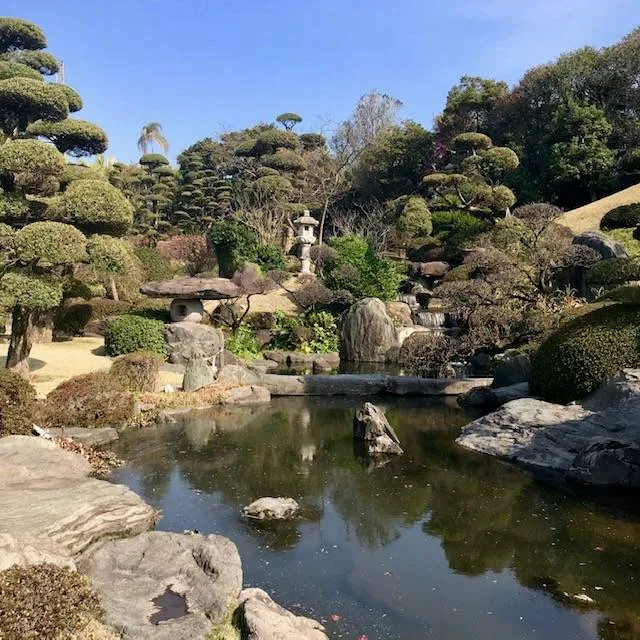
But, don’t end your visit to Amami no Sato with only weaving. There is also a traditional garden based on the gardens grown on Amami Island. As you walk through the garden there are explanations on the dyeing process. It’s also a great place to take photos with red coloured bridges, beautifully manicured trees and carp filled ponds. And if you are feeling a little hungry at the end of your Amami adventure I would highly recommend eating at one of the two restaurants. The restaurant serves keihan which is a rice based dish that is native to Amami Oshima. And best of all, the prices are very reasonable. Be sure to add this location to your list of places to visit while in Kagoshima.
Information
Access Kagoshima is only two hours by plane from Tokyo. Check out the LCCs for cheap airfare. From the airport take the limousine bus to Central station (about 50 minutes) Take the bus that heads towards Ibusuki and walk about 500 meters.Address
Amami no Sato
1-8-1 Nanei
Phone Number
099-268-0331