Urushi is a beautiful type of Japanese Lacquer art dating back to 300 BC and prized by European royalty since the 16th century. Urushi is made all over Japan, but the Urushi from Fukuoka is particularly famous.
Summary
Urushi is a type of Japanese lacquer ware dating back to 300 BC. With over 10 steps involved in the production, it can take up to 3 to 4 months to complete one piece! The Urushi produced in Fukuoka is especially prized for its high quality. The time and attention to detail that goes into producing every single piece of Urushi lacquerware really shows in the undeniable beauty of this type of art. Why not visit one of the best Urushi studios when you visit Fukuoka?
How is Urushi Lacquerware Produced?
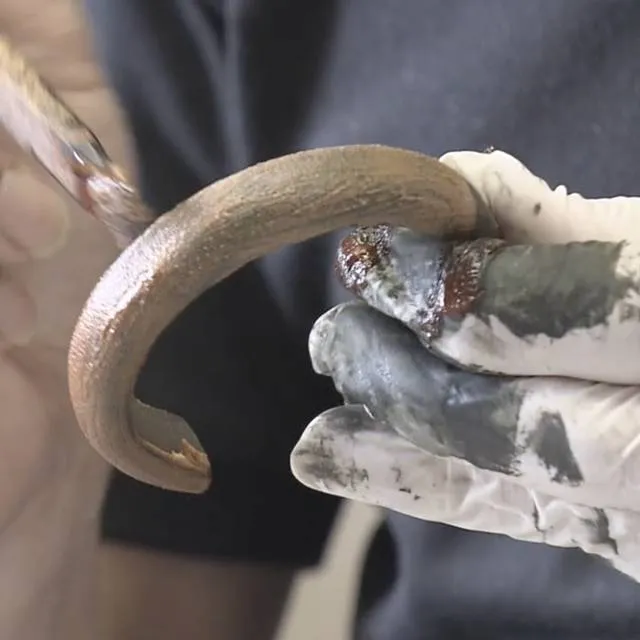
Urushi lacquer is produced from the Asian lacquer tree, the sap from which has the same allergenic compounds as found in poison ivy! Cuts are made into the bark of the tree where the lacquer seeps out and then this is collected, the sap is then filtered several times through layers of special paper. To make sure this has no effect on humans, the treatment process for it is a long one after which a color dye is added. Then the mold for the item to be lacquered is coated with several layers of the urushi lacquer leaving the piece to dry in between each coat. Interestingly, traditional urushi brushes used to be made from human hair! This is not so common these days, however you will find different kinds of animal hair used including sheep, minks, and even mice.
Unfortunately, since the Second World War, domestic production of the raw lacquer has declined due to cheaper substitutes such as plastics and chemical based paints becoming available and cheap lacquer from overseas. Currently only 3% of lacquer used in Japan is produced domestically. Lacquer can be used as paint, adhesive and reinforcing material and to protect domestic producers the Agency for Cultural Affairs has made it a rule that preservation or repair work to buildings or items designated as culturally important national treasures must be done with Japanese lacquer.
Unfortunately, since the Second World War, domestic production of the raw lacquer has declined due to cheaper substitutes such as plastics and chemical based paints becoming available and cheap lacquer from overseas. Currently only 3% of lacquer used in Japan is produced domestically. Lacquer can be used as paint, adhesive and reinforcing material and to protect domestic producers the Agency for Cultural Affairs has made it a rule that preservation or repair work to buildings or items designated as culturally important national treasures must be done with Japanese lacquer.
Popularity of Japanese Lacquerware
Whilst techniques to create lacquerware also existed in China, discovery of lacquered ornaments dating from the Jomon Period (14,000 – 300 BC) provides evidence that lacquer craft also independently emerged in Japan. Urushi was highly prized by Europeans in the 16th century. In fact, the Queen of King Louis XVI of France, Marie Antoinette, was a huge fan of lacquerware. It seems she was influenced by her mother, the Empress Maria Theresia of Austria who even said “I’m a lacquerware person more than a diamond one,” having set up the “Chamber of Lacquerware” in her Vienna palace. Marie Antoinette inherited about 50 pieces of the lacquerware from her mother and acquired more pieces herself to create the greatest lacquerware collection in Europe.
The popularity of Japanese lacquerware even led to the coinage of the 17th-century term "japanning" which refers to techniques used to create pieces that imitate Japanese lacquerware. However, as the Urushi tree did not grow in Europe, a mixture of resin such as linseed oil and copper oil with black colored powder was used as a substitution. Of course, the texture, color, durability of this lacquer did not reach that of genuine Urushi.
The popularity of Japanese lacquerware even led to the coinage of the 17th-century term "japanning" which refers to techniques used to create pieces that imitate Japanese lacquerware. However, as the Urushi tree did not grow in Europe, a mixture of resin such as linseed oil and copper oil with black colored powder was used as a substitution. Of course, the texture, color, durability of this lacquer did not reach that of genuine Urushi.
Unique Properties of Urushi
As the urushi lacquer hardens, it absorbs moisture from the air. This makes the lacquerware perpetually shiny and slick looking. It also makes it very durable and able to withstand erosion from water, acids, alkalies, alcohol, and changes in temperature.
Before it was used as a lacquer, urushi was used to mount the tips of spears as it is a strong and durable adhesive. People later discovered that this very adhesiveness had another use – decoration, and from then urushi became a true artform as is shown by the beautiful urushi pieces in many art shops in Fukuoka.
The creation of urushi pieces takes a lot of time and skill, and this dedication can be seen in the quality of the final product. In fact, traditional urushi lacquer ware is so durable and of such high quality that pieces hundreds of years old retain their glossy luster even today! Urushi pieces are symbols of patience and resilience, two terms often associated with the Japanese themselves. Seeing a real urushi piece is something quite special, as in any pieces you can see the time and effort that went into creating it. If you can visit an urushi studio while you are in Japan, it will definitely be an experience you will never forget!
Take a Tour at an Urushi Studio in Fukuoka
Now that you know the basic knowledge of urushi, why don’t you pay a visit to a studio of one of the finest urushi craftsmen in Fukuoka? Manufacturing of urushi lacquerware is especially famous in Kurume City in Fukuoka Prefecture on Japan’s Kyushu Island. When samurai swordsmen were dismissed from their services due to the Meiji restoration around 1850s – 1860s, they sought new occupations and many ex-samurai in Kurume City were believed to have started careers as urushi lacquer craftsmen!
“Inoue Rantai Shikki” is a small urushi studio located in Kurume City in Fukuoka. Urushi meister Masamichi Inoue is the 3rd generation to inherit the impeccable quality and dedication to fine lacquer ware of the Inoue Family. His great grandfather, Kumakichi Inoue, had the huge honor to create the folding screen which was presented at the enthronement of the Emperor Hirohito. Urushi lacquerware manufactured at Inoue Rantai Shikki are largely made of thin interwoven bamboostrips procured in the local mountains. Then they are covered in the beautiful silky urushi lacquer. The whole process from the cutting of thin strips of bamboo to applying urushi lacquer is all performed at this studio. Their extraordinary collection ranges from baskets, trays, tea ware and chopsticks to beautiful furniture!
In Fukuoka, there are only a few craftsmen left who have this high level of traditional technique and deep knowledge of urushi lacquer ware. Mr. Inoue opens up his studio to the public to educate more people about this local specialty and to give more people access to genuine urushi lacquerware. They welcome you to visit the studio to see the whole process. It will take about 20 minutes and is free of charge. You can request a studio viewing by phone. This is one rare chance you cannot miss to witness the traditional technique of urushi lacquer ware production in Japan!
Information
From Tokyo to Fukuoka
It takes about 75 – 120 minutes by plane from Narita or Haneda Airport in Tokyo to Fukuoka Airport.
“Inoue Rantai Sikki” Urushi Lacquer Studio
By walking: 20-minute walk from JR Kurume Station
By taxi: 5-minute ride from JR Kurume Station
Address: 6-23 Kogashiracho, Kurume, Fukuoka 830-0045
Tel:+81 942-39-5454
Business hours: 9:00 – 17:00 (closed on weekends and national holidays)
Website: http://inouerantai.jp/