There’s a new tour of Asakusa in Tokyo and it focuses onJapanese sweets called “Wagashi”. If you would like to get atraditional taste of the authentic Japanese Wagashi sweets,this tour will leave both you and your sweet tooth satisfied.Visitors will be walking around and learning about thefamous Asakusa district, Nakamise shopping street, visitingJapanese sweets cafes and Wagashi stores, as well asSensoji Temple.
Summary
 There’s a new tour of Asakusa in Tokyo and it focuses on Japanese sweets called “Wagashi”. If you would like to get a traditional taste of the authentic Japanese Wagashi sweets, this tour will leave both you and your sweet tooth satisfied. Visitors will be walking around and learning about the famous Asakusa district, Nakamise shopping street, visiting Japanese sweets cafes and Wagashi stores, as well as Sensoji Temple. As a plus they can also learn about the history of the most famous Japanese sweet stores in Tokyo, Sensoji Temple, how to visit it and more.
“Traditional Japanese Sweets - Walking Tour in Asakusa”
I have a sweet tooth that is terrible to tame, so I decided this time to book a tour over the WOW U homepage, that looked like it might be able to satisfy my love for everything sweet and tasty. Mr Endo, the tour guide, offers to show you around some of Tokyo’s most famous and popular sweet shops and cafes; he gives visitors four options, of which they can choose two. This time I felt like a surprise, so I let him pick the location and eagerly awaited the start of my journey through “Japanese sweets wonderland”.
Meeting Today’s Guide
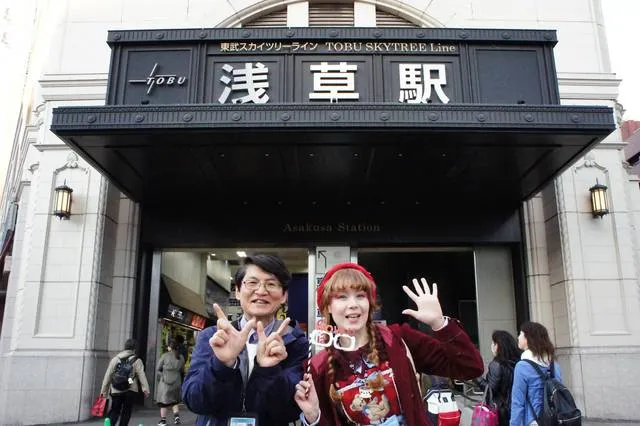
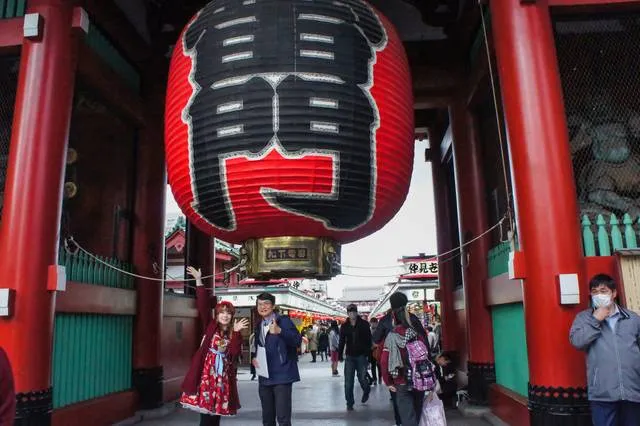
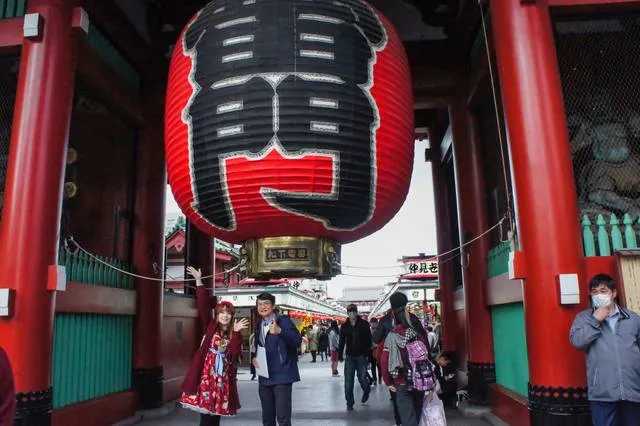
 Mr Endo suggested to meet under the famous red “Kaminarimon”, which translates as “Thunder Gate”. From Asakusa station to Kaminarimon it’s just a few meters and there are also signs with the Kaminarimon displayed in some locations around the station to guide visitors into the right direction. Even if you should miss the signs, you can not miss the amount of tourists streaming into the direction of the gate. It is one of the most popular picture spots for tourists, and a must-visit spot if you’re coming to Tokyo. If you follow the crowds, you will get there in no time. I arrived and mingled with the other tourists taking pictures and selfies and Mr Endo spotted me straight away. On that point I can recommend you use a profile picture on the WOW U registration page with your face on, so you can be found easier in the masses of visitors.
UMEZONO
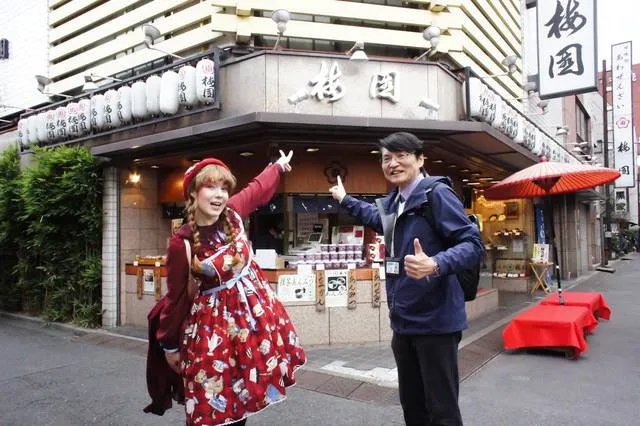 We entered Nakamise shopping street, which is a straight road from Kaminarimon to the famous Sensoji Temple. My guide told me about the many souvenir stores. According to him, this is one of the best places to buy gifts for back home. We left the busy street to turn into a side street to find our first cafe of the day: Umezono.
Mr Endo had prepared some papers to explain more about Japanese sweets. According to him, Umezono has been serving their trademark dish “Awazenzai” since 1854. Upon entering it turned out my guide had made a reservation in advance which led to a smooth visit, without having to wait in line. The cafe’s staff came to tell us more about the history behind Awazenzai. It used to be a food consumed by pilgrims who came to visit Temples. A few moments later our very own portion of Awazenzai arrived and I was eager to try this famous dish. 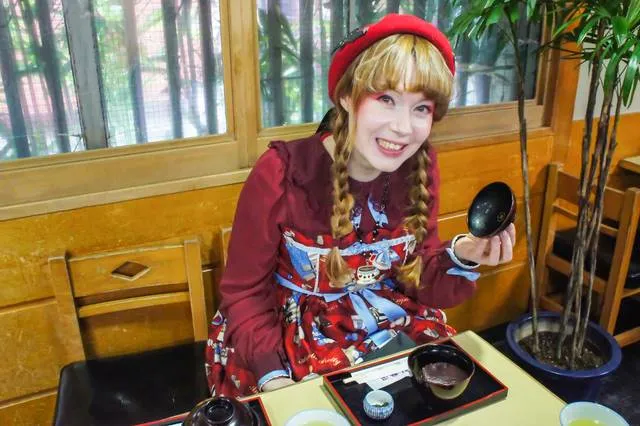 Awazenzai is served in a lacquered bowl, not larger than a bowl of Miso soup. Looking like yellow milk pudding, soft warm rice cake builds the foundation of the dish. It is made of “proso millet” according to Mr Endo. The rice is steamed and served hot. A thick layer of red bean paste covers the top of it. It is a dish that is best served warm, but the staff said take away options are also available. If you enjoy red bean taste, you will get mouth-fulls of it together with the aroma of the steamed warm rice. According to the staff, the balance of sugar, water and red beans is different in every wagashi sweets store across Japan and thus they all have their own original tastes. Rice and red bean are the basic key elements to Japanese Wagashi, so don’t miss out on giving them a try.
To balance the strong sweet taste, the store gives pickled shiso seeds and free refills of green tea. It’s a very filling dish, so I can recommend to leave some space in your stomach before moving on. 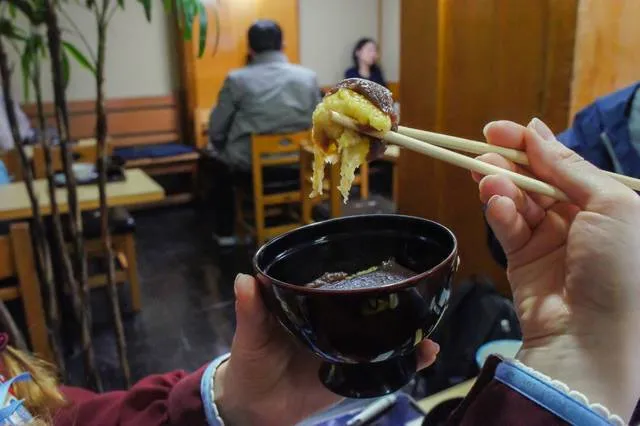
FUNAWA
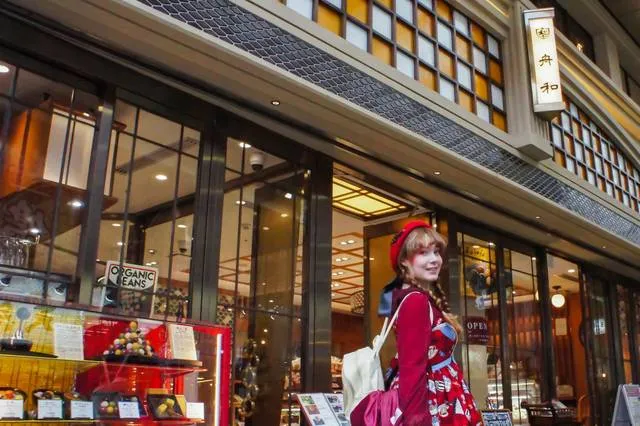 Next stop on our sweets tour was the cafe Funawa. The interior almost looks like a European cafe, with glass chandeliers on the ceiling and comfortable armchairs. What even many Japanese people don’t know: according to Mr Endo, Funawa are the inventors of the original Mitsuame, a very famous Japanese wagashi dish. Mitsuame consists of small jelly cubes, made of agar. They look like little glass cubes in a delicate dish. The topping could be compared to a small fruits salad, with pineapples, apricots and red bean in its original form.
I grabbed a spoonful but when I stuck it into my mouth I was surprised about the lack of flavor. Mr Endo laughed and pointed to the small pot besides my dish. Liquid brown sugar is always served with this dish. It binds all the elements in Anmitsu together to turn it into a sweet dessert with an interesting sensation, as the soft cubes break gently apart in your mouth. There is also a sugared “gyuhi” rice cake on top. The natural red bean is a bit of a surprise, as it tastes a little salty. Yet, it’s that saltiness which works well in connection to all the other items in the Mitsuame. You will have to try out and see for yourself.  If you are less adventurous, Funawa is also famous for Imoyoukan. They are made out of sweet potatoes and have the consistency of rich cheesecake. These little cube sized cakes feel like you’re having a creamy, sweet bite of the sugary part of a high class sweet potato.
They also serve the colorful “Ankodama” which are also wrapped in agar, which makes them look like large shiny marbles. If you prefer a more subtle red bean flavor, I can recommend you these. They come in 6 flavors and they are not too sweet either.
My tip if you don’t want to miss either, is to eat Mitsuame fresh here, but take the Imoyoukan or the Ankodama home.
Sensoji Temple
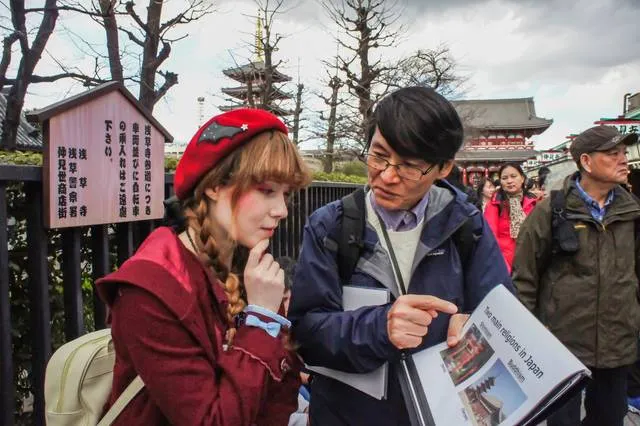
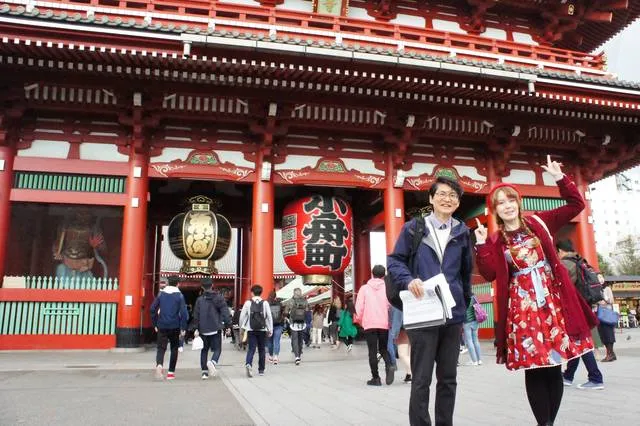 We returned to the busy Nakamise street and headed down the long path towards the famous Sensoji Temple. Mr Endo had brought a paper to explain to me the differences between shrines and temples, which will be helpful for visitors who are confused by the two religions coexisting side by side.
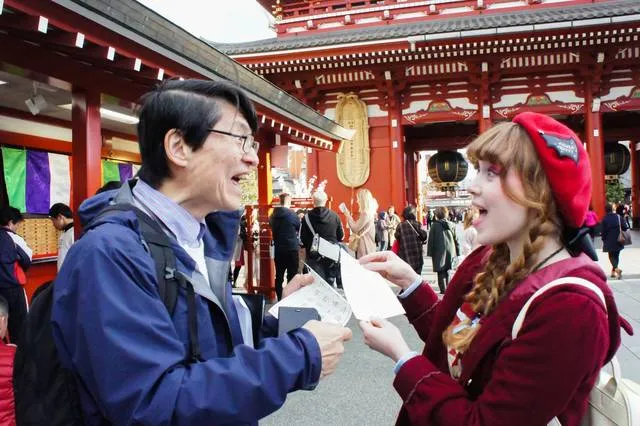
For many generations people have come to Sensoji to pray. While many buildings were destroyed in the second world war, they were soon rebuilt in their current forms. The plaza in front is filled with tourists taking photos of the fascinating architecture, girls wearing kimono for a dress up experience, and common pilgrims. A group of foreign monks in orange robes were walking past under the watchful eyes of the temple’s inner gates guardian figures. Large straw sandals on the inner side of the temple looked like a giant guardian just hung them up there a moment ago. The air is rich with the smell of burned incense. 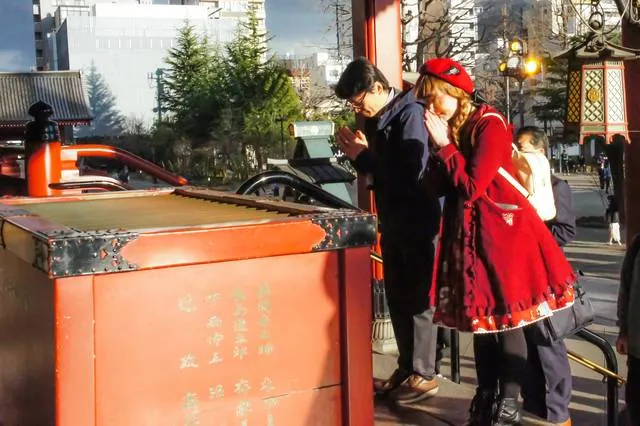 Sensoji is used to visitors from many places. Talismans here have their description in English, as well as the fortune slips. Sensoji is famous for warding off bad fortune and many people come here to pray for their health or the health of their loved ones. After Mr Endo explains to visitors how to wash and purify their hands, he will show them how to pray at a temple. Afterwards you have the option if you would like to draw a fortune slip. Sensoji temple is famous for having a large percentage of “BAD LUCK” fortune slips, which will then have to be tied to a dedicated board to ward it off. The tourists who drew their slip before me had such an experience, which made me worried about mine. I shook the box, took out a wooden stick with a number and searched for my fortune slip in the drawers. I breathed a sigh of relief when it turned out my fortune slip was “LUCKY”. However Mr Endo tried it too and he managed to pull “BEST LUCK” which is a super rare occasion. We were both so surprised, we could not believe it. Good fortune slips should be taken home, so that’s what we did.
AZUMA
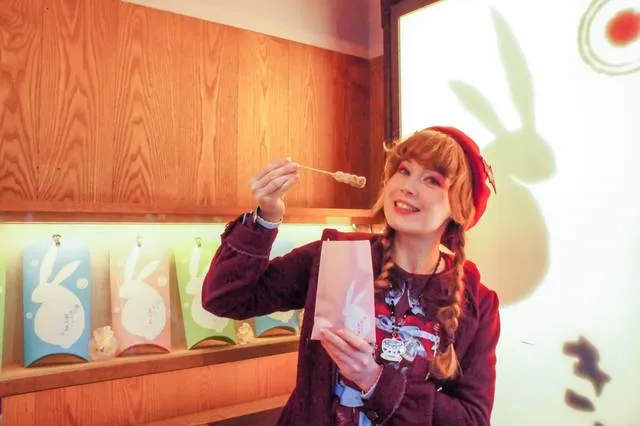 On our way back down Nakamise street is another sweets outdoor stand called Azuma. They sell “Kibidango” a speciality from Okayama. Kibidango are rice cakes, served on a stick, covered in soybean powder. One package contains 5 sticks. There is a rule that applies to all Nakamise shops: visitors are not allowed to walk and eat sweets on this street. Generally the stores will have a side where you are allowed to eat or you need to take them home. Starting to feel full, I decided to share my portion with Mr Endo while taking pictures. This is great if you just want to have the experience of eating something on Nakamise street. All kibidango I have tried so far were presents and thus cold, so it was nice to see how fragrant they are when served hot.
TORAYA
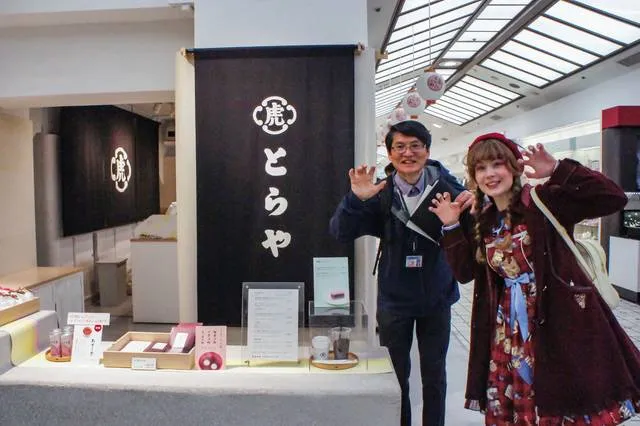 Our last stop took us into a department store. Toraya has another of their branches here and they are famous across the country for their Yokan. They, however, originated in Kyoto, so what brought them to Asakusa? A staff member there was very forthcoming and upon seeing our interest, took her time to research and explain for us. Yokan used to be Japanese wagashi sweets specifically made for the emperor. Toraya was one of the few Yokan makers who were designated to manufacture Yokan for the emperor in the old times. When the emperor moved to Tokyo, Toraya moved with him. We ordered a tea set that served a drink and cut Yokan to close our stomachs and perk up our sugar levels. Since this is the last top of the journey, visitors can continue shopping from here inside the department store or return to Asakusa to take more pictures.Mr Endo said “Japanese wagashi sweets are delicate and artistic. The are a kind of art form.” I want visitors to experience the taste of authentic Japanese sweets.