JMSDF (Japan Maritime Self-Defense Force) Kure Museum and Yamato Museum are located in Kure City. JMSDF is the Japanese Navy and the Yamato was the biggest battleship in the world during the second War World. They kept a submarine and the Yamato battleship both of which were used during the war in the museum. You can actually go inside and see the submarine. It is a great chance to explore and understand Japanese war.
Summary
JMSDF (Japan Maritime Self-Defense Force) Kure Museum and Yamato Museum are located in Kure City. JMSDF is the Japanese Navy and the Yamato was the biggest battleship in the world during the second War World. They kept a submarine and the Yamato battleship both of which were used during the war in the museum. You can actually go inside and see the submarine. It is a great chance to explore and understand Japanese war.
JMSDF Kure Museum
JMSDF Kure Museum is also known as the “Whale of Iron.” It houses the actual Akishio submarine that was decommissioned in 2004. The exhibitions include the history of the JMSDF and recent operations of minesweeping. It is fascinating to just walk around in the museum. As the inside of the submarine is kept as it was, you can “see”, “touch”, and “feel” what it was like to work inside a submarine.
Kure Maritime Museum
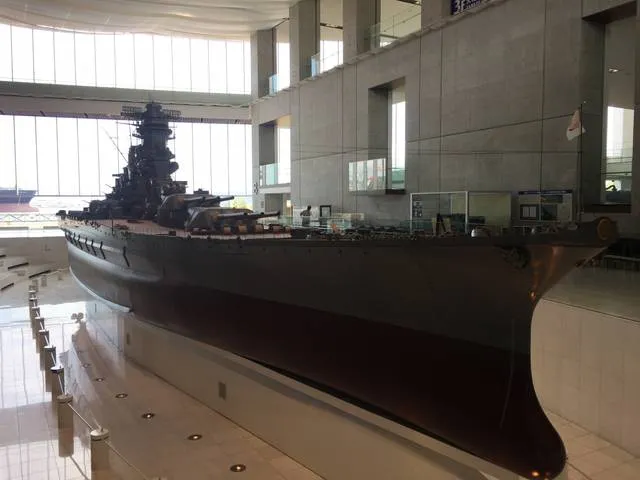
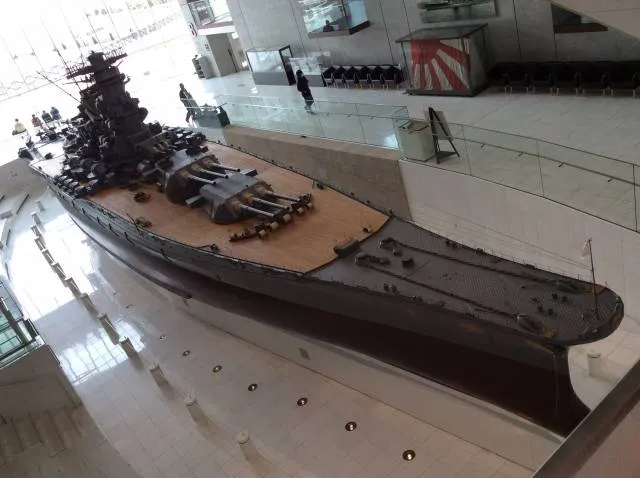
Next to the JMSDF Museum, Kure Maritime Museum has a 1/10 scale model of battleship Yamato in the lobby. Hence, the nickname “Yamato Museum,” Yamato was built in the city of Kure. In 1903, Kure Naval Dockyard was established, and the city prospered in shipbuilding and steelmaking. You will see much of its history here. The objective of the museum is to raise awareness to the tragedy of war but also to pass down important technology to the future.
Yamato Battleship Was Developed To Combat The American Fleet
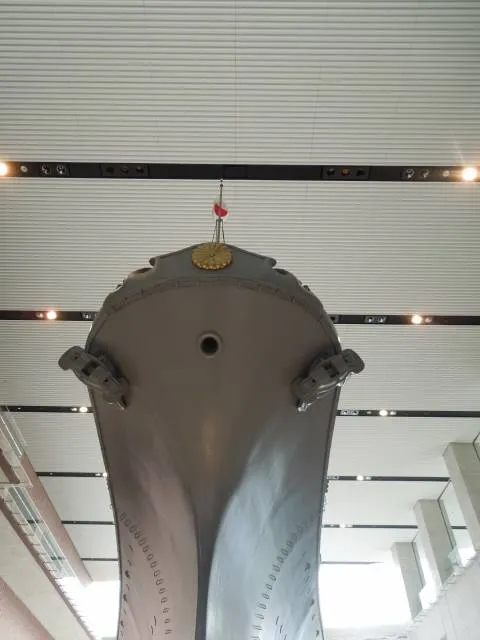
Yamato, the world's largest and most powerful battleship, was a battleship developed by the Japanese Navy as the final weapon to combat the American fleet. Not only with offensive power, but also the state-of-the-art technology at that time which was included in each section of the ship. However, the era had already stopped requiring a naval battle with battleships as the center. Yamato, born with the honor of Japan's expectations, will become a symbol of tragedy without bringing the goal of its creation about.
Before the Pacific War, the Japanese wanted to create a warship capable of strongly attacking an enemy from afar.
Before the Pacific War, the Japanese wanted to create a warship capable of strongly attacking an enemy from afar.
Yamato Is The Largest Battleship In The World
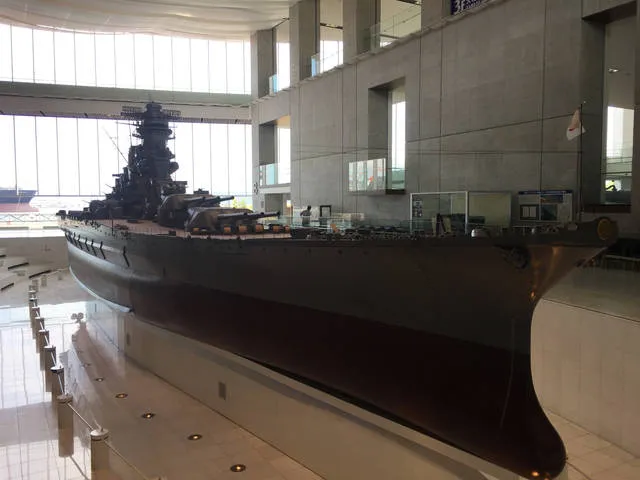
The world's largest battleship was built with the most advanced technology at the time by the Kure Navy Arsenal and built in secrecy in 1941.
Yamato had begun being constructed from November 1937 when the Japan-China War began. Yamato was completed on December 16, 1941, immediately after the Pacific War began. Meanwhile, the Allied Commander of the Union Fleet Yamamoto,
promoted the development of an attack method based on the aircraft carrier and aircraft together. The attack method was used both at the Pearl Harbor on December 8th, 1941 and Naval battle of Malaya on December 10th, 1941.
The Last Battle Of Yamato Took Place On April 7th, 1945 Around Okinawa
The battle fought by the US Navy's aircraft carrier aircraft units attacked the battleship Yamato and its escort ship headed as a maritime squadron to Okinawa on April 7, 1945. As a part of the first guerrilla forces, the Japanese Navy invoked the first attack which was carried out by the Yamato Battleship, 2 Lightning Squadron 's Light Cruiser and 8 destroyers headed out to Okinawa while America sent out navy 58th mission unit to face the threat. As a result of the battle, six ships were sunk, including Yamato. And it was the last attack by the Japanese Navy's largest aircraft carrier.
At that time, the cruise distance, the maximum speed, and the athletic performance overwhelmingly exceeded the ships of other countries, indicating Japan's high technical strength.
At that time, the cruise distance, the maximum speed, and the athletic performance overwhelmingly exceeded the ships of other countries, indicating Japan's high technical strength.
Yamato Museum Exhibits The Biggest Japanese Naval Ship In WWII
You can see the one-tenth scale of model of Japanese biggest battleship "Yamato" with a total length of 26.3 meters. It was reproduced in detail as much as possible based on design drawings, photographs, submersible underwater images, and so on. Yamato battleship represents the importance of peace as a symbol of Yamato Museum and the wonder of science and technology to future generations. On the first floor, there is a permanent exhibition about the history of Kure City. Kure City used to be an industrial center for steel production and ship building.
There are some experience-based events in the museum to learn about scientific knowledge, such as fun science shows, handicraft classes where one can experience wonders of science, and an experimental aquarium where you can learn the nature of waves. It is specially recommended for children whose ages range from 5 years to 10 years old. They are able to try-and-do in different areas.
Free Application of Multilingual Audio Guide In The Yamato Museum
Not only can you see the Yamato battleship, but you can even view the actual machines used, such as fighter aircraft known as "Zero ", human torpedoes and shells of various sizes. Also, there are explanations on the panels and multilingual audio guides in Japanese, English, Korean and Chinese and it is free to download.
You can observe not only the outside of the ship but also the details of the inside and how it was built in the museum. There is an original construction plann and then the artifact has been changed into a bigger scale due to Pacific War.
You can observe not only the outside of the ship but also the details of the inside and how it was built in the museum. There is an original construction plann and then the artifact has been changed into a bigger scale due to Pacific War.
In addition, on the third floor, a video shows a message of science and technology concerning the earth and space from now on to the future by honorary directors etc. At the Yamato Theater, the material information of JAXA and the construction process of battleship "Yamato" were exhibited using new computer graphics images.
Do Not forget To Visit JMSDF Submarine Museum Which Is Just Next To Door.
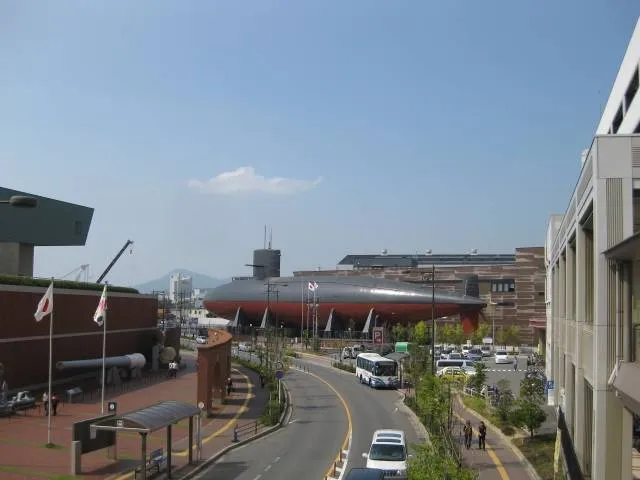
The purpose is to promote understanding of the JMSDF and to contribute to the coexistence with the local community through education of the JMSDF and public relations activities through exhibitions and preservation of materials of the Maritime Self Defense Force.
The exhibition displays historical materials on a submarine's development and update about current situations. It aims to be a historical pavilion introducing the historical relationship between Kure City and the JMSDF. By exhibiting the decommissioned actual submarines, the visitors can have a valuable experience in exploring the inside of a real submarine.
The exhibition displays historical materials on a submarine's development and update about current situations. It aims to be a historical pavilion introducing the historical relationship between Kure City and the JMSDF. By exhibiting the decommissioned actual submarines, the visitors can have a valuable experience in exploring the inside of a real submarine.
On the third floor, you can enter the submarine “Akishio”, 76 meters in length, 2200 tons. It was actually used by the JMSDF from 1986 to 2004. It was loaded onto one of Japan's largest floating cranes and has been exhibited at Kure Museum since September 2006.
With this real submarine, you can imagine the life in the navy and see the inside of the submarine, such as the captain's office and the officer's office, simulate conditions of the environment and living life in the submarine, as well as viewing the structure of the submarine. We highly recommend you come for this unique experience of exploring a real submarine.
With this real submarine, you can imagine the life in the navy and see the inside of the submarine, such as the captain's office and the officer's office, simulate conditions of the environment and living life in the submarine, as well as viewing the structure of the submarine. We highly recommend you come for this unique experience of exploring a real submarine.
Information
JMSDF Kure Museum
Address: 5-32 Takaramachi, Kure 737-0029, Hiroshima Prefecture
Phone: +81 823-21-6111
It opens from 9:00 to 17:00 and it closes at every Tuesday. It is free for entry. People usually stays in the museum about forty to one hour.
Phone: +81 823-21-6111
It opens from 9:00 to 17:00 and it closes at every Tuesday. It is free for entry. People usually stays in the museum about forty to one hour.
Yamato Museum
Address: 5-20 Takaramachi, Kure 737-0029, Hiroshima Prefecture
Phone Number: +81 823-25-3017
It opens from 9:00 to 18:00, however the library closes one hour earlier. It closes on every Tuesday same as JMSDF Kure Museum. the entry fee is JPY500 for adults and JPY300 for senior high school student.
There is a guided tour at 10:00 and 14:00 every day except for Tuesday. We would recommend you have a guide with you while visiting to be able to understand deeper knowledge of the museum. They also provide English audio guides for those who prefer to listen and explore by themselves about WWII and the Japanese Navy history.
ACCESS : JMSDF Kure Museum/ Yamato Museum
By Bullet Train
From Tokyo or Shinagawa Station, take the Tokaido-Sanyo Shinkansen (Nozomi) bound for Hiroshima station. It takes about almost 4 hours. After arriving at Hiroshima Station, transfer to local JR Kure line to Kure Station. The JMSDF KURE Museum is about 5 minutes’ walk from Kure Station.
By Airplane
Take the domestic flight from Haneda airport to Hiroshima airport. After arriving at Hiroshima airport, take the limousine bus called “Kure-Hiroshima airport bus” and get off at Kure Station. It takes about seventy minutes to Kure Station from Hiroshima Station.