Ishikawa / Kanazawa
Traditional Kintsugi Workshop in Kanazawa: Mend with Real Urushi and 22.7k Gold, Taught by Artisan Arisa Nishino
At Kintsugian studio in Kanazawa, artisan Arisa Nishino leads a small group of up to four through every stage of traditional kintsugi — gluing, filling, sanding, and gilding with real urushi lacquer and 22.7k gold. The 2.5-hour class uses naturally cured studio pieces so you experience the full pro…
Activity duration
About 2 hours
Available days
Daily except Sun
Start times (JST)
10:00
Maximum Participants
Up to 4 people
Languages
Japanese, English, Spanish
Meeting place
Kintsugian · Hotel pickup available
Overview
Spend two hours at Kintsugian, the Kanazawa studio of kintsugi artisan Arisa Nishino. Join the shared morning class, or book a private session in the afternoon. In a class of up to four, you practice every stage of traditional kintsugi — gluing, filling, sanding, sealing and gilding with 22.7k gold — using real urushi lacquer.
The real thing, taught honestly
Traditional kintsugi takes at least a month, because each layer of urushi must cure before the next. Arisa prepares studio pieces at different stages of repair, so in about two hours you work through the whole process in order. The goal isn't a finished piece, but to understand each step and why we mend. Every material is natural and food-safe, so a mended bowl can go back on the table for generations.
Nothing is broken for the class
Out of respect for the potters, Arisa never breaks a piece on purpose. You practice on pieces that broke on their own. To her, kintsugi is a way of caring for what you already have.
Arisa Nishino
Arisa runs Kintsugian in Hyotan-machi, where she repairs customers' pieces and teaches in English and Spanish. Her mended work appears in a series with the Mexican ceramic studio Perla Valtierra.
What you'll do
- Learn where kintsugi comes from and why Japanese families mend rather than replace
- Handle urushi, the tree sap at the heart of the craft
- Mix and apply urushi glue and filling paste
- Sand and seal a repair
- Gild a sake cup with 22.7k gold, then keep it
You also take home Arisa's guide to kintsugi and a list of materials and where to buy them.
Go with a Local
Arisa teaches in English or Spanish, so you don't need a Local to follow the class. Add one to be picked up at your hotel, and to show you around Kanazawa before or after class.
At a glance
| Price | Shared: ¥18,700 per person / Private: from ¥56,100 (rate for 3 guests) |
| Time | Mon–Sat. Shared: 10:00–12:15 / Private: start 13:30–16:00 (about 2 h) |
| Group size | 1–4 guests |
| Age | 18+ (16+ with a guardian) |
| Language | English / Spanish (private also Japanese) |
| Where | Kintsugian, 1-7 Hyotan-machi, Kanazawa |
| Closed | Jan 15–Feb 28; July–August 2027 |
FAQ
Can I bring my own broken piece?
A real repair takes a month or more. With a private session, you can send it in advance; Arisa repairs it, and you gild it in class.
Is urushi safe for my skin?
Urushi is related to poison ivy and can cause a rash. Gloves and sleeves are provided, but the class is not recommended for very sensitive skin. The studio cannot accept responsibility for skin reactions, including refunds or medical costs.
How is a private session priced?
1–3 guests pay the shared rate for 3; 4 guests pay for 4.
Can I take photos?
Yes. Videos are for personal memories only — please don't post them online.
Operated by


Presented by: Ishikawa Locals Network
Route
- 1
Arrive at Kintsugian
Your Local picks you up at your hotel, or you come straight to the studio in Hyotan-machi. Step into Arisa Nishino's small workshop, where she mends customers' broken pieces between classes. Gloves and sleeves on — you'll be working with the real material today.
- 2
Why Mend at All
Arisa starts with the story: where kintsugi came from, and why a family in Japan might mend a bowl rather than replace it. A well-repaired piece lasts decades, and is often passed down. You'll notice no plates are broken for this class — out of respect for the potters, Arisa never breaks a piece on purpose.
- 3
Meet Urushi
Handle urushi, the tree sap at the heart of kintsugi, and learn why it takes weeks to cure. Everything used here is natural and food-safe, so a mended cup can go back to holding tea.
- 4
Glue and Fill
Using studio pieces prepared at different stages of repair, mix urushi glue and join a break, then press in filling paste where pieces are missing. This is how a month of work fits into a single session.
- 5
Sand and Seal
Smooth the repair by hand and add the waterproof layer that makes it last. It's slow, careful work — and, as Arisa will tell you, surprisingly calming.
- 6
Gild with Gold, Take It Home
Finish with 22.7k gold, dusted onto a line of fresh urushi on a sake cup. That cup is yours to keep, along with Arisa's guide to kintsugi and a list of where to buy materials, if you want to continue at home.
What's included
- Local guide, with hotel pickup if you'd like (¥8,000 per group)
Kintsugi class with Arisa Nishino · All materials incl. 22.7k gold · Gloves and sleeves · Your gilded sake cup · Kintsugi guide and materials list
Not included
- Customized itinerary
- Food and drink
- Transportation fee
- Other personal expenses
If you choose to be guided by Locals, the host arranges Locals to guide you on the day. You can also ask them to pick you up at your hotel.
What happens after you request
- 1
Send your request
Pick your dates and party size and send a request. No payment yet.
- 2
Decide the details together
Chat with Kintsugian to work out the date, plan, and final price together.
- 3
Pay securely
Once confirmed, pay through a secure link to lock in your booking.
- 4
Enjoy your experience
Enjoy the day. You can leave a review afterwards.
For cancellation fees, see our Cancellation Policy.
Meeting point
Kintsugian
1-7 Hyotanmachi, Kanazawa, Ishikawa, Japan
There is no parking at the studio; please use nearby coin parking. Your Local will meet you at the door 10 minutes before class.
Hotel pickup available
Locals can also pick you up at your hotel instead. You can choose this and enter your hotel when you send the booking request (or tell us later in the chat).
Pickup available from hotels and guesthouses in Kanazawa City (taxi fare, if used, paid by you). Outside Kanazawa City, the Local's round-trip transport is added. Message us for details.
Things to know
- IMPORTANT: Urushi (related to poison ivy) can cause a skin rash. Gloves and sleeves are provided, but the studio cannot accept any responsibility for skin reactions, including cancellation, refunds or medical costs. By booking, you confirm you understand and accept this. We’ll ask you to confirm this in the chat before your booking is finalised.
- Minimum age 18 (16 with a guardian).
- Wear long sleeves and trousers you don't mind getting dirty. Remove rings, bracelets and watches. Bring a hair tie and reading glasses if you use them.
- Shared class of up to 4. For space and safety, only booked participants and their Local guide or interpreter may enter the studio. Your Local may wait in the studio during class or take a break nearby.
- Photos welcome; videos for personal use only, not to be posted online.
- Cancellation: 30+ days before 30%, 14–29 days 50%, 7–13 days 80%, 6 days or less / no-show 100%.
- Private sessions are available Monday–Saturday, starting any time between 13:30 and 16:00 (about 2 hours), in English, Spanish or Japanese. Private pricing starts at the group rate for 3 guests: 1–3 guests pay for 3, and 4 guests pay for 4. You can also send your own broken piece in advance to be repaired (without gold); you’ll then gild it during the session. Message us before booking.
- Bookings open up to 6 months in advance and are confirmed once the studio confirms availability.
- A traditional kintsugi repair takes over a month, so this class focuses on practising each stage on studio pieces and on why we mend, not on making a finished piece. You take home the sake cup you gilded.
More to explore in the area
Spots in the same area as this activity. Some may be a train or car ride away.

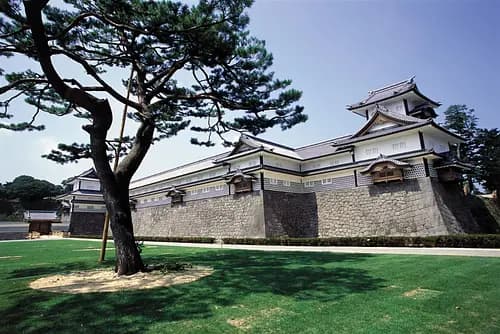
Kanazawa
Kanazawa Castle Park
400-year-old stone walls rebuilt by hand, blossom-ringed each spring.

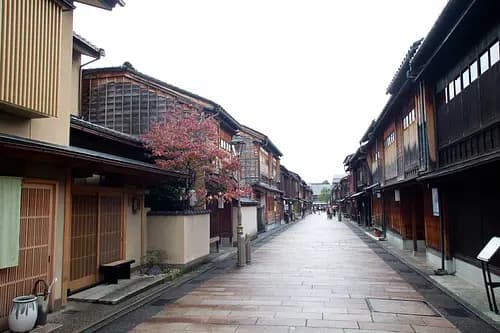
Kanazawa
Higashi Chaya District
Candlelit teahouse streets where geisha culture still lingers at dusk.