Kanazawa
True Kanazawa — Walk With Someone Who Has Never Stopped Paying Attention to This City
A fully private 3–4 hour walk through the Kanazawa your guide has been thinking about for years. Choose your own 3 locations, or follow the route they'd take a close friend — and let the conversation do the rest
Time of day
AM, PM
Maximum Participants
Up to 8 people
Languages
English
Overview
Every city has two versions. The one in the guidebook, and the one that reveals itself to someone who has lived here long enough to notice what doesn't change — and what quietly does.
Your guide is a Kanazawa storyteller. Not a historian, not a certified guide reciting facts — someone for whom every corner of this city has accumulated meaning over years of walking, thinking, and talking to people who have spent their lives here. They notice things. They remember what a market stall owner said three winters ago. They know which direction the morning light hits the Ishikawa-mon gate in October, and why it matters.
The structure is simple: you choose 3 locations from 13 options, or you follow the route the guide would take someone they genuinely care about — their "if I had one afternoon to show you the real Kanazawa" selection. Either way, the tour isn't about the places. It's about what the guide sees in them, and what you start to see too.
Want the guide to choose for you?
Message before booking — tell them what you love about Japan, how long you're in Kanazawa, and what kind of afternoon would feel right. They'll design the route around that.
Your guide contacts you before the tour. They'll ask what you've already seen, what kind of conversation you're hoping for, and whether there's a theme pulling at you — beauty, power, daily life, craft, silence. That shapes everything.
The guide's recommended route — "If I had one afternoon to show you the real Kanazawa"
◾️ Good to know
Your guide contacts you before the tour — please respond. The more they know about you, the better the conversation.
Not suitable for pregnant women, people with mobility limitations, heart conditions, or those requiring medical accommodations.
Not suitable for babies under 1 year. Children welcome — the guide adapts naturally.
Myoryuji requires advance reservation — if selected, your guide arranges this.
Comfortable shoes — the tour covers 3–6 km on foot across varied surfaces.
The D.T. Suzuki Museum works best in near-silence — your guide will prepare you for this.
Operated by

Route
- 1
Nagamachi Samurai District — the city's social grammar, written in walls
~60 min The guide always starts here. Not because it's the most famous, but because Nagamachi teaches you how to read Kanazawa — and once you can read it, everything else opens up. The earthen walls, the drainage channels, the gate positions: these are a map of who feared whom and who owed what to whom. Understanding the samurai district's social logic makes the castle, the garden, and the craft traditions that came after it all feel connected rather than random. "I've walked this lane hundreds of times. I still notice something different each season. Last autumn I realised the wall height here drops exactly at the point where one family's jurisdiction ended and another's began. I'd been walking past that detail for th
- 2
Higashi Chaya District — tradition as daily life, not performance
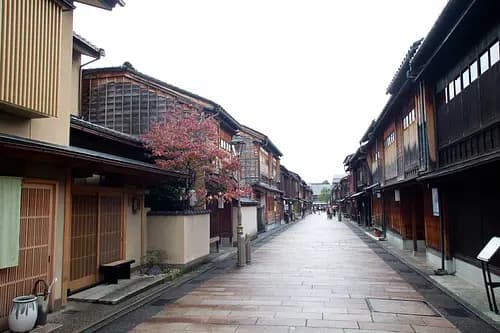
~60 min The guide's relationship with Higashi Chaya is personal. They have childhood memories of these streets — when the lacquer shops were more crowded, when a particular teahouse was still operating, when the cobblestones were worn differently. They walk you through what hasn't changed and what quietly has, sharing what it means to live inside a neighbourhood that has been designated a cultural heritage site — the pressure of that, and the pride of it. "Most visitors see Higashi Chaya as a backdrop for photographs. I see it as a negotiation — between the families who live here, the businesses that draw tourists, and the traditions that only survive if someone actively chooses to carry them. That negotiation is happening right now, in these buildings, on this street."
- 3
D.T. Suzuki Museum — silence used as architecture, thought as form
~50 min This is the guide's most personal recommendation — and the least obvious one. D.T. Suzuki, the philosopher who introduced Zen to the West, was born in Kanazawa. This museum, designed by Yoshio Taniguchi, uses water, light, and deliberate emptiness to make abstract thought tangible. The guide brings Suzuki's ideas into the space: what does it mean to sit with a thought rather than grasp it? How does a city that produced both gold leaf and Zen philosophy make sense as a single place? Unexpectedly, it does. "I always bring people here last, because it changes how they hear everything that came before. The samurai district, the teahouses, the lacquerware — they all make a different kind of sense after you've sat in this water court for ten minutes without saying anything."
- 4
Or choose your own 3 — 10 other locations available
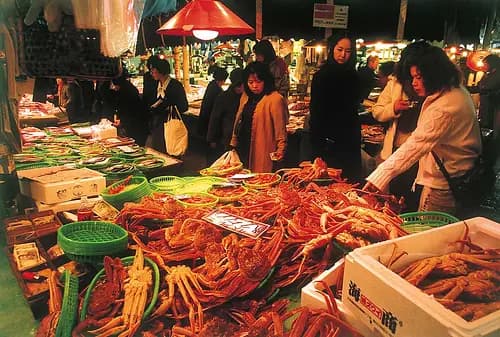
Tell your guide which 3 you'd prefer — or describe what you're drawn to and they'll suggest ◾️ List of Potential Tourist Spots Kenrokuen Garden Philosophy · six impossible ideals Kanazawa Castle Power · political survival Omicho Market Food · daily rhythm · seasonal 21st Century Museum Contemporary art · regional identity Oyama Shrine Ritual · the founding lord Kazuemachi District Quiet · the other geisha district Kanazawa Station Area Arrivals · departures · gates Nishi Chaya District Tradition · different neighbourhood Ishikawa Products Centre Living craft · contemporary artisans Myoryuji "Ninja Temple" Ingenuity · advance reservation required etc...
What's included
- Customized itinerary
- Guided Experience
- Local insights and insider tips
Dedicated WOW U storyteller guide (English) · 3–4 hours private Pre-tour personal connection — guide contacts you beforehand Guide's recommended route or your choice of 3 locations Storytelling shaped by the guide's current observations No script — genuine dialogue throughout Closing: personalised recommendations for the rest of your stay
Not included
- Entrance fees
- Food and drink
- Transportation fee
- Other personal expenses
Food and drinks Venue admission fees (Kenrokuen ¥320, D.T. Suzuki Museum ¥300, Ninja Temple, museum fees) Optional artisan experience fees (¥1,300–2,050/person, paid on the day) Public transport between distant locations (if chosen)
What happens after you request
- 1
Send your request
Pick your dates and party size and send a request. No payment yet.
- 2
Decide the details together
Chat with the Locals to work out the date, plan, and final price together.
- 3
Pay securely
Once confirmed, pay through a secure link to lock in your booking.
- 4
Enjoy your experience
Meet your Locals host on the day and enjoy. You can leave a review afterwards.
For cancellation fees, see our Cancellation Policy.
Things to know
Optional — add a hands-on artisan encounter
At several locations, your guide can arrange a brief encounter with a working artisan — paid separately on the day (¥1,300–2,050 / person). Availability varies by season.
【Wagashi with a Master:¥1,300–2,050 / person】
Make a seasonal Japanese sweet alongside someone who has been thinking about sugar and aesthetics for decades.
【Daruma Painting:¥1,300–2,050 / person】
Paint your own Daruma and hear the personal wishes and traditions the guide has collected from artisans over the years.
【Gold Leaf Application:¥1,300–2,050 / person】
Apply 0.0001mm-thin gold leaf to an item you keep — and understand why 99% of Japan's gold leaf comes from this specific city.
More to explore in Kanazawa
Spots in the same area as this activity. Some may be a train or car ride away.
Kanazawa
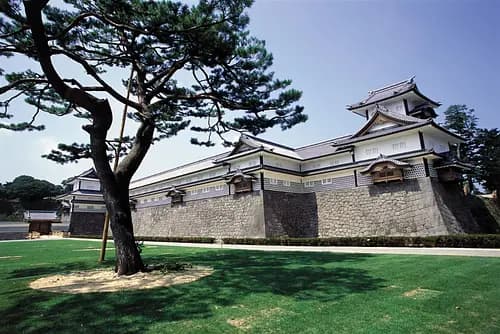
Kanazawa Castle Park
400-year-old stone walls rebuilt by hand, blossom-ringed each spring.

Kanazawa
Higashi Chaya District
Candlelit teahouse streets where geisha culture still lingers at dusk.