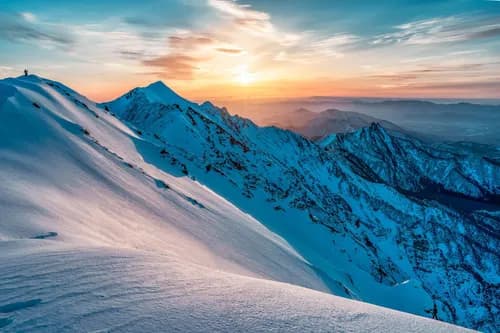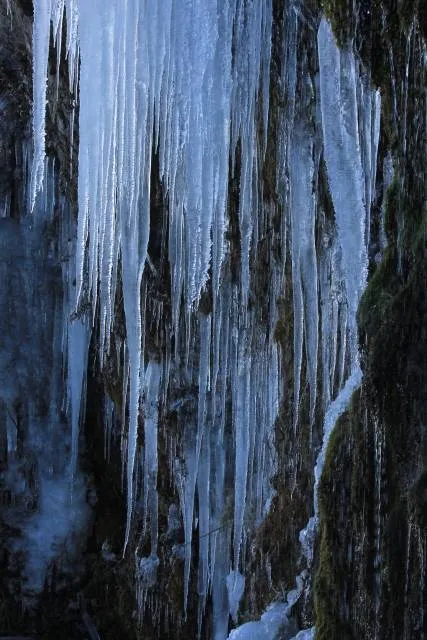
Frozen Waterfall Icicles-- have you ever seen them up close?Huge crystal clear icicles up formulate in a winter mountain in Fukuoka, a prefecture in Southern Japan in January and February.You have to walk up a not-so-easy 2.5 km trail, but it's definitely worth the walk.
Summary
Frozen Waterfall Icicles-- have you ever seen them up close? Huge crystal clear icicles up formulate in a winter mountain in Fukuoka, a prefecture in Southern Japan in January and February. You have to walk up a not-so-easy 2.5 km trail, but it's definitely worth the walk.
Go Hiking to see Fukuoka's Huge Waterfall Icicles
There is a special waterfall called the Nan-sho-gataki in the Mount Sangun and Mount Houman areas that freezes and forms huge icicles in January-February every year. These icicles can only be seen for a few weeks during those two months, and many tourists come during this time hoping that they can check them out (sometimes it’s still not cold enough, and the waterfall is not frozen, so timing is crucial).
The Gouradani route takes you to the icicles in the mountain. From Fukuoka Umi Town's Showa no Mori parking lot, it is a one-way trail to the Nan-sho-gataki waterfall. It's about a 2.5 km trail walk or a 90-minute hike. During the winter season, this trail becomes packed with people, so it’s best to start early in the morning.
The climb to the waterfall is not easy. The roads are rocky with big and small rocks scattered all over. There are several spots where you cross over rivers- the rocks are usually not slippery unless it’s snowing or raining. If it’s snowing, you can expect to see the frozen waterfall more (considering the temperature is low), but you need to walk up the trail more carefully. Sometimes the snow could be more than 10cm deep (which is pretty deep for southern Japan).
If you are climbing up during icicle season, there will be many people hiking to get to the same location, so chances of getting lost in the mountain are slim. There are also red tapes on the trees that show you are on track so as long as you follow the red tapes, you won’t go off track. However, it's always better to have more information about the mountain for safety purposes so be familiar with the Japanese writing for Nan-sho-gataki beforehand (all the signs in the mountain are in Japanese).
After a while, you’ll come across a small waterfall called sho-tsurara. Usually, hikers take a look at this small frozen waterfall from a distance (you need the energy to go close to it, it’s very rocky). After passing the small waterfall, the hike starts to become a little intense. You climb up some big rocks (trekking poles will come in handy). After you climb the rocks, you’ll finally reach the frozen waterfall.
After a while, you’ll come across a small waterfall called sho-tsurara. Usually, hikers take a look at this small frozen waterfall from a distance (you need the energy to go close to it, it’s very rocky). After passing the small waterfall, the hike starts to become a little intense. You climb up some big rocks (trekking poles will come in handy). After you climb the rocks, you’ll finally reach the frozen waterfall.
Beautiful Frozen Waterfall, Nansho-ga-taki
Known as Nansho-ga-taki, but officially called Gouradani-no-dai-tsurara, the waterfall is located at 724m (2,375 ft) of the 936m (3,070 ft) mountain. If Fukuoka is having a warm winter, there is a possibility the icicles are small – so don’t be too disappointed if you get there and you don’t see what you saw in the clip above. Just zoom in to take pictures of the icicles up close. If you are lucky though, you’ll experience an icicle paradise in front of you- which is a rare sight on an island that is known for its warm weather. The icicles are made of spring water and melted snow from the mountaintop and are crystal clear and beautiful.
If you have time (and energy), you can continue to hike to the peak of Mount Houman but keep in mind the hike to the top will not be easy. The path becomes steeper. For you to reach the peak of Mount Houman, you have to climb to the top of Mount Butcho first. It is about a 45-minute hike from the big waterfall. After you get to the top of Mount Butcho, the path is not as steep anymore, and it becomes an easier walk. There is a camping site at a peak too.
If you have time (and energy), you can continue to hike to the peak of Mount Houman but keep in mind the hike to the top will not be easy. The path becomes steeper. For you to reach the peak of Mount Houman, you have to climb to the top of Mount Butcho first. It is about a 45-minute hike from the big waterfall. After you get to the top of Mount Butcho, the path is not as steep anymore, and it becomes an easier walk. There is a camping site at a peak too.
5 Necessities when Climbing up Nan-sho-gataki
Hikers say it gets freezing near the frozen icicles, and that it is windy. The best thing to do in preparation for hiking Nan-sho-gataki is to have all the gear ready to keep yourself warm, protect yourself from climate change, and to keep yourself safe and comfortable. Here are five essential winter hiking necessities to hike this path to Nan-sho-gataki and the peak of Mount Houman:
1. Trekking pole
Make sure you have a trekking pole with you because hiking up Mount Houman is not easy. If it’s snowing up there, it becomes even more difficult with all the rocks to climb over. Use a trekking pole (or if you have a set that’s even better) so that you can keep your balance no matter what the weather condition is.
2. Trekking shoes
You want to be wearing proper trekking shoes for this hike, not sneakers. Wear trekking shoes that are waterproof and insulated, or wear snowshoes or winter boots that are easy to walk in but are suited for mountain climbing. You want to be as comfortable as possible, and not have to deal with wet shoes and wet socks. You don’t want to get sick during your precious stay in Japan.
3. Gloves
You are climbing up a mountain in the winter so the temperature will be cold. Protect your hands by wearing gloves to keep them warm, and to be able to use your hands to go up some hard parts of the mountain.
4. Warm clothes and gear
It’s always useful to have a fleece vest, jacket, a beanie or any other piece of clothing that will keep you warm, dry, and comfortable.
5. Water and food
You’ll be burning a lot of energy to keep your body warm. You want to stay hydrated and energetic.
How to Visit
The easiest way to get to Showa no Mori park is using a rental car. There is a large free parking lot where you could start your hike.
If you can’t rent a car, you can also go by bus. From the Hakata bus terminal, go on the Seitetsu bus (numbers 32 or 33) and get off at Shojidake bus stop. From Shojidake bus stop, walk up the hill toward the mountain, and you will reach Showa no Mori park. From Showa no Mori park, walk toward the Gouradani trail. The entire walk from the bus stop to the beginning of the trail is about 40 minutes to an hour. Make sure you look at the schedule ahead of time, because buses don’t come and go frequently. Also, make sure you can go back to the bus stop in time to ride a bus back to the place you are staying.
Address: Umi, Kasuya District, Fukuoka 811-2101
Tel: 81-92-934-2370 (Umi Townhall)