Even though Yamanashi has something to offer for tourists visiting it all year round, Autumn is one of the best moments to witness the beauty of seasonal transition and to taste the luscious fruits of the Fall harvest. Just before the beginning of its long and snowy winter, beautiful autumn flowers and colorful fallen leaves are there waiting to enchant Yamanashi's visitors.
Yamanashi's Flowery Autumn
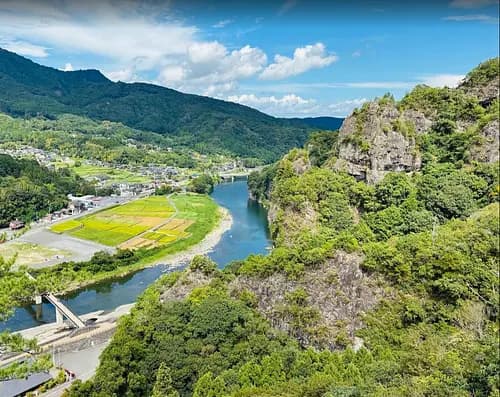
The prefecture of Yamanashi, located in central Japan, almost 80% of its landmass is either mountainous or covered by forests. While many visitors might already be familiar with its most famous peak, Mt.Fuji. The prefecture has other spectacular peaks, Mt.Yatsugatake and the Akaishi mountains, also known as the Southern Alps, is home to two natural parks and three national parks, including the well known Fuji-Hakone-Izu national park. To preserve the beauty and purity of such a rich natural environment, the use of vehicles is restricted in some areas. Yamanashi's natural attractions are both countless and spectacular, and visitors often come from all over the country to appreciate them.
Even though Yamanashi has something to offer for tourists all year round, Autumn is one of the best moments to witness the beauty of seasonal transition and to taste the luscious fruits of the Fall harvest. Alongside the locally produced pears, peaches and grapes, fruit-based sweets are also very popular throughout the prefecture.
Just before the beginning of its long and snowy winter, beautiful autumn flowers and colorful fallen leaves are waiting to enchant Yamanashi's visitors.
Buckwheat Flower Fields in Full Bloom Around Yamanashi
In Autumn, visitors to foothills town around Mt.Fuji or Mt.Yatsugatake can enjoy the sight of the buckwheat (Soba) flower fields in full bloom. While it's true that buckwheat fields are generally white, it's not uncommon to see red or pink ones. Without a doubt, the beauty of such a multicolored landscape is a sight worth the trip.
Fully bloomed buckwheat fields are one of the Autumn scenery characters in Japan's countryside.
Not many people know the beauty of the buckwheat's blossoming flowers, and the flowers pungent smell: as a matter of fact, many unsuspecting visitors might get surprised by such a unique scent.
In Japan buckwheat's seeds are generally used to produce Soba noodles or Soba tea. Both are great ways of fully enjoying buckwheat's crispy aroma and soothing flavor. In recent years, many shops and restaurants have been inspired to create some unique confectioneries using buckwheat's seeds.
We are sure trying out some of these new recipes would make a great tasting experience.
The Unique Aroma of Soba Noodles in Mountainous Areas
via pixabay.com
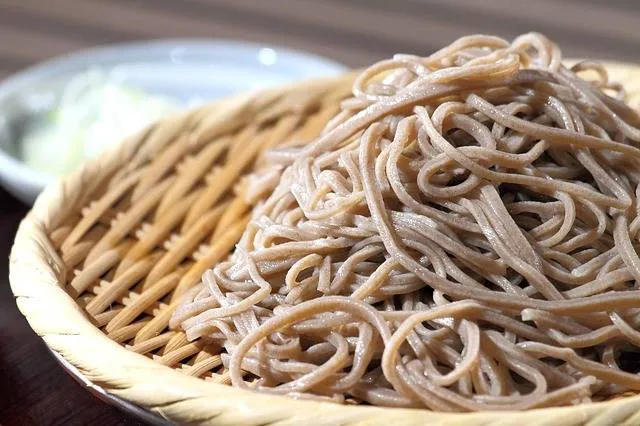
Since the introduction of buckwheat to Japan, the thin noodles made with buckwheat flour have become a Japanese traditional dish. Soba noodles are usually eaten with a soy based sauce called Tsuyu and wasabi.
Soba noodles are generally light brown, even though color and flavor can both differ from place to place, depending on the percentage of buckwheat flour used in the mix or on the addition of extra ingredients. As a rule, the buckwheat flour content diminishes compared to it's wheat counterpart, the noodle's color tends to fade to a light golden brown; but what about the other colors you might have seen in Japanese restaurants? The dark green noodles are flavored with green tea, and they go under the name of Chasoba, while the lgiht green colored ones contain a small percentage of seaweed and they are called Hegisoba: they are a common find in specialized Soba restaurants and are defined by a very delicate flavor and aroma. Other popular Soba-related dishes are Soba rice and Soba tofu, both commonly served in the so-called Soba Kaiseki, a multi course Japanese menu strictly focused on buckwheat.
Yamanashi and the mountainous area around it are especially famous for the quality of their Soba noodles: this is granted by their cool climate and the freshness of their water supplies.
Unlike other noodles, the season for Soba noodles come twice a year, both in Spring and Autumn. The taste of Soba noodles changes with the seasons, despite being delicious all year long, freshly harvested Soba seeds in Autumn are said to make Soba noodles more aromatic and delicately flavored.
Autumn Soba noodles are available from late October to early November, so please give yourself a chance to try some while they are at the peak of their flavor.
How to visit?
From Tokyo to Yamanashi Prefecture : about 2 hours by train or car
From JR Kiyosato station : 5 minutes by car or 15 minutes by bus
From Sutama or Nagasaka IC : 20 minutes by car
From JR Kiyosato station : 5 minutes by car or 15 minutes by bus
From Sutama or Nagasaka IC : 20 minutes by car
The Shiny Autumn Comes to Mt.Fuji
Among the many Autumn sights one can experience in Japan, the golden Susuki (Japanese pampas) fields certainly occupy a special position, as the Japanese pampas withering stems dance gracefully and gently with the wind; the sight is one of Japan's most nostalgic and poetic landscapes.
The Japanese pampas often symbolizes Autumn in Japanese literature. Many poems have been inspired by the beauty of this plant, such the Manyoshu written by Yamanoue Okura, which is ranked among the most famous. The Manyoshu is the oldest existing collection of Japanese poetry, dating back to somewhere in-between 600 and 759: many poems within this anthology contains the Japanese words for Susuki.
Susuki is often used to decorate homes on the day of the Harvest moon: this night, popular for its bright moonlight, is usually referred to as Jugoya (the fifteenth night). The night falls somewhere around late September and the early days of October.
In between Lake Yamanaka and Mt.Mikuni there is a hilltop called Panoramadai, famous for offering a unique viewpoint of the surrounding area. At dawn or dusk, visitors can enjoy the contrast of the golden brown Susuki fields and the Sun's blazing red glow.
The panoramic views of Yamanashi and the chance of taking spectacular pictures, often capturing Mt.Fuji or Lake Yamanaka as well as the Susuki fields in one shot; make this area a very popular Autumn destination for visitors from all around Japan.
The Panoramadai area is also a very common destination among hikers, and it offers several seasonal attractions all year round.
How to visit?
From Tokyo to Yamanashi Prefecture : about 2 hours by train or car
From JR Gotenba station : 40 minutes by bus
From Yamanaka-Lake IC : 5 minutes by car
From JR Gotenba station : 40 minutes by bus
From Yamanaka-Lake IC : 5 minutes by car
Rose Gardens, the Rose Enchantment in Yamanashi
One of Yamanashi's peculiarities is that it has about 10 rose gardens throughout the prefecture.
The gardens sometimes gather more than 720 cultivars or 3000 flowers: at their entrance, magnificent rose arches invite visitors to a spectacular garden. Most of these rose gardens are located around Kofu city, Yamanashi's crescent shaped capital city. Going up north from Kofu we end up in Hokuto, a small city in the Mt.Yatsugatake's area, where most of the remaining rose gardens are located. With its 230m long rose arches, currently ranked as the longest rose corridor in entire Japan, the Flower Center Heidi Village is certainly representing a very popular destination among garden and flower lovers.
Both Spring and Autumn are popular seasons to enjoy the beauty of Yamanashi's roses. The Autumn season starts around October, and visitors gather in the area every year from all of Japan to have a chance at visiting the gardens before the beginning of Yamanashi's long winter.
How to visit?
From Tokyo to Yamanashi Prefecture : about 2 hours by train or car
From JR Katsunuma Budogo station : 10 minutes by car
From Katsunuma IC : 15 minutes by car
From JR Katsunuma Budogo station : 10 minutes by car
From Katsunuma IC : 15 minutes by car