Mount Fuji is by far the tallest mountain in Japan with its 12,388 feet(3,776 m)height. It is not just a national icon for Japan, Fuji is also representative of the natural beauty that can be found in the world. Its beauty is elevated even further from late October to February. This is when the Diamond Fuji can be seen.
View on FacebookMt.Fuji; A Symbol Of Japan
Mount Fuji is almost synonymous with Japan. Few, if any, have not heard of the iconic mountain that is often featured in classic and contemporary Japanese artwork. It is, in fact, a volcano, (although a dormant one) with its last eruption being in 1701-1708. Standing as a solemn, symmetrical peak that slowly builds up toward the sky, Mount Fuji stands out, its summit reaching 12,388 feet(3776 meters) above sea level.
Three mountains in Japan are included in the collective “sanreizan,” which translates to Three Holy Mountains of Japan. These three mountains are Mount Haku, Mount Take, and of course Mount Fuji. The iconic mountain is 62 miles(100 kilometers) south-west of Tokyo. On a clear day, it is even possible to see it from Tokyo. The mountain is by far one of the most famous mountains in the world and is frequently depicted with a snow-capped peak in artworks and photos. The peak remains capped in snow for five months of the year.
Given its stature and cultural impact on Japan, the mountain and twenty-five separate locations in the area are recognized as sites of cultural interest. Amongst them are the mountain itself, the Shinto Shrine Fujisan-Hongu Sengen Taisha, and also the Buddhist temple Taisekiji head temple, which was founded far back in the year 1290. According to UNESCO, Mount Fuji has inspired countless artists and poets, and is also a part of a pilgrimage. Many art pieces have been made featuring Mount Fuji, and the most famous might be the Ukiyo-e created by renowned artist Katsushika Hokusai.
Activities To Enjoy Around Mount Fuji
There is a massive amount of activities in close vicinity to Mount Fuji for tourists to enjoy during their visit. There are lakes, amusement park, museum, shrines and hot springs available for tourists to enjoy.
Fuji Five Lakes
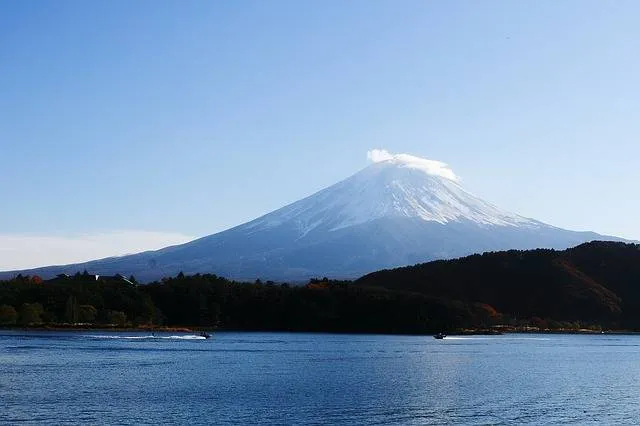 via pixabay.comOne activity for tourists visiting Fuji is to see the area known Fuji Five Lakes. It derives its name from the lakes in the area that were formed hundreds of years ago. Rivers were dammed up by lava flows that came during eruptions from Mount Fuji. The area can be found at the northern base of Mount Fuji. Underground waterways still connect three of the five lakes, Saiko, Shojiko and Motsuko. The two remaining lakes are called Yamanakako and Kawaguchiko. The area, which is located in Yamanashi Prefecture, is about 3,280 feet(1,000 meters) above sea level. It is a place of natural scenic beauty, and for those who wish to climb the most iconic mountain in Japan, it is a great place to start the hike.
Fuji Q Highland
Amongst the activities that can be found around Fuji, there is an amusement park, Fuji Q Highland, which is easily of one the most popular amusements parks in the country. The park opened back in 1968 and has set numerous records since then, and is even included in Guinness for a record-breaking roller coaster. There are four very popular, and quite impressive rides. They have the Fujiyama, which was opened back in 1996. When it opened it was, in fact, tallest roller coaster in the world with an impressive height of 259 feet.Fujiyama’s record has been passed since then, but it is still ranked highly among visitors. Dodonopa is another record breaker, it was finished in 2011 and is the fastest roller coaster in the park, and also the one with the most rapid acceleration in the world. Eejanika, opened in 2006 is known as the 4th dimension ride, which features moving seats in the carts. The final of the four is Takabisha, a rollercoaster that was officially opened in 2011. Holding the distinction as the steepest roller coaster in the word, with an insane 121 degree-angle drop, Takabisha is a record-breaking ride just like those that came before it in Fuji Q Highland Park.
Fuji Shibazakura Festival
How do you elevate the beauty of Mount Fuji? By seeing it in tune with other beautiful sights. One such view that goes well with Mount Fuji is the Shibazakura Festival. It is one of the most popular places to see Shibazakura in Japan. Shibazakura is known as pink moss or phlox moss in English. From April to June there are 800,00 stalks on display close to Mount Fuji. Gorgeous fields of pink, white and purple spread across the landscape, and not too far away is Mount Fuji towering above it all. The festival venue is located in the Fuji Five Lakes area, only a few miles south of Lake Motosuko.
Gotemba Kogen Resort
With the ocean on one side and the view of Mount Fuji on the other Shizuoka Prefecture is an ideal place for people trying to experience the beauty Japan has to offer. At the Gotemba Kogen Resort visitors can enjoy Hot springs with Mount Fuji as a backdrop. It is open every season, and each season has another beautiful view of Mount Fuji to show the tourists who make the trip. For visitors looking for an escape from the urban areas of Japan, this might be the perfect spot. Along with the hot springs, the resort also has many other activities available. Golf, tennis, and soccer are among the activities tourists can take part in at the resort. They even have a brewery, and many restaurants. Taking the train from Shinjuku station to Gotemba station is possible. From the station, there is a free shuttle, and the ride to the resort takes about fifteen minutes.
Mt.Fuji World Heritage Center
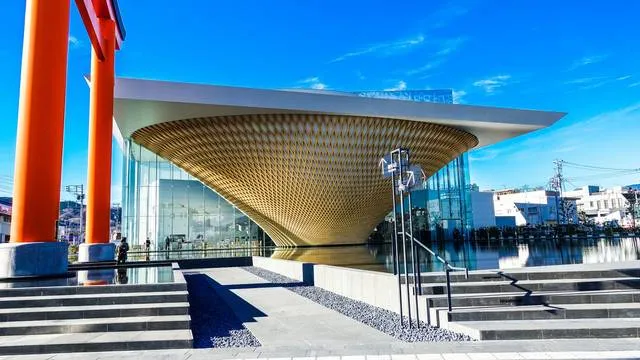 Another location of interest in Shizuoka is the Mt.Fuji World Heritage center. The center is designed as a mirror image of Mount Fuji itself. Inside the center, there are exhibits made to convey the beauty of the mountain. Some displays show just how vital it is for the surrounding area, how the mountain is part of the ecosystem in the area around it. There are also several other exhibits showcasing the fantastic Mout Fuji. From Shinagawa Station in Tokyo get on the Tokaido Sanyou Shinkansen all the way to Mishima Station. Disembark here and find the Tokaido main line, ride this train to the Fujinomiya Station. From here it is just a seven-minute walk to the Mt.Fuji World Heritage Center.
The Diamond Hidden Atop Mount Fuji
Mount Fuji is filled to the brim with activities to enjoy. Shrines, museums, hot spring, amusement parks and so on. How do you choose the best one? It is quite simple actually. All of these activities are amazing, but there is one that overshadows the others. Mount Fuji is, to put it mildly, a mesmerizing sight, but as it happens, there is a time of year when the natural beauty of Mount Fuji is elevated even further.
Autumn and winter are busy seasons in the Fuji area, as ski resorts get ready for the ski season. In the meantime, several photographers gather to see the fantastic sight known as Diamond Fuji. It is the moment when the rising or setting sun aligns perfectly with the top of the mountain, making the light shine like a diamond. Arguments can be made for every single attraction in the area around Mount Fuji, but there is something special about the Diamond Fuji, in how nature comes together to create such a magnificent sight.
Diamond Fuji appears both as the sun rises, and as the sun sets. Which one you can see depends on which side of the mountain you are on. If you are on the west side of the mountain you can see the sunrise, and if you are east of the mountain you can see the sunset. There is plenty of vantages point for people eager to see this themselves. The phenomenon can be observed all the way from Tokyo. Roppongi Hills Observatory and Sunshine City Observatory are two great options for people unable to leave the city. They both offer a great view of the surrounding area. The best viewing dates from Sunshine City are the 15-18 of November, and the 27-18 of January. Roppongi Hills offer the best views on the 3-4 of November and the 7-8 of February.
For the people who have the option of leaving the Tokyo area to see the phenomenon, there are many good options. For example, the summit of Mount Takao. Very many people gather here each year to catch a glimpse of the diamond Fuji. The best viewing dates are from the 20th to the 24th of December. All though Diamond Fuji is a spectacle to behold in an of itself there are some places double the beauty, quite literally actually. Lake Tanuki, located in Shizuoka Prefecture, perfectly reflects the beautiful sight in its clear water. Creating the Double Diamond Fuji. This is an option best suited for the most hardcore, as it is quite the journey from Tokyo to Lake Tanuki, which should take 4 hours by public transportation. Another location to consider for those that want to see the Double Diamond Fuji is Yamanakako. The lake lies in the shadow of Mount Fuji and is naturally a great place for visitors to see the fabled sight. There are a handful of options, but by far the best one might be the Panoramic Viewing Platform in Hirano. It is perhaps the most ideal place to witness the Double Diamond Fuji as the mountain and sun both are reflected in the lake below. The viewing time for Diamond Fuji depends on where you are, so it is important to do thorough research beforehand to make sure you are at the right place, at the right time. The viewing period starts in late October and carries on well into February.
Information
Access By Bus To appreciate this sight in all its glory, you need to go to Yamanashi prefecture from Tokyo. Dozens of highway buses make the journey from Tokyo to the Fuji Fake Lakes area. There are two departures points from Tokyo. Shinjuku station and Tokyo station. It takes two and half hours when traveling by highway bus. Address: 418-0112 Kitayama, Fujinomiya city, Shizuoka ### Reference Listhttp://www.yamanakako.gr.jp/event/info1.php?ent_id=29
http://www.vill.yamanakako.yamanashi.jp.e.kh.hp.transer.com/holiday_diamondfuji.php