Kanazawa
Nothing in Kanazawa Was Made in a Hurry — 180 Years of Garden, Then Gold Beaten to One Ten-Thousandth of a Millimeter
Matcha in the reconstruction of the single room the whole garden grew out of, then a 1919 gold leaf house in Higashi Chaya where you set real leaf onto chopsticks and carry them out the same day
Time of day
AM, PM
Maximum Participants
Up to 6 people
Languages
Japanese, English
Meeting place
Kenrokuen, Katsurazaka Gate
Overview
Kenrokuen was not designed. It accumulated.
In 1676 the fifth Maeda lord cleared a works yard beside a pond and put up a single villa to take tea in. That building — one room facing water — is where the garden starts. Successive lords kept adding: another pond, another stream, a pine trained sideways over the water, a fountain that runs on nothing but the pressure of the pond above it and has been running that way since long before Japan had pumps. Roughly 180 years and six generations later, someone decided it was finished. Nobody alive had seen it begin.
You'll walk it with a guide who can tell you which parts belong to which century — the two-legged lantern everyone photographs, the ropes strung from poles every November to hold pine branches against snow that may or may not come, the pine whose roots were carried here from Lake Biwa.
Then you sit in the teahouse. The original was torn down in the Meiji era; it was rebuilt in 2000 from surviving floor plans, the ten-mat and eight-mat rooms restored to the dimensions on paper. Matcha and a seasonal sweet made for that day, on tatami, facing the garden that grew out of this room.
The afternoon is the opposite extreme of the same patience. In Higashi Chaya, a house that has worked gold since 1919. Kanazawa produces almost all the gold leaf in Japan, and the reason is dull and physical: the humidity here lets a beater keep working a sheet past the point where it would tear anywhere else. What comes out is one ten-thousandth of a millimeter thick. Breathe wrong and it's gone.
At the bench you mask your own design onto a pair of chopsticks, brush the adhesive, and lay the leaf. Your first sheet will tear. Then the excess is swept away and the pattern appears, and you understand why this city never learned to rush.
Operated by

Locals available to lead this activity
These Locals have trained for this activity. Your Locals is assigned after you request to book.

Route
- 1
Kenrokuen Garden
A garden nobody designed
our guide meets you at Katsurazaka Gate. Thirty minutes through the garden with the chronology attached: the Kotoji lantern and Kasumigaike pond, the Karasaki pine brought from Lake Biwa, the yukitsuri ropes if it's the season, and Japan's oldest fountain — fed by a canal cut in 1632 and pushed upward by nothing but the height of the pond behind it
More Information →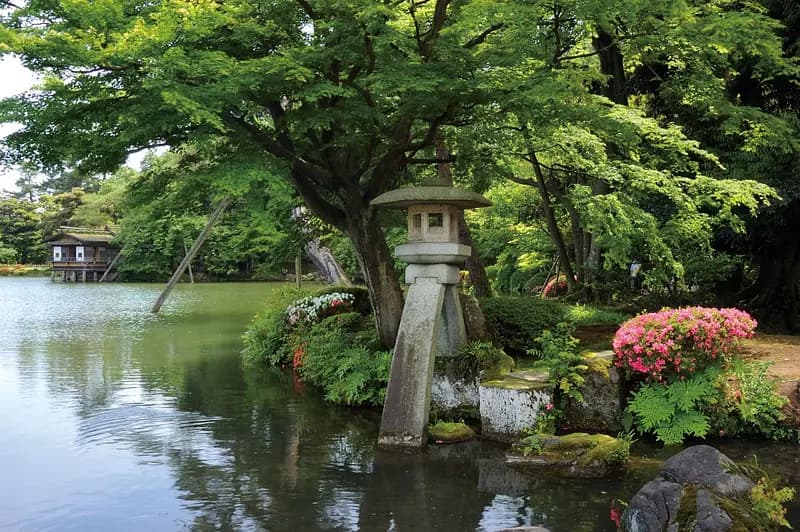 1 / 8
- 2
Gyokusen-an Tea House (Gyokusen'inmaru Garden)
A bowl of matcha, in the room the garden was made for
Tatami, the garden filling the window, a seasonal wagashi and a bowl of matcha. Not a ceremony to sit through — the way tea has actually been taken here: unhurried, in conversation. Your guide sets up the question the rest of the morning answers: why did a clan this powerful spend this much on something this small?
More Information →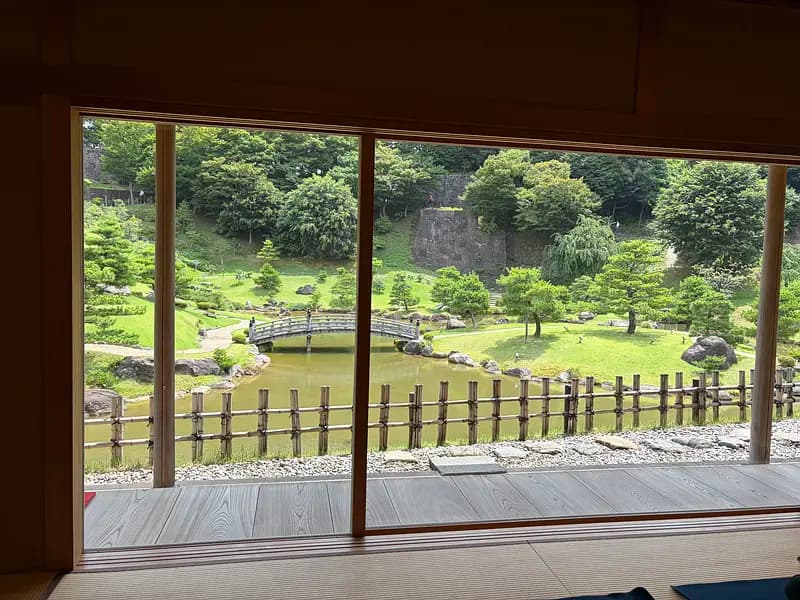 1 / 81 / 9
- 3
Across the city, into the gold quarter
Kenrokuen → Higashi Chaya Twenty-five minutes on foot down through the old town and over the Asano River, or a short taxi if you'd rather. Your guide uses it to set up the workshop: why gold leaf is beaten here and almost nowhere else, what the Maeda clan's spending had to do with it, and what a beater's hands look like after forty years.
- 4
Kinpakuya Sakuda Main Store (Gold Leaf Crafting Workshop)
One ten-thousandth of a millimeter, onto your own chopsticks
Sixty minutes at the bench with an artisan. Mask your design, brush the adhesive, lay the leaf, sweep the excess. Between steps you can watch artisans handling full sheets in the workshop — work rarely shown outside the trade. Your guide is beside you throughout, so nothing goes through a translation app. Finished chopsticks are wrapped and handed over. Ends around 12:00 in Higashi Chaya, with your guide's own list for lunch.
More Information →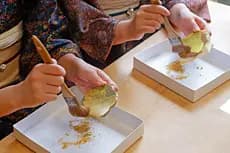 1 / 61 / 7
What's included
- Customized itinerary
- Guided Experience
- Local insights and insider tips
- Entrance fees
- Food and drink
- English-speaking WOW U Local guide throughout (2.5 hours) - Kenrokuen admission - Matcha and seasonal sweet at Gyokusen-an - Gold leaf workshop at Kinpakuya Sakuda (chopsticks, take home same day) - Cultural interpretation at both stops
Not included
- Transportation fee
- Other personal expenses
- Hotel pickup and drop-off - Meals and personal drinks - Workshop item upgrades - Personal shopping
What happens after you request
- 1
Send your request
Pick your dates and party size and send a request. No payment yet.
- 2
Decide the details together
Chat with Ishikawa Locals Network to work out the date, plan, and final price together.
- 3
Pay securely
Once confirmed, pay through a secure link to lock in your booking.
- 4
Enjoy your experience
On the day, Ishikawa Locals Network will meet you at the meeting point. You can leave a review afterwards.
For cancellation fees, see our Cancellation Policy.
Meeting point
Kenrokuen, Katsurazaka Gate
1-19 Kenroku-machi, Kanazawa, Ishikawa 920-0936, Japan
Things to know
◾️ Good to know
Please arrive at Kenrokuen's Katsurazaka Gate at the time specified by your guide. The gold leaf workshop runs on fixed session times, so the schedule can't shift once started. Maximum 6 participants — always private, never merged with another group. The teahouse is tatami seating. Let your guide know at booking if sitting on the floor is difficult. Chopsticks are the included item. Plates, small boxes and other pieces can be upgraded on the day at your own cost. About 25 minutes of walking between the two stops, mostly downhill. A taxi can be arranged instead — please request at booking. The garden is gravel throughout; flat shoes are a good idea. Suitable for children. Stencils are available at the workshop and the artisan adapts naturally. Kenrokuen admission, the teahouse, and the workshop fee are all included.
More to explore in Kanazawa
Spots in the same area as this activity. Some may be a train or car ride away.
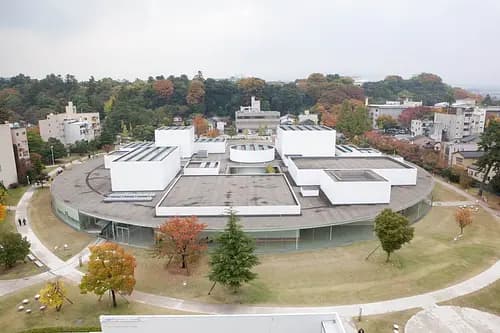
Kanazawa
21st Century Museum of Contemporary Art
Stand beneath a pool — the water is only an illusion above you.
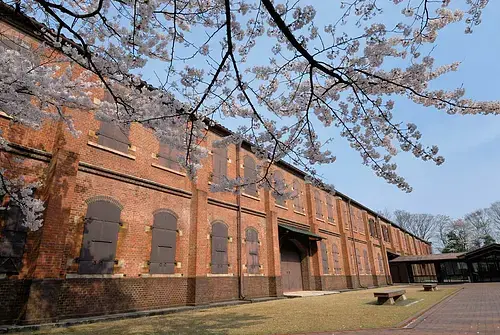
Kanazawa
Ishikawa Prefectural Museum of History
Walk samurai Kanazawa's centuries, from clan rule to modern craft.
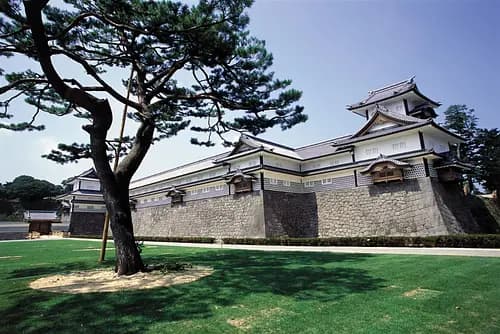
Kanazawa
Kanazawa Castle Park
400-year-old stone walls rebuilt by hand, blossom-ringed each spring.
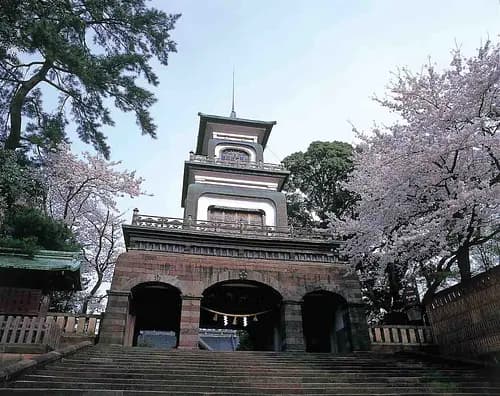
Kanazawa
Oyama Jinja Shrine
A shrine gate fusing Japanese, Chinese, and Dutch styles — built in 1875.