Kanazawa
Kanazawa Was Built to Look Harmless — Tea in the Lord's Private Garden, Then Two Houses That Have Been Serving That Tea for 400 Years
The third Maeda lord spent a fortune on tea so the shogunate would see no threat. Three and a half hours following what that money built: his garden, the sweet he commissioned, and the fu that filled the bowl — two of which you make with your own hands
Time of day
AM, PM
Maximum Participants
Up to 6 people
Languages
Japanese, English
Meeting place
Gyokusen'inmaru Garden entrance, Kanazawa Castle Park
Overview
Kanazawa is a city of craft because its rulers were afraid.
The Maeda clan held the richest domain in Japan outside the shogun's own. That wealth was a problem: a clan that rich, that far from Edo, looked like a threat. So they spent it where it could not be mistaken for an army — on tea, on Noh, on gardens, on confectioners and lacquerers and gold beaters. Three hundred years of proving harmlessness is why almost everything worth touching in this city is something someone makes by hand.
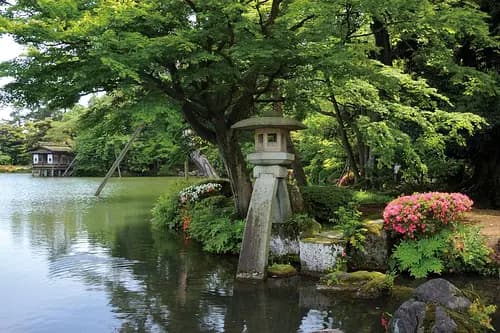
This morning follows one man's version of that. Maeda Toshitsune, the third lord, began the garden you'll walk into in 1634 — private, built into the castle's own slope, with a waterfall dropping from midway up a stone wall patterned like scattered poem cards, laid as scenery rather than defense and found in no other castle in Japan. The same lord commissioned a dry sweet called Chōseiden, which a tea master of the era named and which is still counted among the three great confections of Japan.
You take tea in the room the garden was made for. Then you walk out of the castle to the house that has made that sweet since 1625, and press your own rakugan into an Edo-period wooden mold — the same molds that fill the museum upstairs, a thousand of them, carved for sweets that no longer exist. Yours comes out of the mold in about four seconds, and you eat part of it with matcha while it's still soft.
Then, five minutes down the street, the savory half. A merchant house making fu — wheat gluten — on the same corner since 1865. Fu is the backbone of this region's cooking: in tea kaiseki, in temple food, in jibuni, the stew every household here argues about. You'll build three soup monaka from dozens of fu shapes and dried vegetables, choose your broth, and carry them home sealed.
Sweet side and savory side of the same 400 years, made by your own hands, in one morning.
Operated by

Locals available to lead this activity
These Locals have trained for this activity. Your Locals is assigned after you request to book.

Route
- 1
Kanazawa Castle Park
The garden that was never on the guest list
Your guide meets you at the garden entrance. A short walk in first: the stepped waterfall, the pond shaped to the castle's terrain, the poem-card stonework. Who Gyokusen'in was — wife of the second lord, daughter of the warlord Oda Nobunaga — why this garden stayed private while Kenrokuen was shown off, and what excavation proved before it was rebuilt in 2015.
More Information →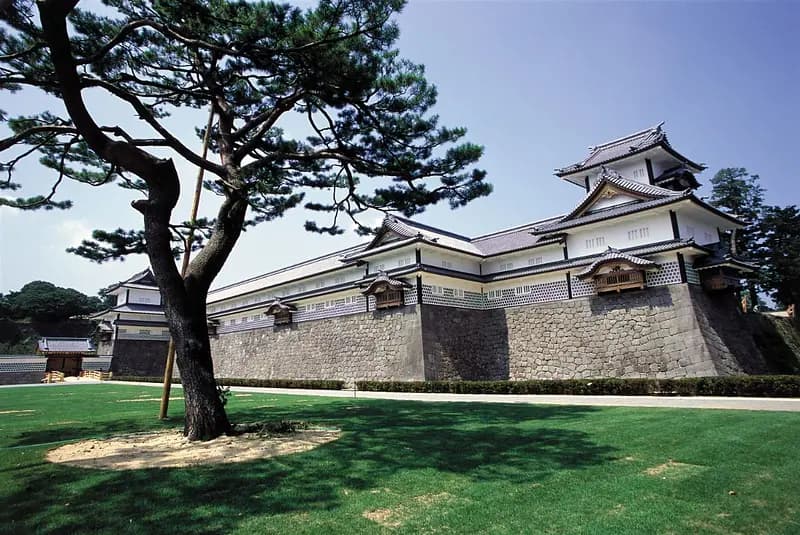 1 / 10
- 2
Gyokusen-an Tea House (Gyokusen'inmaru Garden)
A bowl of matcha, in the room the garden was made for
Tatami, the garden filling the window, a seasonal wagashi and a bowl of matcha. Not a ceremony to sit through — the way tea has actually been taken here: unhurried, in conversation. Your guide sets up the question the rest of the morning answers: why did a clan this powerful spend this much on something this small?
More Information →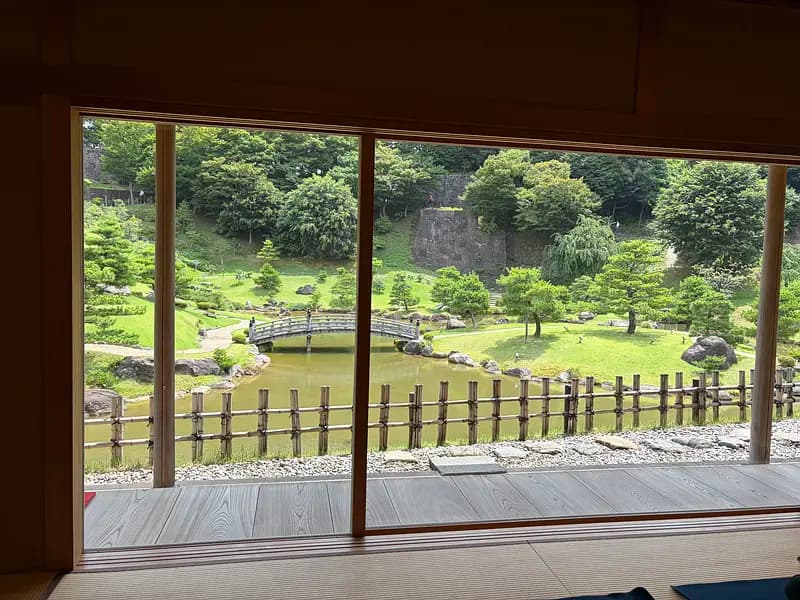 1 / 81 / 9
- 3
Out through the great gate, into the merchant quarter
Twenty minutes on foot across the Sannomaru grounds and out the castle's main gate. The moat, the clan's calculation, and what the shogunate was watching for. You arrive at a confectioner that has been in business since 1625 — a decade before the garden you just left was started.
- 4
A thousand molds for sweets nobody makes anymore
Upstairs, over a thousand molds carved from the Edo period onward, kept by one family. Cranes, shells, crests, seasonal figures — some for sweets whose recipes are gone. Your guide reads the ones worth stopping at.
- 5
Kagafu Fumuroya Owaricho Main Store
The savory half, since 1865
Forty-five minutes building your own soup monaka: fillings from dozens of fu shapes and dried vegetables, then a broth from six dashi and miso bases. Three finished pieces, sealed to travel. Before you go, the house specialty — shiratama nama-fu, fresh fu as soft as mochi. Ends around 12:20 in Owaricho, with your guide's list for lunch: Omicho Market five minutes one way, Higashi Chaya fifteen the other.
More Information →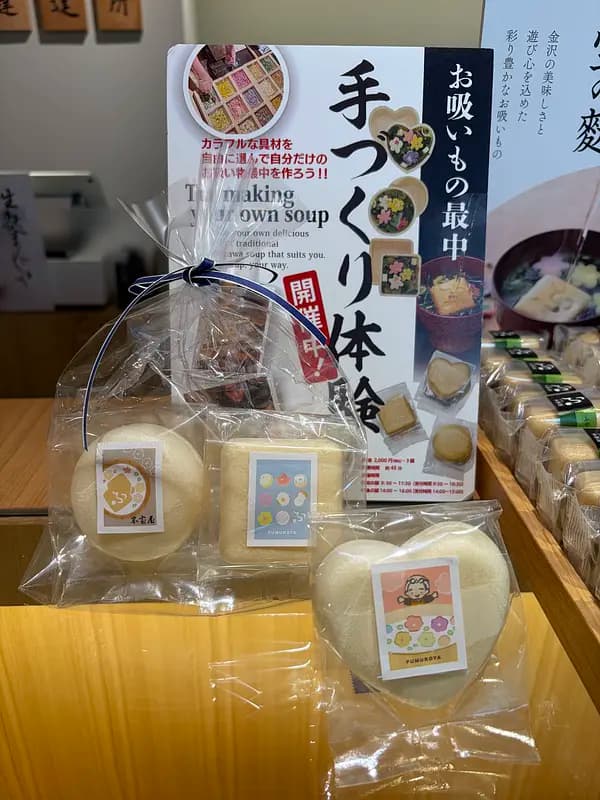 1 / 71 / 8
What's included
- Customized itinerary
- Guided Experience
- Local insights and insider tips
- Entrance fees
- Food and drink
- English-speaking WOW U Local guide throughout (3.5 hours) - Matcha and seasonal wagashi at Gyokusen-an - Admission to the Kanazawa Confectionery Mold Museum - Soup monaka workshop at Kagafu Fumuroya (three pieces, yours to take home) - Shiratama nama-fu at the dessert counter - Cultural interpretation at all three stops
Not included
- Transportation fee
- Other personal expenses
- Hotel pickup and drop-off - Lunch, meals, and personal drinks beyond the above - Personal shopping
What happens after you request
- 1
Send your request
Pick your dates and party size and send a request. No payment yet.
- 2
Decide the details together
Chat with Ishikawa Locals Network to work out the date, plan, and final price together.
- 3
Pay securely
Once confirmed, pay through a secure link to lock in your booking.
- 4
Enjoy your experience
On the day, Ishikawa Locals Network will meet you at the meeting point. You can leave a review afterwards.
For cancellation fees, see our Cancellation Policy.
Meeting point
Gyokusen'inmaru Garden entrance, Kanazawa Castle Park
1-1 Marunouchi, Kanazawa City, Ishikawa
The closest entrances to Gyokusen'inmaru Garden are the Imorizaka Gate and the Gyokusen'inmaru Gate — pass through Nezumita-mon Gate and the garden is right there.
Things to know
◾️ Good to know
Please arrive at the Gyokusen'inmaru Garden entrance at the time specified by your guide. Enter from Imorizaka or Gyokusen'inmaru Gate — the garden is just past Nezumita-mon.
This activity requires at least 2 participants and must be booked in advance — the confectionery workshop runs only twice a day and cannot be added on the day.
Maximum 6 participants — always private, never merged with another group.
The teahouse is tatami seating. Let your guide know at booking if sitting on the floor is difficult; a seat can be arranged.
Both workshops are hands-on but gentle: no heat, no blades. Well suited to children and to travelers who don't consider themselves crafty.
Contains wheat in both workshops. Please tell your guide at booking about allergies or dietary needs — fillings can be adjusted, the shells and molds cannot.
What you carry home: a boxed set of rakugan and three sealed soup monaka. Both are dry goods and travel well.
About 30 minutes of walking in total, on flat ground with a gentle slope out of the castle. Taxis can be arranged instead — please request at booking.
Garden admission is free; teahouse, both workshops, and museum admission are included in the price.
The garden and teahouse may close temporarily for maintenance or weather. Your guide will contact you in advance and propose an alternative.
More to explore in Kanazawa
Spots in the same area as this activity. Some may be a train or car ride away.
Kanazawa
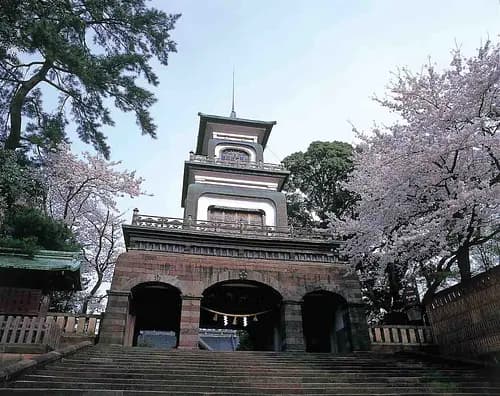
Oyama Jinja Shrine
A shrine gate fusing Japanese, Chinese, and Dutch styles — built in 1875.