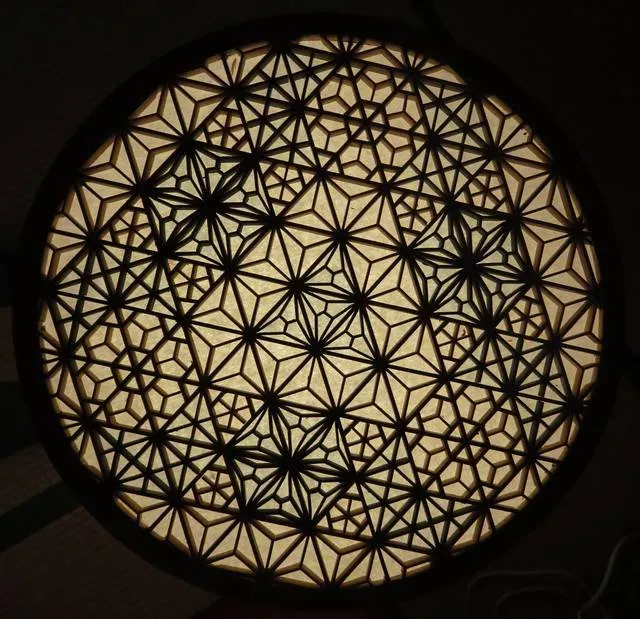
content: Japanese traditional arts are often considered old fashioned by modern consumers. A kumikozaiku artist wants to change that.
Summary
Japanese traditional arts are often considered old fashioned by modern consumers. A kumikozaiku artist wants to change that.
What is Kumikozaiku?
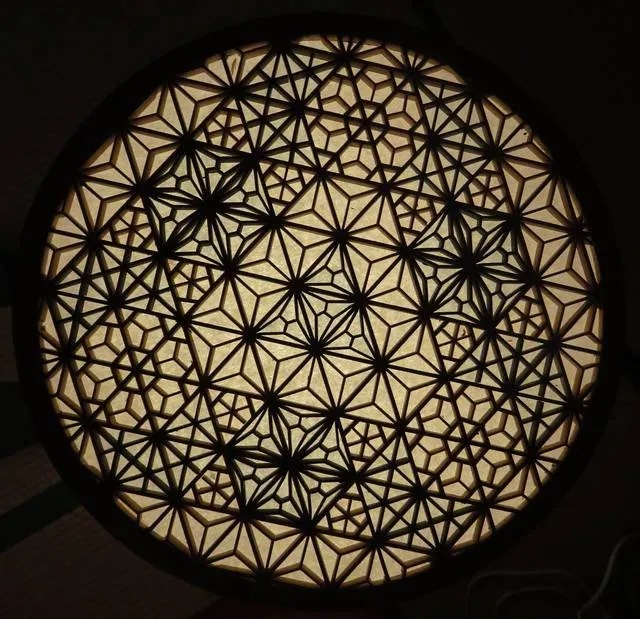
The fine art of Kumikozaiku
The Japanese pay attention to detail. From the meticulous strokes of their writing system (kanji), to the studied control of flower arranging (ikebana), to the precision of paper folding (origami), the Japanese pride themselves on their dedication and determination to endeavor towards perfection.
One of the most iconic examples of Japanese attention to detail is seen through the art of kumikozaiku, Japanese wooden latticework. Kumikozaiku is a process where the artist cuts, shapes, and shaves thousands of tiny bits of wood, then slices small grooves into each piece in order to attach them without nails or glue. Each piece, naturally, must be precisely cut, down to the nearest micron, or they will not fit together. The pieces are then arranged into intricate patterns and made into objects as simple as coasters or as elaborate as lamps and wall decorations.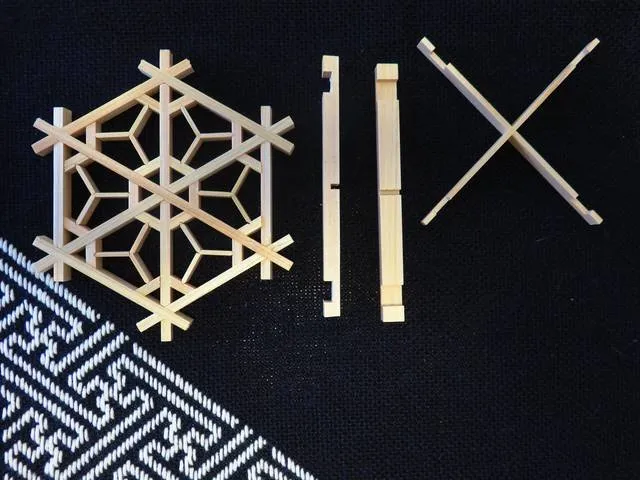 #### Small pieces of wood are cut, notched and connected without glue or nails.
The Fight to Keep the Tradition Alive
kumikozaiku was developed between 600 and 700 AD, and was primarily made into decorative foldable screens and ramma, the ornamental space above doors and along dividing walls in traditional Japanese houses.
But there is little space for tradition in modern Japanese homes. Tatami rooms are being replaced with wood flooring, while rooms are being designed to have an open, airy atmosphere rather than including walls and runners for dividing rooms with sliding doors. The demand for kumikozaiku has plummeted.
Many kumikozaiku artists believe their craft can be adapted to modern life, though, and won’t let it disappear without a fight. They are creating exquisite tables, chairs, boxes and paper-backed lanterns for modern markets. However, because kumikozaiku is made of hundreds of small blocks of wood, the art would appear to be limited to flat-panel objects.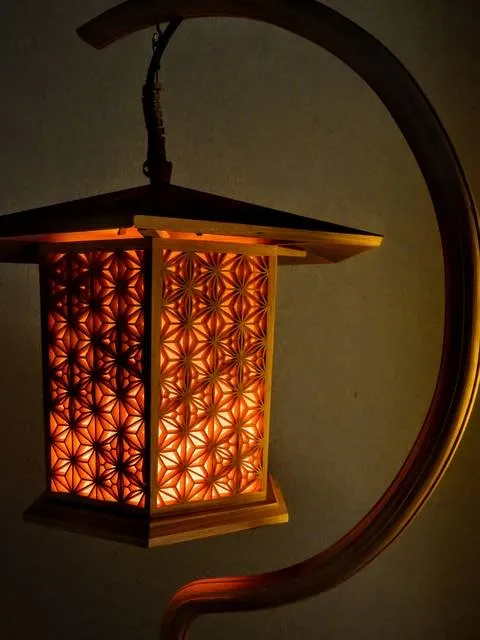
A Kumikozaiku-patterned lantern.
Changing Modern Perceptions of Kumikozaiku
That limitation, “is a matter of perception,” said Sato Shinji, a woodcraft artist who is making revolutionary advances in kumikozaiku. “We need to change perceptions about what can be done with kumikozaiku, where it belongs, and who our customers are.”
Sato is a craftsman in Hadano, a country town about an hour south west of Tokyo. During the day, he works to order, making fusuma and shoji doors and windows for clients’ homes and businesses. In the evenings, however, he experiments with kumikozaiku, allowing his creativity to flow. After years of experimenting and countless results that didn’t match what he had envisioned, Sato accomplished what he was after—a technique for breaking out of the flat-paneled limits for kumikozaiku. Sato creates round kumikozaiku lamps, wood pieces laid in intricate patterns and backed by Japanese paper, then lit with LED lights. The lamps are a bridge between tradition and modern. They hang, revolve or stand, and are exquisite, magical and luminous.
An Artist’s Vision
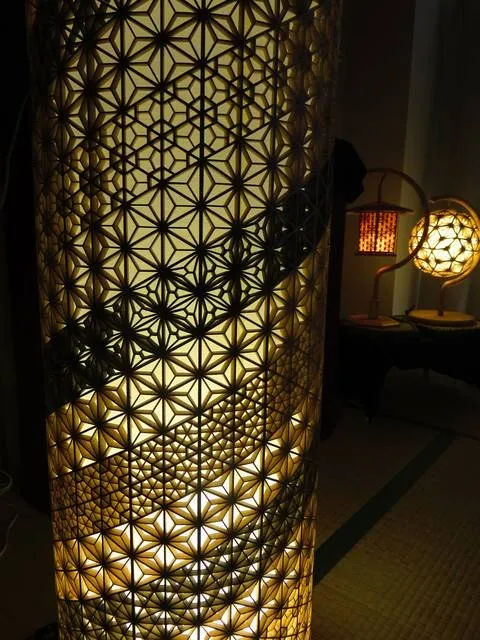
Using a technique he created, artist Sato Shinji makes round and revolving lanterns that appeal to modern consumers.
Usually stoic and serious, Sato gestures, smiles and infuses enthusiasm through the rise and fall of his voice when talking about his passion. Hadano is surrounded by the Tanzawa mountains, he explains. “We see them every day, we feel their presence,” so he uses cypress from the nearby mountains in his creations. Machines cut the larger pieces to guarantee equal thickness in each piece, but he uses hand-held tools, like chisels and planes, for shaping and finishing, as well as cutting the notches that will connect the pieces. Working with his hands instead of machines is important to him. “The wood is warm and smooth. It’s hard and soft at the same time, and when my hand moves across it, it is just naturally relaxing.”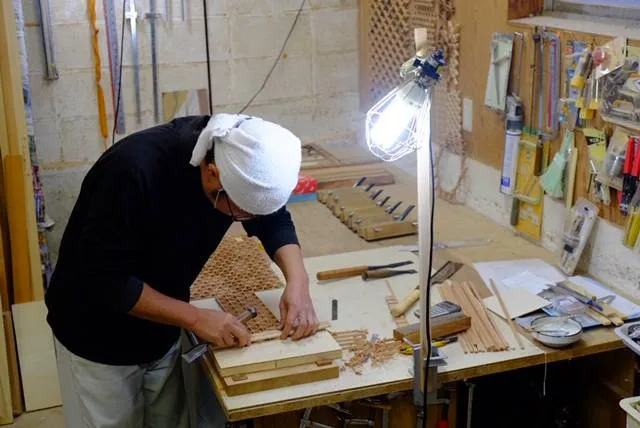
The artist in his workshop.
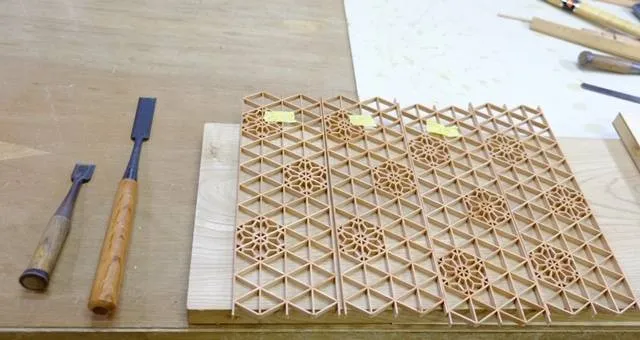
A work in process
Kumikozaiku in a Modern World
Sato hopes his unique pieces, as well as what other artists are doing across Japan with kumikozaiku, will change the way Japanese think about the craft.
“Foreigners have no preconceived notions of kumikozaiku or where such objects can be placed in a house. They just accept it for its beauty,” he said. The Japanese audience, though, associate it with times gone by, with their grandparents or the ancient houses visited on school trips. Sato hopes that his lamps will light a spark in the modern Japanese consumer, so that he and other kumikozaiku artists can continue their quest for perfection.
Information
For more photos of Sato’s work, visit HERE