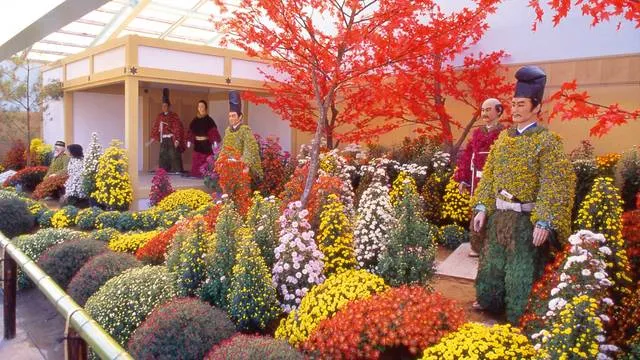
The Takefu Chrysanthemum Figure Festival is held in Echizen city, Fukui. Thousands of chrysanthemums are used to decorate the figures with vivid and colourful views.
First of all, what is a Chrysanthemum Figure?
Yellow, white, orange, pink… over 20,000 chrysanthemums bloom in Echizen city, but what’s interesting about these chrysanthemums is, they clothe the figures. The figures are as tall as general people like us and they are well dressed by different colors of flowers. These figures are called “Kiku-Ningyo” that literally means figures of chrysanthemums.
Echizen city and Takefu city (which has recently merged with Echizen city) has a long history of breeding chrysanthemums and they started the festival of Chrysanthemum Figures in 1952. Ever since then, Takefu Chrysanthemum Figures Festival has been held every fall season. In 2018, it was held from September 28th to November 4th.
The festival sets the theme each year for making chrysanthemum figures, 2018 was themed Saigo Takamori and Bakumatsu-Meiji Period. Saigo Takamori was a popular samurai in Bakumatsu Period and he was considered as one of the three great nobles who led the Meiji Restoration. There are not only chrysanthemum figures of Saigo Takamori but also of locals during that time and people that contributed to the Meiji Restoration. There are photo spots available so you can take pictures with Japanese historical heroes. 2018 marks the 150th anniversary of Meiji Restoration so there are many related events all over Japan.
Chrysanthemum figures as the living arts
The most highlighted part of the festival is, of course, chrysanthemum figure itself. Although it looks like a figure with chrysanthemum, it takes a long process and requires three professionals from different fields. The chrysanthemums for the figures are needed to be thinner, longer and more flexible than other chrysanthemums. These are specially called “Ningyo-giku” (literally means the chrysanthemum for figure) and about 30 different Ningyo-giku are raised by gardeners.
Then the second professional “Ningyo-shi”, the figuremaker, makes hands, feet and heads for the figures. They use traditional materials such as bamboos and grass-straws. The figures are so realistic that they seem so real, that their eyes seem to have life. The last professional for making chrysanthemum figure is called “Kiku-shi.” Kiku-shi puts chrysanthemums on the figures. Flowers are not cut; but tied the roots together and put on the figures. Fresh water is served everyday and the chrysanthemums are replaced every 10 to 14 days. The work of Kiku-shi does not finish before the festival starts, but it continues until the very end of festival.
When the condition is good, flowers pleasantly bloom so the figures look lively and energetic. That is why chrysanthemum figures are called the living art and you should visit not only one day, but several days in a row to see the changes of the chrysanthemum figures.
More things you can enjoy in the festival
The Takefu Chrysanthemum Figure Festival is designed for not only people who like traditional Japanese arts, but also for wide range of people including children. The festival is in the public park Echizen-shi Takefu Chuo Koen, and there are more than 10 kinds of fun attractions like merry-go-round, playland and Ferris wheel. The model of Hokuriku-shinkansen, the bullet train running between Tokyo and Hokuriku (Niigata, Toyama, Fukui, Ishikawa) looks so realistic and kids can ride on it. Single tickets are available or you can buy tickets for the whole day.
Gardeners exhibit their chrysanthemums with great care and effort. Senringiku is much larger than other chrysanthemums and it takes 2 years to grow and more than 2,000 chrysanthemums flower bloom. Interesting fact is they come from a specific species of plant. Nanahon-date of Ogiku is the chrysanthemum species that are breed and have seven variety of flowers. This kind has been preferred among Hokuriku area and its appearance is gorgeous.
Besides figures, there are chrysanthemums shaped as animals in Kiku no Art Garden. You will see many animals like a dolphin or a peacock and it is a popular photo spots especially a 4 meter (13 feet) bear, the largest chrysanthemum animal on display. There are souvenir shops and food courts in the festival area. The local food in Hokuriku area is popular for fresh and tasty seafood which is a must try.
If you are interested in Japanese traditional crafts, there are many places to visit in Fukui. Sabae is the city produces the most eyeglasses in Japan. Echizen is popular for Washi, Japanese traditional paper and you can try making Washi there. Echizen even has the shrine which is sacred to gods of paper.
How to visit?
It’s about a 3 hour train-ride from Tokyo to Takefu Station. The free shuttle bus is available from the train station to the festival place during the festival season or even it is about 1.5km long so you can walk too.
Address: in Fukui Takeo Central Park (Takase 2, Echizen-shi, Fukui)
Tel:+81-778-21-0175
Address: in Fukui Takeo Central Park (Takase 2, Echizen-shi, Fukui)
Tel:+81-778-21-0175