content: From the beginning of the Showa Period (1926 - 1989) Bunko leather products have been made in this workshop in Mukojima, Sumida-ku. This traditional craft combines a variety of patterns and colors skillfully on white leather to create tasteful designs. We spoke to the leather craft maker "Ozeki" about the sustainable model they are using to keep their craft alive at a time when it said that many of the traditional crafts are in decline.
Summary
From the beginning of the Showa Period (1926 - 1989) Bunko leather products have been made in this workshop in Mukojima, Sumida-ku. This traditional craft combines a variety of patterns and colors skillfully on white leather to create tasteful designs. We spoke to the leather craft maker "Ozeki" about the sustainable model they are using to keep their craft alive at a time when it said that many of the traditional crafts are in decline.
With Over 100 Designs, Bunko Leather Serves Customers And Continues To Polish Their Ideas
Have you heard of the leather craft works called "Bunko Leather" made in Mukojima, in the Sumida district of Tokyo?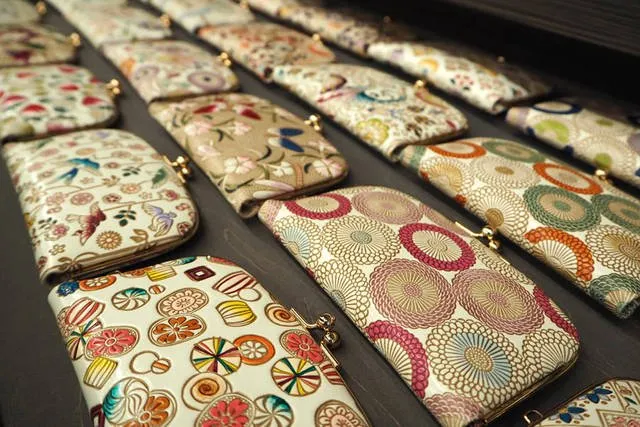
Photograph: Colorful "Bunko leather product" line-up at the leather craft shop.
via 2018, Photo by Ayako TakahashiThis traditional leather craft began in Himeji, Hyogo Prefecture. In order to create this traditional leather craft, white cowhide which is colourfully embossed with various patterns using a technique called "Sabi-ire" literally, putting rust in, is used.Sometimes subtle, sometimes striking, every design is hand-crafted one brushstroke at a time. It uses the "Sabi-ire" technique, which uses "urushi" lacquer and , "makomo", the ground up seed of poaceae perennial plant. This technique gives each design its depth and elegance, painstakingly and meticulously crafted one at a time.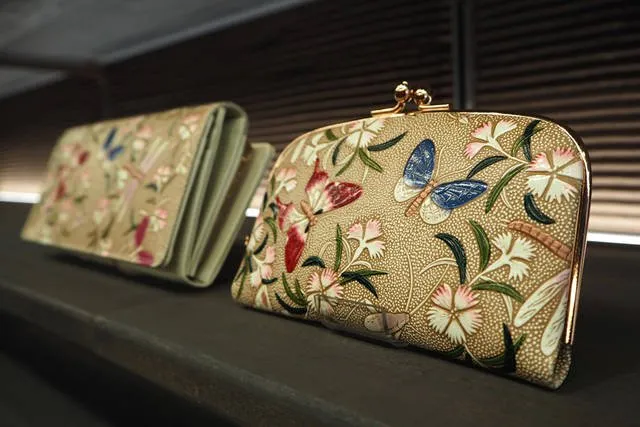
Photograph: Following the "Sabi Ire" process the leather takes on a brown color. Deeper coloring can be done.
via 2018, Photo by Ayako TakahashiBunko Leather originated from Himeji's local industry known as "Hime Leather Craft".
At the time, Hime Leather Craft's production techniques gradually spread from the west to the east, and it is said that by the Taisho Period (1912 - 1926) Hime Leather workshops were dotted around the Kanto Region. However, those workshops were completely wiped out in the Great Kanto Earthquake of 1923.
The leather craft workshop "Ozeki's" founder, Mr. Ozeki Usaburo also lost his workshop in the earthquake. However, he independently rebuilt the workshop by himself. Since then 91 years have passed and the same store is run by the 3rd generation president.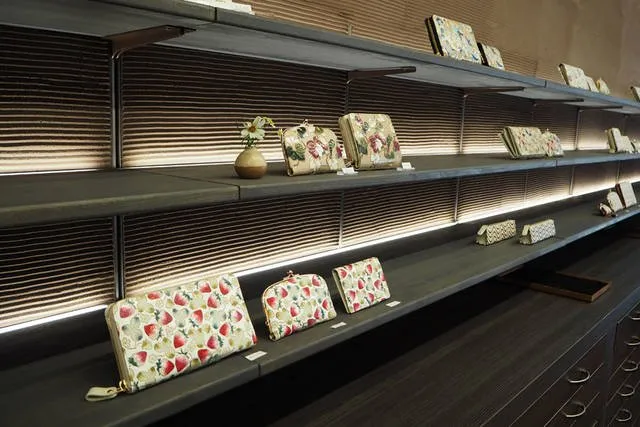
Photograph: Compared to Hime Leather, Bunko leather craft is said to be more vibrant and colorful.
via 2018, Photo by Ayako TakahashiBunko Leather has more than 100 design patterns. If you include the patterns not currently being displayed, this number climbs to over 300 designs. These include long wallets, folding wallets, coin purses, stamp holders, smartphone cases and business card holders of various shapes and sizes. The diverse lineup can be seen on their website, or at their Asakusa or Ginza stores.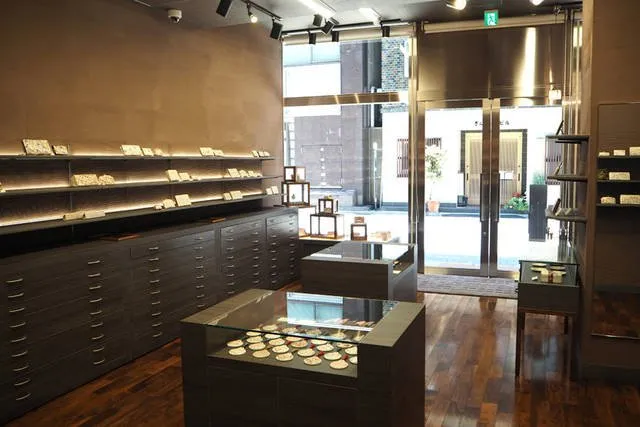
Photograph: Interior of the Bunko leather shop "Ozeki" Ginza Store, opened in 2018
via 2018, Photo by Ayako TakahashiProducts are lined up in the store so it is easy to take each product in hand one at a time and compare them at your leisure. Some collectors even accumulate tens of the same item in different designs. 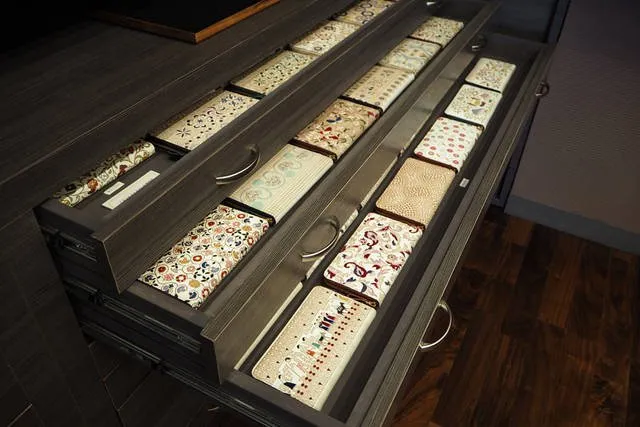
Photograph: According to data from the online shop there are more than 300 customers who purchased over 20 items each.
via 2018, Photo by Ayako TakahashiEven with such an abundant variety in designs this Bunko leather workshop has only 2 designers. One of them is Ms. Moeko Tanaka who has brought many designs to life whilst participating in customer relations at the Ginza Store. "I get sudden inspiration from the types of items customers are looking for, or are currently using." Says Moeko.
Why Bunko Leather Is Particular About The Popular "Candy" Design
For Moeko, the ability to meet and interact with customers is essential to help with her design work.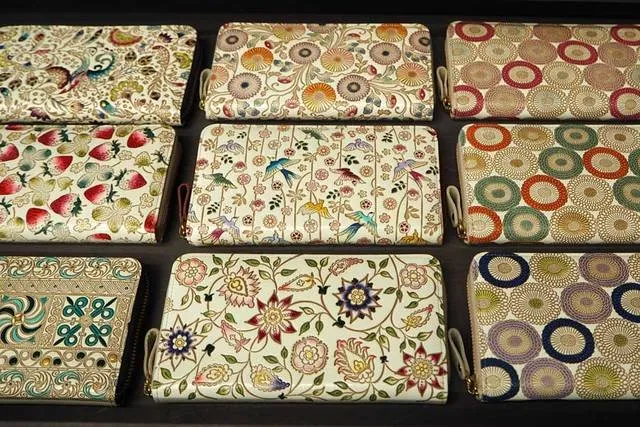
Photograph: The designer says that by examining the product line up in store, it is often possible to consider what designs that are not yet available and get new ideas
via 2018, Photo by Ayako TakahashiMoeko began trying her hand at Bunko leather craft design before she even joined the company, when she was still looking for a new job. That design has chitose candy, fruit drops, mandarin candy and other vivid, nostalgic candies all drawn together in a cute design. It is said that she unveiled the design at her job interview.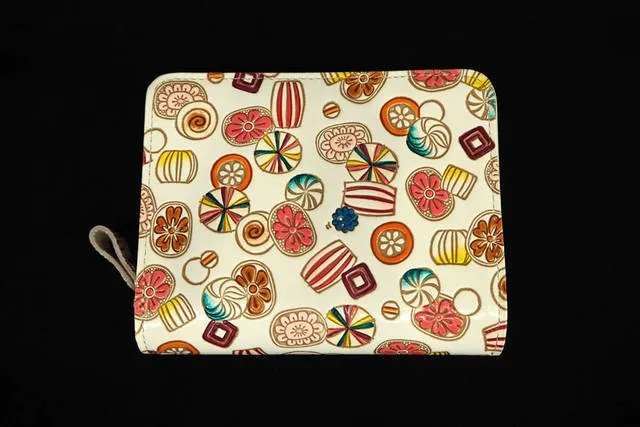
Photograph: This is the "Candy" design that is said to have taken 7 years to make. An elderly lady supposedly said "looks delicious" as she purchased this item.
via 2018, Photo by Ayako TakahashiThe candy design is currently very popular at the store. However, from the day the design was first unveiled to it actually becoming a product took an unbelievable 7 years.
"Bunko Leather designs are etched roughly into the leather. Because of that they have unusual lines, with a pattern that dictates where and how it should be textured, when the rusting is applied what sections should be done, with consideration to the appropriate way to present the design, all of which are necessary when making the illustration." (Moeko)
Over the 7 years, whilst doing other work and designs, the candy design underwent much trial and error before the final design was approved.
For example, Moeko realized that whether the candy images should be evenly or randomly placed, and whether they should be embossed or not has a big influence on the impression of the design.
Furthermore, the deep blue of konpeito candy that uses blue dye can greatly change the appearance of the piece. She says that the two little short lines next to the candy make it look like the candy is rolling. Without the two lines impression is totally different.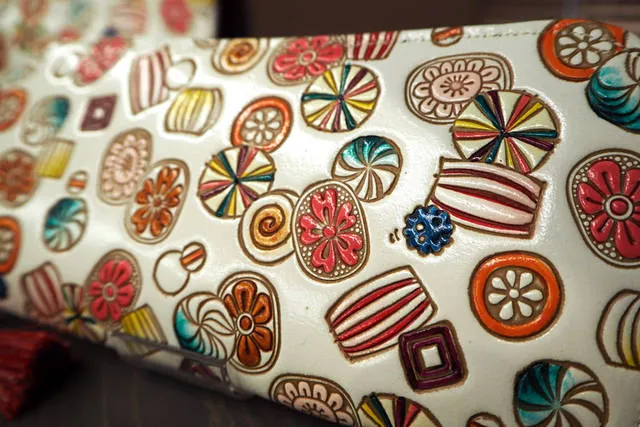
Photograph: Imagining the design without the blue konpeito candies while listening to her talk, I was convinced that it will be totally different.
via 2018, Photo by Ayako Takahashi"These products are not cheap and customers need some courage to buy them – so I believe we have to focus on all the little details." (Moeko)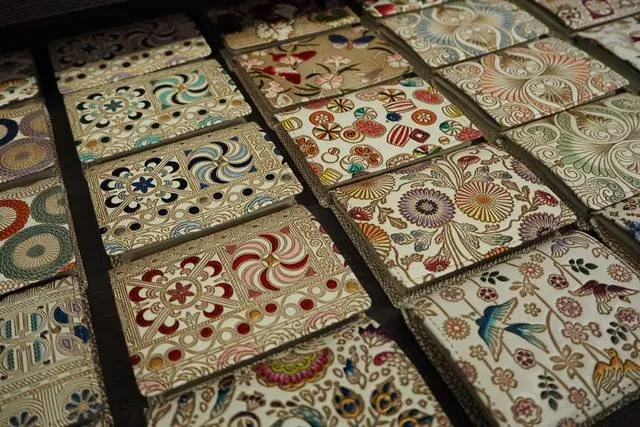
Photograph: They told me that there are times when they discover a new way of expressions through trial and error, leading to ideas for new designs.
via 2018, Photo by Ayako Takahashi
Creating A System To Preserve The Traditional Craft For 50 Or A 100 Years And More
Meanwhile, the other designer, Mr. Takeshi Tanaka, the Presiden, creates patterns logically using past sales data. Based on Pareto's law, which states that 20% of a product range accounts for 80% of sales, he comes up with designs to generate this 80% of the sales. While this is the main source of sales, they also have a wide range of designs which do not need to be so popular but are favored by a few customers.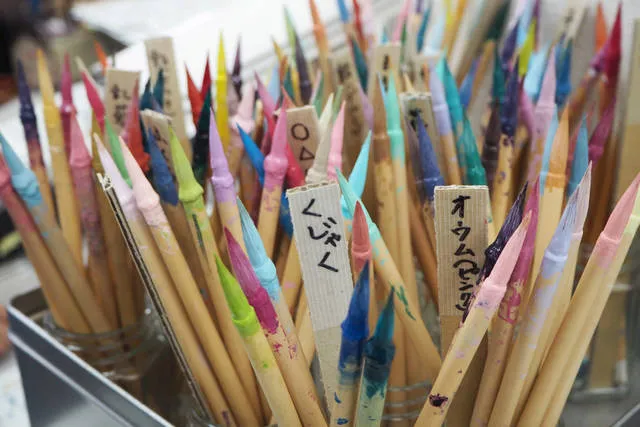
Photograph: Brushes used for painting
via 2018, Photo by Ayako Takahashi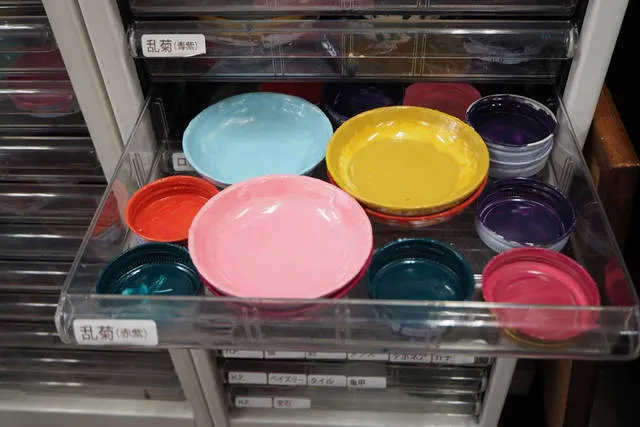
Photograph: Hundreds of hues are created by skilfully mixing just these 8 colors of paints.
via 2018, Photo by Ayako TakahashiThe time required for a design to be completed varies greatly from design to design, some progress smoothly and some can take up to 10 years before becoming products.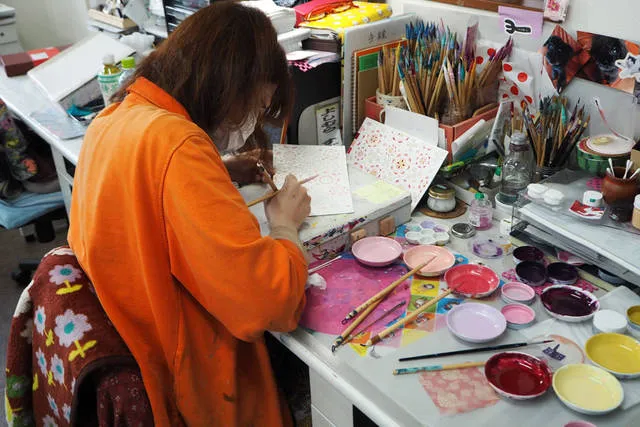
Photograph: Professional painters perform painting in a beautiful, thorough and even manner, sometimes holding 2 brushes at the same time and switching between them quickly.
via 2018, Photo by Ayako Takahashi"We always work on around 10 designs in parallel, not getting fixed on a particular design. This is because one day you can suddenly make progress on a design just by keeping it near at hand." (Takeshi)
Takeshi engages in various operations as the president including designing. However, he says that when he was young he never imagined he would be doing what he does now.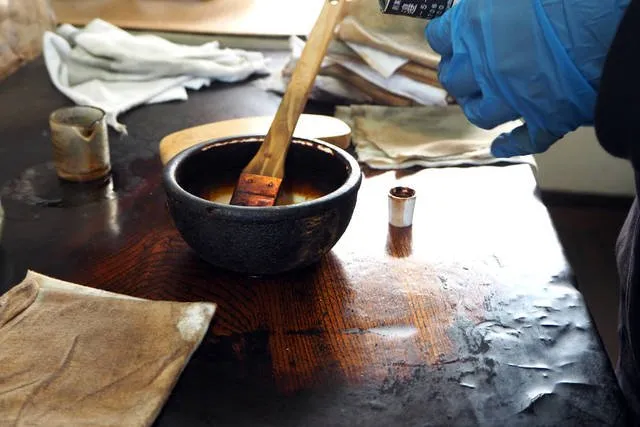
Photograph: Urushi lacquer at the factory
via 2018, Photo by Ayako TakahashiIt was about 25 years ago when Takeshi reached a turning point while he was working independently in his 20s to make a living outside the family business. Two of the family businesses, the "Ozeki Store" (the name back then) run by his father, and the "Tanaka Store" which produced wallets for licensed brands, nearly went bankrupt. As a result, Mr. Tanaka took over both of the family businesses to attempt to save the businesses.
Today, they are creating a system to continue to train new craftspersons and secure human resources permanently in order to keep the business running for another 50 or 100 years.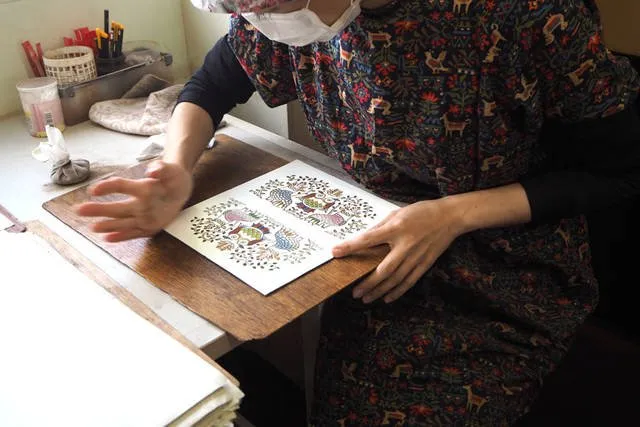
Photograph: Checking to ensure that "sabi" is evenly there after "sabi-ire" process
via 2018, Photo by Ayako TakahashiThere are currently 43 employees in the company including 18 people engaged in coloring, 6 people for stamping and general sales. There are also 11 freelance coloring staff who used to work for the company. They say that the reason for dividing work and not assigning one person to do the whole process is to prevent competition within the same business.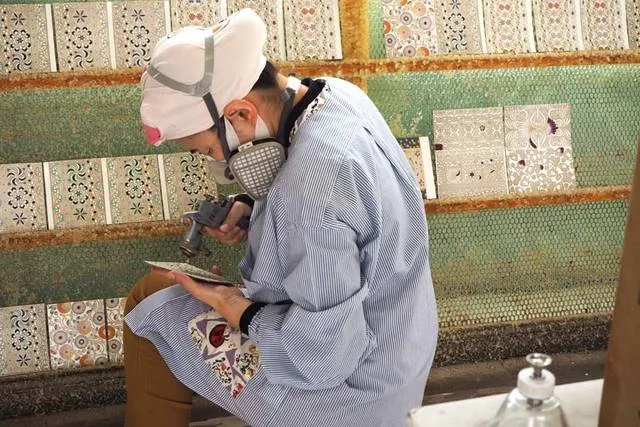
Photograph: Air blowing process
via 2018, Photo by Ayako TakahashiAnother strong point of the business is that they have the ability to own the whole process from procuring material to sales.
"Since we sell our products directly to our customers without involving a wholesaler, the more products we sell the more profit we make. We make our products and sell them by ourselves – so we can take a leadership role in logistics." (Takeshi)
This strength lets them provide their customers with attentive aftercare. Customers can request repair of products they have purchased from "Ozeki".
"This is possible because we fully understand our products and we make them totally on our own. Even if repair is difficult, we can explain that to customers in details." (Takeshi).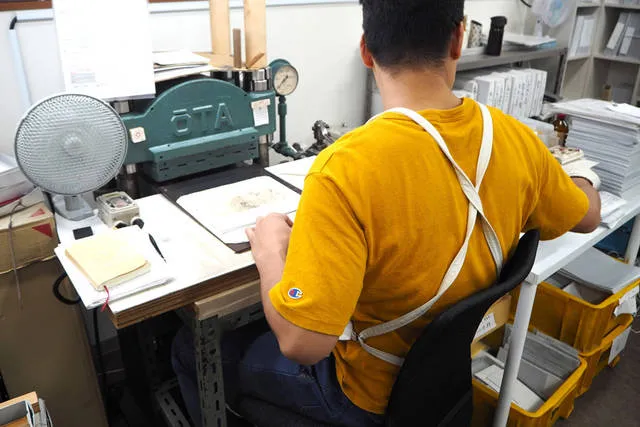
Photograph: Stamping process
via 2018, Photo by Ayako TakahashiTakeshi's pioneering spirit was also demonstrated when they began online sales in 2000. At the time, running an e-commerce website was not common and it was a big challenge to set up the online shop. He learned how to use HTML tags from books and participated in discussions and meetups with other online shop owners to talk about how to increase access to their sites.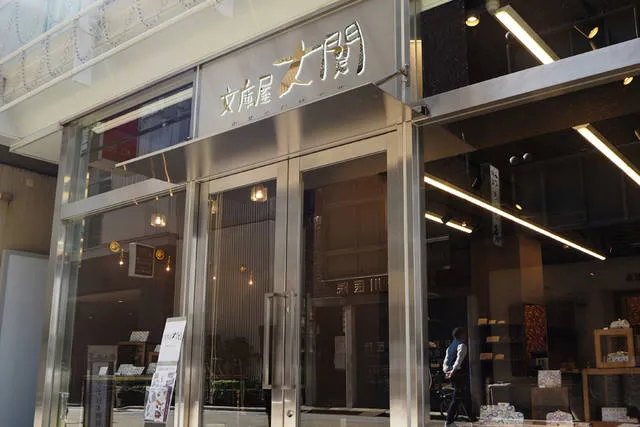
Photograph: Appearance of "Ozeki" Ginza Shop
via 2018, Photo by Ayako TakahashiWith all those efforts starting to bear fruit, the leather craft shop "Ozeki" grew to have 2 flagship shops in Tokyo's busiest areas. We highly recommend you to take a look at their beautiful world full of colors.
Information
● Bunko Leather Shop "Ozeki" Ginza Store ・Address: 1-8-7 Ginza, Chuo-ku, Tokyo ・Access: 2-minute walk from exit no. 9 of Ginza Itchome Station on Tokyo Metro Yurakucho Line. 5-minute walk from the exit no. A12 or 13 of Ginza Station on Tokyo Metro Ginza Line. ・Opening Hours: 11:00 – 19:00 ・Open all days of the week● Bunko Leather Shop "Ozeki" Asakusa Store ・Address: 2-2-6 Asakusa, Taito-ku, Tokyo ・Access: 6-minute walk from Asakusa Station on Tokyo Metro Ginza Line. 7-minute walk from Asakusa Station on the Toei Asakusa Line. ・Open Hours: 10:00 – 18:00 ・Closed on Wednesdays *Closed from December 29th – January 2nd for the New Year Holiday *The open hours are subject to change.Supervision
 Provision of Article
URBAN METRO LIFE
ーーーーーーーーーーーーーーー
Tokyo Metro Co., Ltd.
3-19-6, Higashi-ueno, Taito-ku, Tokyo
TEL:+81 FAX:+81 E-mail:
ーーーーーーーーーーーーーーー
© urban life metro 2018