content: On top of being well known for their distinctive natural features, the beauty and abundance of their mythological or historical sites and the diversity of their culinary panorama, several cities all around Kyushu have managed to keep a number of traditional rites and festivals alive and thriving.
Among them, Kumamoto prefecture's Yatsushiro city is famous for its unique Autumn festival, the Myoken Festival.
Summary
On top of being well known for their distinctive natural features, the beauty and abundance of their mythological or historical sites and the diversity of their culinary panorama, several cities all around Kyushu have managed to keep a number of traditional rites and festivals alive and thriving.
Among them, Kumamoto prefecture's Yatsushiro city is famous for its unique Autumn festival, the Myoken Festival.
Interesting Facts about Kumamoto and Yatsushiro
Located in central Kyushu, Kumamoto has a lot to offer to its visitors, both in terms of wild nature and historical sites. Still, beautiful forests and abundant thermal springs are not its only characteristic features: in recent years, in fact, a series of eruptions has brought Kumamoto's most famous volcano, Mt. Aso, under the spotlight of the media. The danger it represents, combined with the impressive size and features of its caldera, caught the attention of many, not only within Japan, but also on a global scale.
Situated in the heart of Kumamoto, Yatsushiro is the second largest city within the prefecture: it spreads from east to west and with its surface encompassing both coastal and mountainous areas. With an economy focused on agriculture since the Edo period (1603-1868), Yatsushiro produces yearly almost 80% of the soft rush straw (igusa) used in Japan for the realization of Tatami mats. Additionally, Yatsushiro is also famous for the quality of its tomatoes and citruses.
The area facing the sea is well known for its hot springs, with the most popular among them being Hinagu onsen, a renowned bathing spot since the late 15th century: after a trip to the hot springs, visitors will be able to enjoy local seafood while strolling around immersing themselves in the town's picturesque landscape. According to the Japanese custom of taking citrus baths with the arrival of the cold season, tourists visiting Hinagu onsen in winter will also have a chance to experience the luxury of bathing among locally produced citruses.
Yatsushiro's Myoken Festival at Myokengu
The Myoken festival is the biggest festival in Yatsushiro, as well as one of the oldest. According to the records, it was first held in 1515 – during the Muromachi period (1336-1573) – at a shrine known as Myokengu, which was founded in 795 at the beginning of Heian Period (794-1185). The festival, taking place towards the end of November, is listed as one of the three major festivals in Kyushu, together with Nagasaki's Kunchi and Fukuoka's Tamatori festivals. In 2011 the Myoken Festival has been acknowledged as a National Intangible Folk Cultural Property, and it was listed among UNESCO's Intangible Cultural Heritages in 2016.
Among the many highlights of the festival, the powerful dance of the black tortoises certainly holds a special position. The black tortoise is an imaginary animal commonly represented in Asia as a crossing between a turtle and a snake, and it is generally referred to in Japan as Kida or Game. Its mythical status stems from a folktale, according to which about 1300 years ago the God of Myoken came to visit the area riding on a huge black turtle: to celebrate this event, the locals elected Game as the representative figure for this festival.
On the day of the celebrations, a long procession of dancers dressed up as Game, Gods and other mythological figures walks through the city from early morning to late afternoon. Visitors are encouraged to take a look at the route map or gather some information on the official Yatsushiro website beforehand to familiarize with the suggested sightseeing routes and pick the best spots to admire the lively course of the procession.
How to visit?
From Tokyo to Kumamoto : about 2 hours by airplane, about 6 hours by bullet trainFrom JR Yatsushiro station : 10 minutes by bus
From Aso Kumamoto airport : 1 hour by car
From Yatsushiro IC : 5 minutes by car
Kyushu's Two Other Major Festivals in Nagasaki and Fukuoka
 via www.photo-ac.com
 via www.photo-ac.comAs we already mentioned, Kyushu is home to two other widely known major festivals: Nagasaki's Kunchi and Fukuoka's Tamatori.
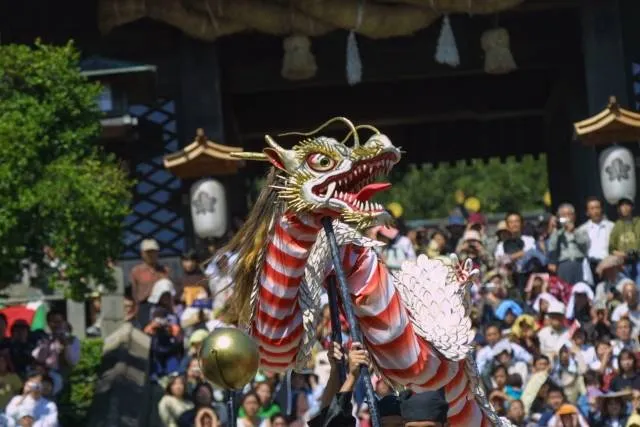
The Nagasaki Kunchi, with its 500 years of history, takes place in the Suwa-jinja, a Shinto shrine within walking distance of Nagasaki's main station. Locally referred to as Okunchi, it is venerated as the most energetic festival in the area. With Nagasaki's historical background as Japan's main port for international trading since 1571, the Kunchi developed an international flavor which makes it stand out among other traditional festivals in Japan; examples of this foreign influence can be found in the Chinese styled Dragon Dance and in the parade of the floats (Hikimono) with its fully fledged exotic appeal. The festival, with its bright atmosphere and its rich colors, is held every year in early October and goes on for three days in a row.
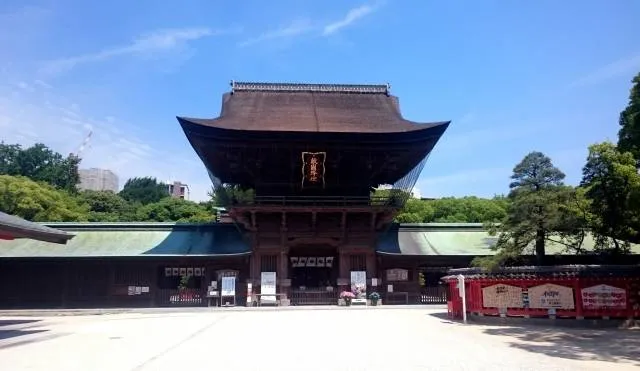
Also known as Tama-seseri, Fukuoka's Tamatori also holds a special place among festivals in Kyushu. In fact, it has been regularly held for over five centuries to celebrate the arrival of the New Year in the suggestive location of Hakata's Hakozakigu-jinja, a prestigious shrine founded in 923 and currently ranked as one of Japan's most important national properties.
The whole idea of Tamatori revolves around its main ceremony, where the participants, all dressed up in nothing but loincloth, compete for the possession of a ball (Tama) representing the Yang before it gets reunited with its counterpart, the one representing the Yin. Those who manage to touch the ball are thought to be granted good luck for the New Year, and men from the area engage in a fierce competition to obtain such a privilege. Visitors interested in local traditions won't be disappointed after attending this festival.
How to visit?
From Tokyo to Nagasaki : about 2 hours by airplane, about 7 hours by bullet trainFrom Nagasaki-Dentetsu tram line Suwa Shrine station : 10 minutes walk
From Nagasaki Susukizuka IC : 10 minutes by carFrom Tokyo to Fukuoka : about 2 hours by airplane, about 5 hours by bullet train
From Metro Hakozaki-Miyamae station : 3 minutes walk
From JR Yoshizuka station : 10 minutes walk
Must Visit Destinations in Yatsushiro: the Shohinken Teahouse and Gokanosho Natural Park
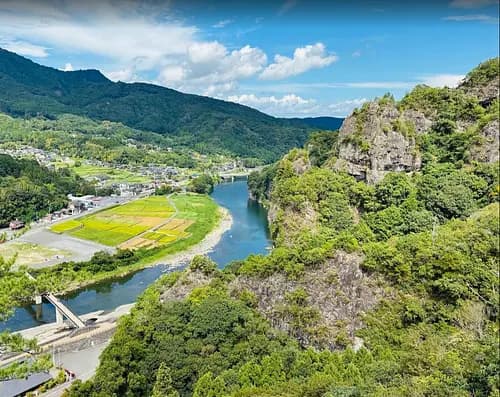
Yatsushiro's attractions do not end with the Myoken festival: one of the most popular destinations for tourists visiting the area is Gokanosho, a natural park situated in the mountainous area east of Yatsushiro. It's a wonderful one-day trip destination for nature lovers and hikers, and especially in Autumn, when the colors of the landscape start shifting into the reddish tones of the Japanese momiji, visitors can immerse themselves in the graceful atmosphere of breathtaking panoramas.
For those interested in the architecture or Japanese gardens, the Shohinken teahouse and garden are an absolute must-visit. The Shohinken teahouse is conveniently located and easy to reach from the the city center: its structure was completed in 1688, and even after 350 years it still retains Edo's characteristic elegant design and ambience. The whole area changes dramatically with the movement of the seasons, and it is always ready to welcome its visitors with its rich, nuanced panorama.
How to visit?
From Tokyo to Kumamoto : about 2 hours by airplane, about 5 hours by bullet trainFrom JR Yatsushiro station : 15 minutes by bus and 5 minutes walk
From Yatsushiro IC : 15 minutes by carFrom Tokyo to Kumamoto : about 2 hours by airplane, about 5 hours by bullet train
From JR Arisa station : 2 hours by car
From Mashiki IC : 1 hour by car
Reference List
https://www.osuwasan.jp/page0200.html
https://www.hakozakigu.or.jp/pdf/english.pdf
https://www.kinasse-yatsushiro.jp/myoken/en
http://en.myouken.com/
http://nomano.shiwaza.com/tnoma/blog/archives/007195.html
http://www.kinasse-yatsushiro.jp/en/