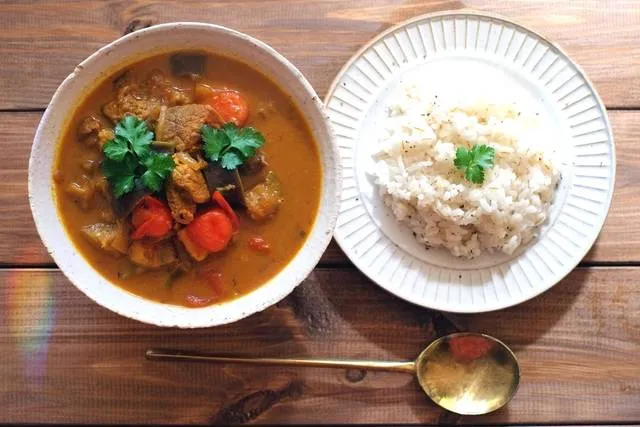
content: Kanda Jinbōchō is known for its many curry restaurants. But how did the curry culture established there in the first place?We studied a little bit deeper into it and found some materials, which are different from the known stories.
Summary
Kanda Jinbōchō is known to be the “world's #1 secondhand bookshop district” among Japanese visitors (Chiyoda Ward). But, there is actually another speciality hiding within Kanda Jinbōchō, which is as popular as those secondhand bookstores, and that's curry.
More than 400 curry restaurants and shops in the area
Kanda Jinbōchō is known to be the “world's best secondhand bookshop district” among Japanese visitors (Chiyoda Ward). But, there is actually another speciality hiding within Kanda Jinbōchō, which is as popular as those secondhand bookstores, and that's curry.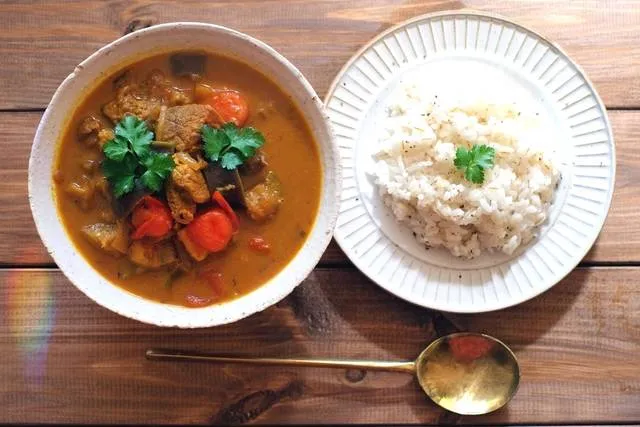 Curry came to Japan in the Meiji period. It is already long known to be a national favorite dish. (Photograph: Photo AC)via urbanlife.tokyo
Within just a 1km radius around Jinbōchō Station, there are already 60 curry shops lining up, including cafés and restaurants that have curry dishes on their menu. This amazing number of shops eventually has increased to more than 400 shops, and the number is still growing. 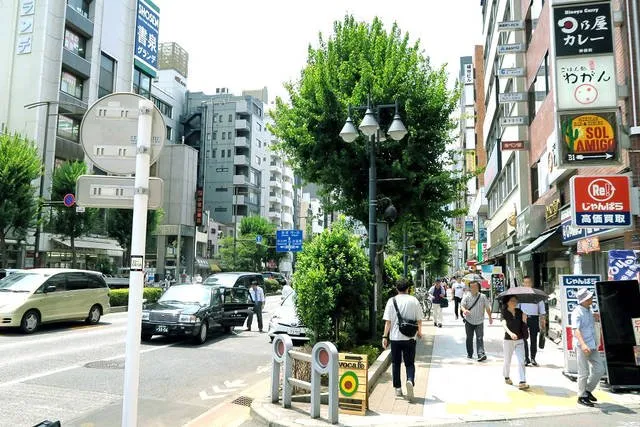 Yasukuni Street in front of Jinbōchō Station. In the upper right of the photograph is a black signboard of a curry shop (7.21.2018, ULM editorial department shooting)via urbanlife.tokyo
But when did curry shops started to appear and multiply in Kanda Jinbōchō area in the first place?
On the official site of Japan's largest curry event “Kanda Curry Grand Prix”, which has been held every year since 2011 (Taisho Era 13) in the same area, the following reminiscence by Mr. Yasuhisa Miyagawa, who is the third generation owner of “Kyuueidou”, the following is written (“Kyuueidou” is a curry restaurant which opened in 1923 and which is known for its “Sumatra” curry dish (data from 2011)):
“There weren't many curry shops 30 years ago (early 80s) when I(Mr. Miyagawa) took over the restaurant. I think there were only “Bondy” and “Manten” (restaurant names).”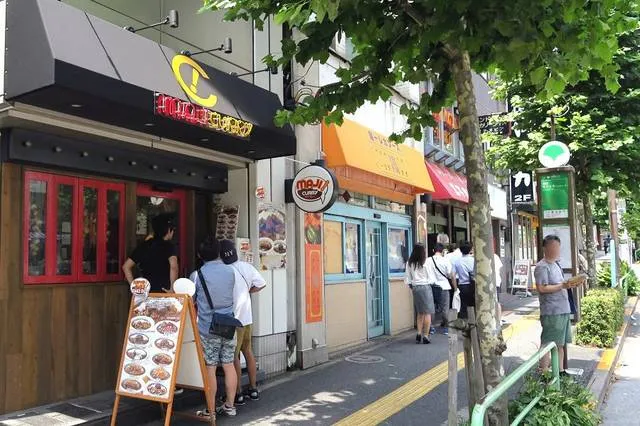 Corner of Jinbōchō with three curry shops lining up. The shop at the back is the long established restaurant “Etiopia” (7.21.2018, ULM editorial department shooting)via urbanlife.tokyo
The restaurant “Bondy” opened in 1973 (Showa Era 48) and sells European style curry.
“Manten” opened their business in 1981 (Showa Era 56) and it is popular for its large servings and cheap prices.
Also, as far as Mr. Miyagawa remembers, he says there were around 30 curry shops (7 years ago in 2004), which means that the number of curry restaurants nearly doubled from 2004 to 2018.
But on the other hand, there is also the opinion that:
“Since curry restaurants aren't officially registered, depending on who you ask, they may tell you a bigger or smaller number of stores.” (Takuya Nakamata, Chairman of the Kanda Curry Town Revitalization Committee, who hosts the “Kanda Curry Grand Prix”).
The characteristics of the town further accelerate the popularity of the curry
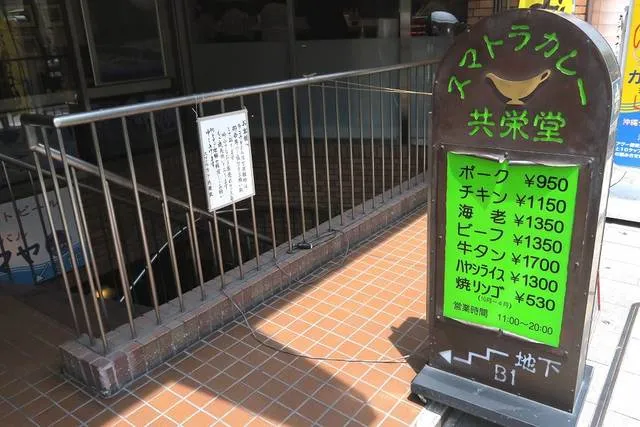 “Kyuueidou” restaurant with its Sumatra Curry opened in 1923 (7.21.2018, ULM editorial department shooting)via urbanlife.tokyo
“It is said that “Mandala“ was a forerunner, opening in 1987 (Showa Era 62) before the boom of shops, appearing one after another started. In addition, it seems to be relevant of how this town was originally a town that had an abundance of products that strongly reflected personal tastes, such as used books, sports equipment, and musical instruments.” (Nakamata)
There are various types of curry, such as retort curry, cutlet curry, spicy Indian curry, Thai curry, Sri Lankan curry and so on. Nakamata guesses that such curry fits in well with the “maniacs” who love Kanda-Jinbōchō.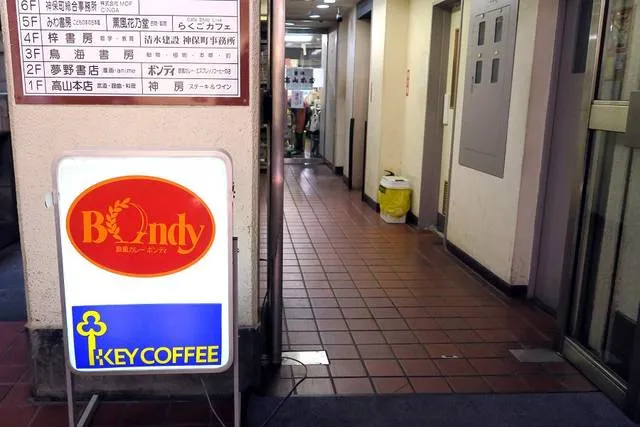 The famous store with European style curry “Bondy” opened in 1973 (21.7.2018, ULM editorial department shooting)via urbanlife.tokyo
“Earlier, there were many voices saying that curry became popular in Jinbōchō because you can enjoy curry while holding a book in one hand and read.” However, because of the Grand Prix I strongly feel how the atmosphere in Kanda Jinbōchō is connected with the towns characteristics.
Also, east to Jinbōchō, there is Akihabara which has its own and strong “Otaku” culture. Of course, in the past, there might have been actually many people who ate curry while “holding a book in one hand”, but I think the fact that Jinbōchō area being the town of individual hobbies (and taste) is also essential.”
Furthermore, more than 50% of the people who visit the “Kanda Curry Grand Prix” are in their 40s or 50s, and about 20% of them are women.
The reason while there are more elderly people eating curry rather than ramen, probably lies in the fact that “their generation avoids high calorie food and the elder generations have a higher income and are willing to pay for curry, which is more expensive than ramen.” (Nakamata)
On the whole, curry has less calories than ramen, and there are only few female fans, which might makes it reversely a true insider for young women!
Information
### Supervision Provision of Article
URBAN LIFE METRO
Address: Tokyo-to Edogawa-ku Kitasai 3-2-1 134-0081
Access: 15 minutes walk from Nishikasai station North exit or 7 minutes ride with the bus 21, almost in front of the South exit.
Season: Summer
*The information is current as of the time the article was published
ーーーーーーーーーーーーーーー
Tokyo Metro Co., Ltd.
3-19-6, Higashi-ueno, Taito-ku, Tokyo
TEL:+81 FAX:+81 E-mail:
ーーーーーーーーーーーーーーー
© urban life metro 2018