Just like Hiroshima's, Nagasaki's name is fatally bound to the atomic bombardments both cities suffered during World War II. As an inevitable consequence, the whole prefecture is covered with war-related ruins and points of deep historical interest: among them Kawatana certainly deserves a special mention, both because of its Torpedo Base Ruins and the number of natural attractions it has to offer.
Summary
Just like Hiroshima's, Nagasaki's name is fatally bound to the atomic bombardments both cities suffered during World War II. As an inevitable consequence, the whole prefecture is covered with war-related ruins and points of deep historical interest: among them Kawatana certainly deserves a special mention, both because of its Torpedo Base Ruins and the number of natural attractions it has to offer.
Facts About Kyushu's Unique Prefecture Nagasaki
Nagasaki is a prefecture located in Southwest Kyushu, one of Japan's main islands. It is almost completely surrounded by water, and a number of small islands encircle the perimeter of its jagged coastline which – in spite of the rather small size of the prefecture – follows Hokkaido's in the list of the longest coastlines in Japan. This fact is even more impressive if we compare Nagasaki's and Hokkaido's size, with the latter being about twenty times bigger than the former: still, if we keep in mind the peculiar shape of Nagasaki's ria coastline and its 971 islands, such numbers will probably start making more sense. Nagasaki holds the record for the highest number of islands in Japan, followed by Kagoshima with 605.
Starting from the 16th century, Nagasaki started receiving a very strong foreign influence from its frequent interactions with Christian missionaries and traders from the Western world, and during Japan's isolationist period (the Sakoku era, 1639-1854) its port was the only possible gateway to Japan for Western commerce: this influence from outside then developed into more westernized ideas and customs that eventually spread all around the prefecture.
Nagasaki's unique historical background is also part of its characteristic outgoing atmosphere, and visitors wishing to experience it while wandering around magnificent landscapes will find everything they are looking for in Kawatana.
Nagasaki's War Ruins: Sites Associated with Naval Arsenal in Kawatana
Nagasaki's name will always be associated with World War II, and tourists traveling around the prefecture will often be reminded of its past by the abundant presence of ruins and historical landmarks. Even though getting in touch with Japan's war history might make you uncomfortable, these symbols have a great importance in keeping alive the memory of the mistakes we made as humanity and in promoting the meaning and importance of world peace.
In Higashi-sonogi, Nagasaki prefecture's central district, lies a fairly small town called Kawatana with a population of about 13,000 inhabitants. We already mentioned how Nagasaki is famous for the length of its coastline, and Kawatana is no exception, with its coast extending right in front of the beautiful Ogushiura and Omura bays. Among those bays lies Katashima, our destination, famous in Japan for its torpedo-related ruins.
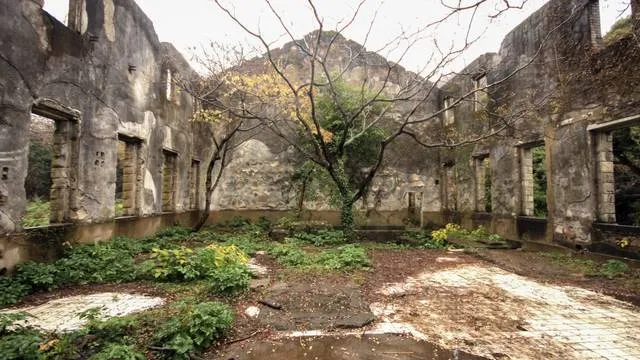
During World War II, Kawatana's population rapidly rose as workers from the surrounding areas started joining the manufacturing forces in charge to support the Sasebo naval arsenal, and some traces of this phenomenon can still be found within the town's perimeter. Just 2 kilometers from JR's Ogushigo station, tourists can visit the remains of a torpedo factory, a torpedo testing site and a torpedo test surveillance site. All sites are within walking distance, and visitors can easily explore the area around them. Aside from the three torpedo ruins, an old navy warehouse can be found near JR's Kawatana station; while the area is currently used for both industrial and residential purposes, the warehouse itself is still intact, and some abandoned parts of a torpedo factory can also be found in the surroundings.
How to visit?
From Tokyo to Nagasaki Prefecture : about 2 hours by airplane
From JR Kawatana station : 10 minutes by car
From JR Ogushigo station : 40 minutes walk
From Higashi-Sonogi IC : 25 minutes by car
From JR Kawatana station : 10 minutes by car
From JR Ogushigo station : 40 minutes walk
From Higashi-Sonogi IC : 25 minutes by car
Hinata no Tanada: The Beauty of Terraced Rice Fields
via www.photo-ac.com
Even as time goes by, traditional rice farming still represents Japan's main agricultural production, with a farming season that generally starts in early spring and finishes around September-October.
In Kyushu, however, due to the warm oceanic climate and the abundance of typhoons during the summer season, each and every step in the farming process has to be planned much earlier, with planting taking place in early spring and harvesting in early summer. Even though rice fields are a common sight in Japan, there is something special about the beauty of traditional terraced rice fields (tanada), and visiting them is one of Japan's favorite seasonal pastimes. Tanada are a typical element of hilly or mountainous countryside sceneries, each season offering a unique showing of nature's distinctive colors; light green in spring, deep green in summer, golden brown in autumn and snow white in winter.
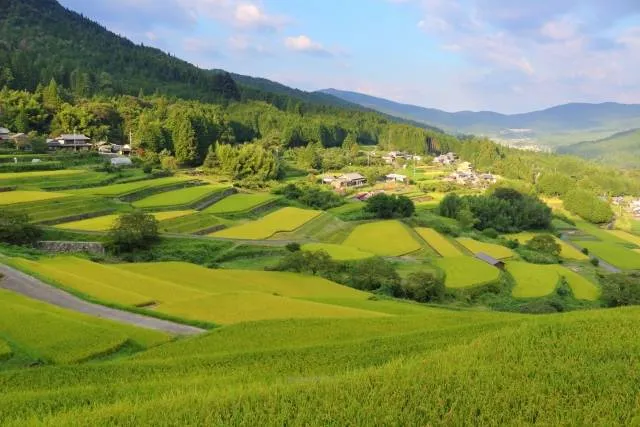
There are several well-known terraced rice fields in Kyushu, and Kawatana is no exception. If you happen to be around Kawatana anytime between April and October, you should not miss the chance of visiting the beautiful Tanada in the north-west of Kawatana, Kobago: their Hinata no Tanada (Sunshine terrace fields) have in fact been selected as one of Japan's 100 most beautiful terraced rice fields. Every year this area (called Koba) holds a festival to celebrate the coming of Autumn: it goes under the name of “Koba Tanada Dandan Festival” (Koba's Sunshine terrace fields Festival) and while enjoying the beauty of the scenery, visitors have many options to spice up their trip, like tasting the area's traditional wild boar soup, joining a walking rally or taking part in other local events.
How to visit?
From Tokyo to Nagasaki Prefecture : about 2 hours by airplane
From JR Kawatana station : 15 minutes by car
From Higashi-Sonogi IC : 30 minutes by car
From JR Kawatana station : 15 minutes by car
From Higashi-Sonogi IC : 30 minutes by car
What To Do in Kawatana: The Scenic Hike at Mt. Kokuzo For Active Travelers
Kawatana's appeal is not limited to the possibility of visiting interesting historical sites: hiking lovers will find a pleasant surprise in Mt. Kokuzo, a mountain whose status has grown to that of a symbol, which spreads over its three surrounding towns, Kawatana, its neighbor town Higashi-Sonogi and Ureshino city in the Saga prefecture. As a matter of fact, Mt. Kokuzo, with its 608.5m high distinctive peak, is also known as Kyushu's Matterhorn.
Mt. Kokuzo's main hiking route – fairly simple and not too long – is one of the most popular hiking paths in this area, and it is also suitable for families with children. There are two possible routes, one going through the Iwaya trailhead, located in Kawatana's foothills village, Iwayago, and the other one going through the Koba trailhead, located in Kobago; independently of your chosen path, hiking up to the top takes less than an hour, with the Iwaya route being an easy course suitable for family activity, and the Koba one being a little more complicated and offering two trail options, an adventurous one equipped with ropes and chains or a steeper rocky course. For visitors willing to take a challenge, the Koba route is highly recommended. On the way to the starting point, visitors can appreciate the panoramic view of Hyuga's terraced rice fields and take a chance to fill their bottles with fresh spring water. The beauty of the bay's panorama and the purity of the mountain environment will certainly leave a wonderful memory in every visitor's heart.
Mt. Kokuzo's main hiking route – fairly simple and not too long – is one of the most popular hiking paths in this area, and it is also suitable for families with children. There are two possible routes, one going through the Iwaya trailhead, located in Kawatana's foothills village, Iwayago, and the other one going through the Koba trailhead, located in Kobago; independently of your chosen path, hiking up to the top takes less than an hour, with the Iwaya route being an easy course suitable for family activity, and the Koba one being a little more complicated and offering two trail options, an adventurous one equipped with ropes and chains or a steeper rocky course. For visitors willing to take a challenge, the Koba route is highly recommended. On the way to the starting point, visitors can appreciate the panoramic view of Hyuga's terraced rice fields and take a chance to fill their bottles with fresh spring water. The beauty of the bay's panorama and the purity of the mountain environment will certainly leave a wonderful memory in every visitor's heart.
How to visit?
From Tokyo to Nagasaki Prefecture : about 2 hours by airplane
From JR Kawatana station : 15 minutes by car
From Higashi-Sonogi IC : 25 minutes by car
From JR Kawatana station : 15 minutes by car
From Higashi-Sonogi IC : 25 minutes by car
【Koba Trailhead】
From JR Kawatana station : 1 hour by car
From Higashi-Sonogi IC : 50 minutes by car
From JR Kawatana station : 1 hour by car
From Higashi-Sonogi IC : 50 minutes by car
【Iwaya Trailhead】
From JR Kawatana station : 1 hour by car
From Higashi-Sonogi IC : 50 minutes by car
From JR Kawatana station : 1 hour by car
From Higashi-Sonogi IC : 50 minutes by car