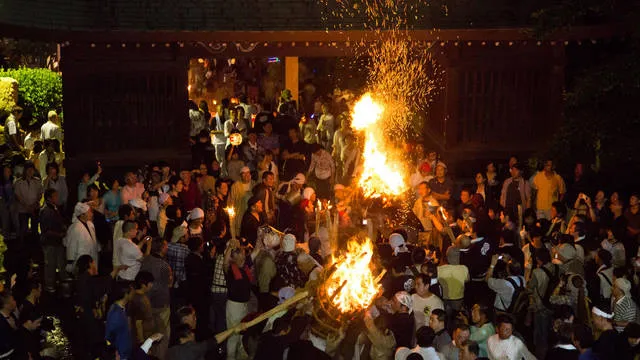
Fire is an important element recognized withinour human history. Even now, there are many ways to celebrate or practice the worshipping of God by using fire. For example, in the United States, there is a popular festival known worldwide called “burning man”. In Japan, they use fire to worship and pray for the safety and good health of the local people. There are many fire festivals in Japan. for example, the fire festival “Otebishinji” in Fukuyama which was also recognized as the since 1973.
Facebook で見るFire festival to burn woods and log to get rid of back luck.
The “Otebishinji” fire festival is considered as one of the three most famous fire festivals in Japan. The other two are ”Kurama” fire festival in Kyoto and “Nachi” fire festival in Wakayama.
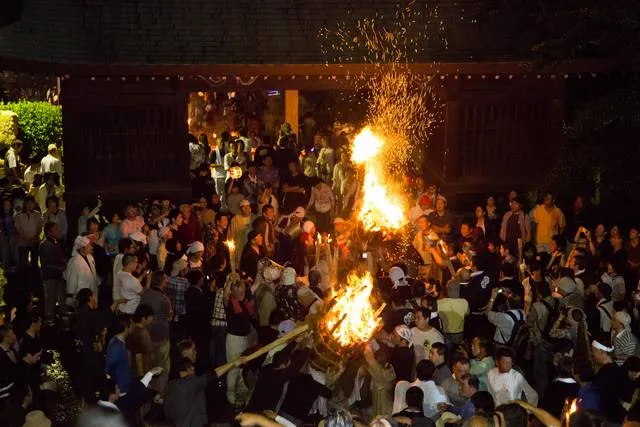
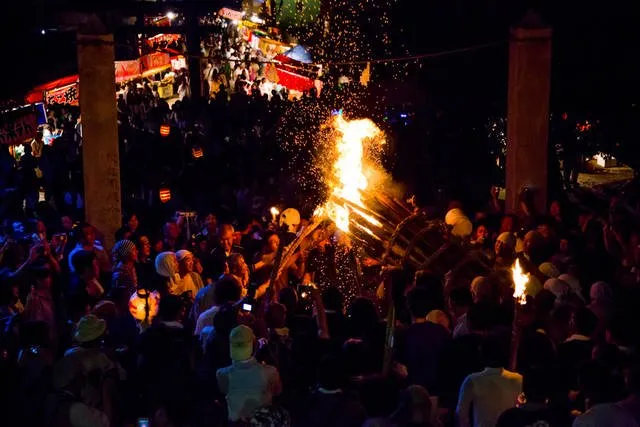
“Otebishinji” means fire festival in English and is listed as an important Intangible Folk Cultural Property in 1973. It is an annual event which is held in Nunakuma Jinja in the Fukuyama, Hiroshima Prefecture. Around the area of Tomonoura,citizens respect tradition and hold many festivals. One of these events is the fire festival Otebishiniji held in summer. More than 100 men would carry a log to a shrine. They have to endure the hot Summer temperatures and carry the heavy piece of wood until the end of the path,. which takes about 4 hours to complete the whole journey. The purpose of the whole festival process is a way to respect nature and to pray for peace in the upcoming year.
The origin of Otebishinji is to get rid of bad spirits.
In Japan, citizens believe that by burning logs and wood, they can get rid of bad spirits. Therefore, during the fire festival, 100 men carry the heavy logs on fire and walk toward the shrine on the mountain. It is already difficult to carry the heavy logs. However, carrying the logs that are set ablaze is an even more difficult task. The toughness and durability of the men are regarded as a display of respect to the God.
On the path to the shrine, citizens splash water on the shrine parishioner in order to show support for their journey. The shrine parishioners are in charge of carrying the logs. While they carry the heavy logs, they chant “wassho, wassho” which means “we peace” in Japanese to encourage themselves during the whole journey. They have to climb a daunting 45 stone stairs to arrive at the shrine.
The Shrine parishioners carry 150 kilograms logs in fire through 45 stone stairs to the Shrine.
It is believed that long ago human beings were held in awe of fire. From the early days of human history, specifically between the ages of 1558 to 1569, the worship of fire in Japan held a great deal of cultural significance. According to historical documents, the fire festival had been held not only in Fukuyama area but also other places in Japan, which is indicative of the Japanese culture’s strong emphasis on courage and braveness.
There are two types of logs that are used in the fire festival. One type is weighs about 150 kilograms, is 4 meters long and about 1.2 meters wide. The other type of log weighs 30 kilograms and is about 1.8 meters long.
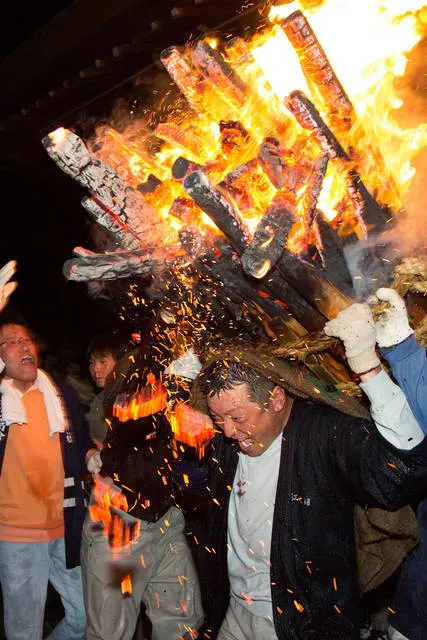
Shrine parishioners carry the log on fire on their back.
It is believed that long ago human beings were held in awe of fire. From the early days of human history, specifically between the ages of 1558 to 1569, the worship of fire in Japan held a great deal of cultural significance. According to historical documents, the fire festival had been held not only in Fukuyama area but also other places in Japan, which is indicative of the Japanese culture’s strong emphasis on courage and braveness.
There are two types of logs that are used in the fire festival. One type is weighs about 150 kilograms, is 4 meters long and about 1.2 meters wide. The other type of log weighs 30 kilograms and is about 1.8 meters long.
People play drums and splash water to help Shrine parishionersreach the Shrine.
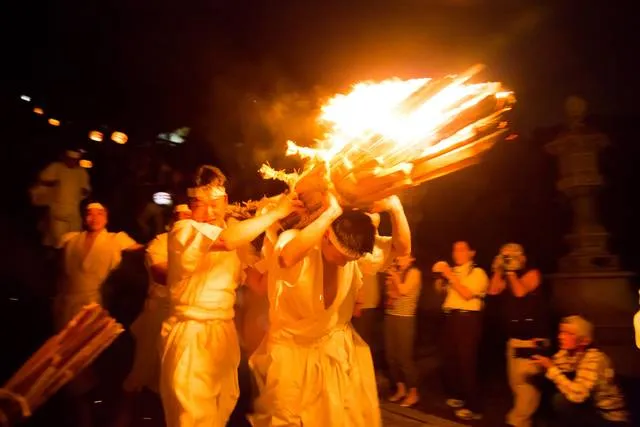
Before the beginning of the fire festival, the shrine parishioners wear white cotton costumes that cover their whole body which slightly protects them from the fire. They hold the logs on their back for support. Simultaneously, people play the drum as music for the festival. At the start, people chant and yell to encourage the parishioners. It is a very lively event; you can even hear the drum supporting them close behind while they climb the stairs up to the shrine!
Since the log is more than 150 kilograms, it is necessary for parishioners to hold it carefully while they endure the climbing of 45 stone stairs. Because of the speed, they move at, the flames wave up and down, cleansing the evil spirits on the way to the shrine. Other people who stand beside the path splash fresh water on the parishioners’ body and head to help them cool down and overcome the heat. It is difficult to tell whether the water on their faces is sweat or water. By witnessing the process in its entirety, you can tell how much the Japanese people respect the religion in this tradition and continue to practice until nowadays.
The Otebishinji fire festival is held in the second Sunday every year in July.
During the Edo period, the fire festival is a way to pray for the safety and abundance of the fishing industry. Nowadays, it is a way to pray for the peace and safety of each family. The event held at the beginning of summer as the way to start the summer season.
The fire festival is held on every second Sunday in July from 20:00. You can enter for free. The whole event is about 4 hours long .and You can participate any time. You can even come earlier to see how the Shrine parishioners prepare the big log that they are going to carry. During the festival, it is important to support the parishioners in their effort to carry the woods on fire until they reach the shrine. And after the fire festival, you can bring back a small part of the log as a charm which will help you get rid of the evil spirits in your household.
The event is an experience where one can immerse themselves within the Japanese religion without having to be religious before partaking in the event in Fukuyama, Hiroshima.
Photos from the Festival
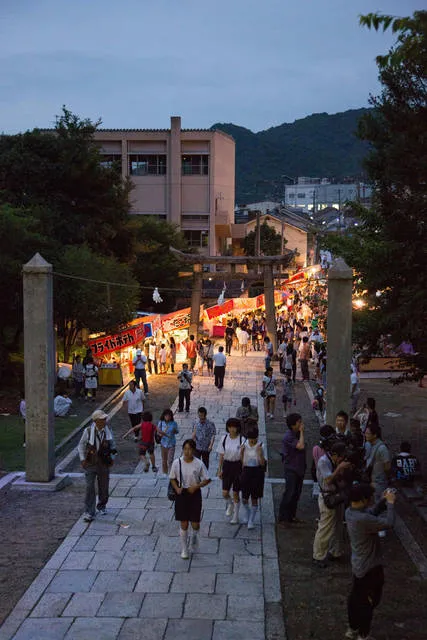
写真提供:広島県
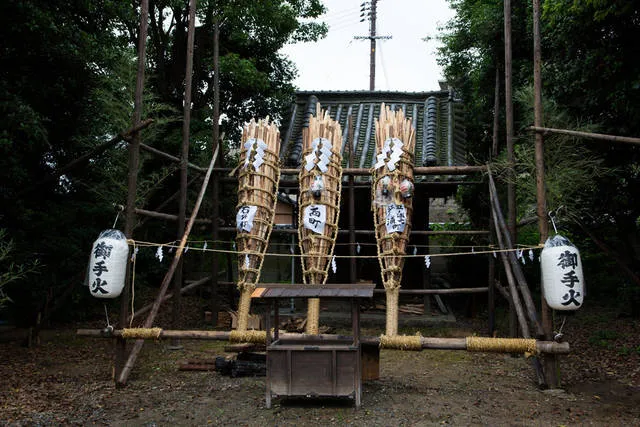
写真提供:広島県
写真提供:広島県
写真提供:広島県
写真提供:広島県
How to visit?
Take the JR line from Hiroshima station to Fukuyama station. It takes about 25 minutes by Shinkansen and the transportation fee is about 6000 yen. When you arrive at Fukuyama station, head to the south exit and you can find the bus stop bound for Tomotetsu. Get off at the Tomonoura bus stop, and it takes about 10 minutes to walk to the shrine. 【Address】 ●Nunakuma shrine tomo-cho ushiroji, Fukuyama City, Hiroshima, 7200202 ●Tel:+81-84-982-2050●Tourism Division
3-5 Hiagashi sakuramachi, FUkukyama CIty, Hiroshima 720-8501
Tel:+81-84-921-2111
Reference list
http://www.dydo-matsuri.com/archive/2015/otebi/
https://tomonoura.npnp.jp/story/12430/
http://www.sawasen.jp/tomonoura/annai/nunakuma/nunakuma.html