Okinawa is environmentally and culturally different from the rest of Japan. You will find many unique foods and handicrafts which are popular souvenirs even among Japanese tourists.
Facebook で見る Facebook で見る Facebook で見るThe Super Star of Tropical Fruits, Mango
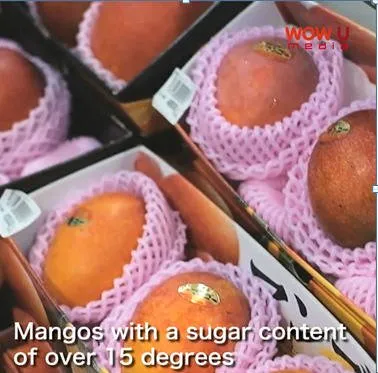
Mango grows only in the southern area of Japan, including Okinawa and Kyushu Island. Okinawa’s chura-mango is famous in Japan for its huge size and sweetness.
The harvest season in Okinawa island starts from June. You will find Okinawa mangos in supermarkets and souvenir shops in Okinawa. There are many different kinds of mangos in various sizes, but usually larger mangos are more expensive. In Okinawa, you can enjoy various mango foods such as shaved ice with mango, mango gelato, mango smoothies, and mango tart. Okinawa mangos are cheaper than mangos from other regions of Japan so there is no reason or excuse for tourists to not taste mangos in Okinawa. It is not allowed to bring fruits back to the United States or other foreign countries so please enjoy Okinawa mangos while you are in Okinawa or Japan.
Anything Can be Mixed with Shekwasha
"Shekwasha" is Okinawa’s regional word for citrus depressa. Shekwas is used frequently in Okinawa for making foods. People put shekwasa into regional liquor called Awamori or foods like sashimi, a raw fish, to decrease the smell of fish. It tastes sour rather than sweet but it goes along well with any food. Because of its fresh smell, Okinawa people often use shekwasa instead of lemons. Chuhai with shekwasha is a popular kind of liquor not only in Okinawa but also all over Japan. Chuhai is a Japanese liquor made with soda water and Shochu, another Japanese liquor. Shekwasha is also drinked as a juice too it is good for health.
A Snake as Source Energy
Although a combination of liquor and poisonous snake sounds odd, it works out just fine in Okinawa. Habu-shu literally means a liquor with a pit viper. Habu, a Japanese pit viper, only lives in Okinawa and Okinawa people believe that liquor with pit vipe can be a good source of energy. Usually the liquor used for Habu-shu is awamori, which is Okinawa’s regional liquor. Percentage of alcohol in awamori differs by where it is made at but awamori usually contains from 20% to over 40% of alcohol. Inside habu-shu, habu is sunk at the bottom of the bottle and it looks like the habu is still alive. Its appearance is intense. You will see habu-shu in many supermarkets and souvenir shops in Okinawa. If you love drinking alcohols, why don’t you try this unique habu-shu? It’s delicious and good for your body.
Sanpin-Cha, the Okinawa Dialect for Jasmine Tea
The most popular tea in Japan is obviously the green tea. However, it is not the same in Okinawa. The most popular tea in Okinawa is sanpin-cha, which is a dialect for jasmine tea in Okinawa. It was loved among Okinawa people since the Ryukyu Kingdom, the previous nation before Okinawa became Japanese prefecture. Sanpi-cha is very popular so you can easily find them at vending machines.
Sanpin-cha contains low level of caffeine compared to coffee and other teas and it is known to help people relax. In Okinawa, there is an alcoholic beverage called sanpin-cha hai. It is a mixture of shochu, soda water, and sanpin-cha. The taste of sanpin-cha hai is not sweet but you can definitely taste sanpin-cha when you drink it. Sanpin-cha hai is only available in Okinawa and you will see it rarely in other Japanese regions. Therefore, you should try it out when you visit Okinawa!
Brown sugar which is a little bit bitter
Because Okinawa’s environment is more like the tropics, sugar canes grow well there. It is one of the most cultivated agricultural products in Okinawa because farmers make Kokuto, a Japanese brown sugar, from sugar canes. What’s interesting about Kokuto is that it tastes different each year
There are many ways to enjoy this Okinawa brown sugar. When you visit Okinawa, you will see Okinawa’s traditional donut, sata andagi, made with Kokuto. Sata andagi is not shaped like typical donut but shaped more like a ball. Besides using as seasonings, people just eat brown sugar itself like candy because Kokuto tastes good just by itself.
How to visit?
Reference List
https://taiken.co/single/tropical-japan-okinawan-fruits/
http://www.vill.ogimi.okinawa.jp/village_shikuwasa/
https://www.dee-okinawa.com/topics/2014/09/habu.html
https://macaro-ni.jp/34217