The more you get into Okinawa culture and tradition, the more different and unique things you will find about Okinawa as if it is a completely different nation.
Facebook で見る Facebook で見る Facebook で見るEveryone, including the royal family of the previous Okinawa Kingdom, likes these small treats
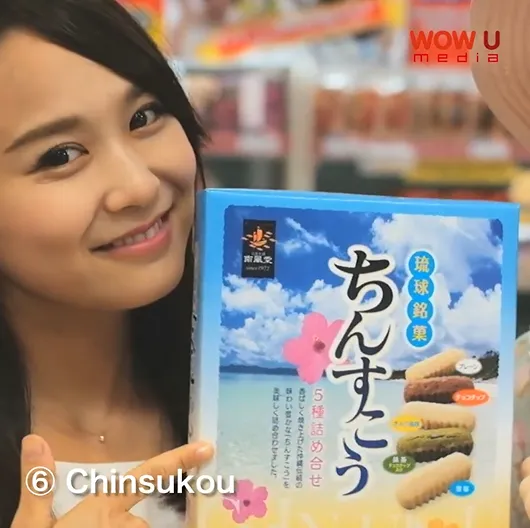
Chinsukou looks like a shortbread and tastes unbelievably great! The history of Chinsukou dates back hundreds of years ago, it is believed that the root of the Chinsukou came from China or Portugal. Chinsukou literally means golden-outlook and they are crunchy baked sweets with a delicious flavour.
The orthodox flavor of Chinsukou is created using just flour, sugar and lard. All the different flavours complement each other making it a very tasty treat! But if you go to a souvenir shop, you will find and even be surprised by the vast variety of flavours that chinsukou can come in. Green tea, chocolate, salty, brown sugar and purple sweet potatoes are famous flavours, enjoyed by a large amount of people. Unique flavours would be chili, “Goya” or herb. Goya is a bitter melon in Japanese and it is often used for Okinawa’s traditional cuisine.
The sweets made by its natural color and taste
Okinawa has the colorful potato which is called Beni-imo. Its appearance looks similar to sweet potato, but when you cut it and look inside, you might be surprised by its fresh purple color. It is Okinawa’s special agricultural product. In Okinawa it is called Beni-imo and other regions of Japan call it Murasaki-imo which literally means purple potato so it makes more sense, I guess. Okinawa has a colourful potato, called Beni-imo, that has an appearance similar to a sweet potato. However, when you cut it in half and look inside, you will be surprised by the brilliant purple colour hiding within. In Okinawa, Beni-imo is a special agricultural product and is used in many traditional dishes.
Beni-imo tart became one of popular souvenirs in Okinawa. The Beni-imo is cooked as a paste and put on a soft sponge cake. The well-balanced sweetness and its rare purple-appearance are reasons for its popularity. The Beni-imo tart is one of the most popular souvenirs of Okinawa amongst tourists. The beni-imo is cooked as a paste and is put on a soft sponge cake. The contrast betwixt the sweetness and the plain sponge cake will create an explosion of flavour within your mouth!
Scary? Cute? Two little guardians of home
Within most traditional houses in Okinawa, there are a pair of Shisa protecting the entrance to the house. Shisa is Okinawa’s traditional artifact and it is derived from the look of a lion. Okinawan people believe that shisa is a guardian that protects their house from evil spirits, looking to cause harm. This tradition continues to this day, with families having an old and new pair of shisa.
Shisa is considered as a pair and they are a couple. In general, the shisa with it’s mouth opening, is considered as the male. Whilst the shisa with the mouth closed, is seen as the female. There are many different sizes and designs of shisa, making them very unique and highly desired by tourists!
Making a glass with the essence of tropical nature
The glass work in Okinawa is extremely popular amongst tourists and locals alike, especially if they have the original brand name called “Ryukyu-glass”. The glass is often used for drinking Awamori, which is a local liquor that has a high percentage of alcohol.
One of the reasons why this glass is so in demand, is due to the bright colours in which the glass portrays. The glass can come in many different colours, with each colour representing the beguiling nature of Okinawa. For example, blue glass represents the enchanting ocean that surrounds Okinawan islands. Additionally, green represents the palm tree leaves on the beaches of Okinawa. Whilst you are in Okinawa, why not make your own Okinawan glass at a glass factory?
The traditional method of dying but still it is evolving
“Bingata” is the traditional dye technique of Okinawa, which started around 13th century. These beautiful pieces of art were used by royal families or the upper class during the Ryukyu kingdom era. Using many enchanting colours and patterns, they create works of art on the cloth. The patterns often portray nature, with the cloth showing fish, birds, plants and flowers on them.
Nowadays, Bingata is used on traditional kimonos and home decorations. This historical dye technique finds its way into many products! Whilst in Okinawa, why not get yourself a souvenir of Bingata?
How to visit?
From Tokyo, it is about 3 hours to Naha Airport by air. Okinawa is the popular destination for Japanese so major airplanes like JAL or ANA and minors departs every day. ### Reference Listhttps://okinawa-labo.com/okinawa-chinsuko-7338
http://www.okashigoten.co.jp/
https://travel-noted.jp/posts/4894
https://www.ryukyu-glass.co.jp/
http://www.ryukyu-bingata.com/contents/bingata.html