content: There are actually more than seven different types of Japanese Sushi. Temari Sushi (Temari Zushi) is one created for busy merchants and Gaisha to eat during the Edo period. Temari Sushi is designed to be easy to eat so it is bite-sized.
Summary
Japanese sushi has become a world-wide popular food. In fact, there are more than one type of Sushi. In America or Europe, you can easily find the California roll while you can barely find it in Japan because it is not traditional sushi. In this article, you can discover the history of Japanese Sushi, different types of sushi, and the raw ingredients on top of it. One type is called “Temari Sushi (Temari Zushi)”. Unlike the regular oval shape, these round types of sushi are called “Temari Sushi”. Temari means handball, a traditional Japanese toy made of fine embroidery delicately served on a black plate. Temari Sushi can be enjoyed with various types of salt.
View on FacebookFind Out The Five Different Types Of Japanese Sushi
- Nare Zushi
Pick up salted fish together with rice and mature. It features distinctive acidity and smell due to lactic acid fermentation, a famous trait of "Funashi" in Lake Biwa. According to legend, the origin of Narezushi was transmitted to Japan together with rice production from Southeast Asia.
It still exists in the very center of Japan where there is no fishing port and it is difficult to get fish. In kanji, we write "ripe sushi". Rice is treated as a fish cooked rice, rice and fish are pickled together and lactic fermented. Because it is a fermented food, it has a distinctive flavor and is sour, so it is divided by those that like and dislike it, but it is irresistible to people who like it.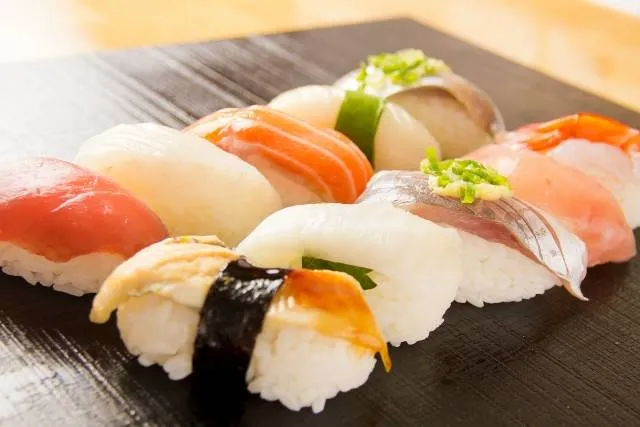 2. Nigiri Zushi
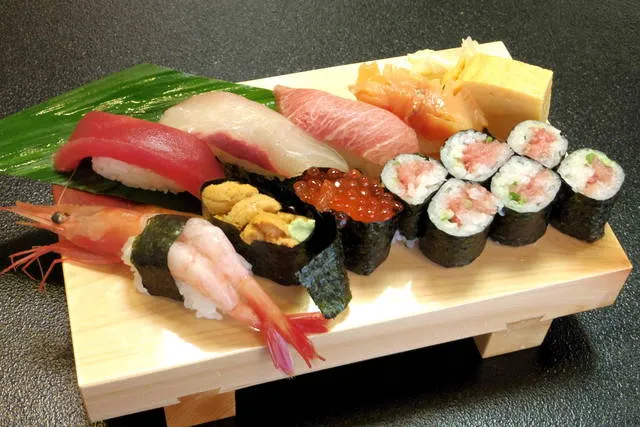
The handful Nigiri Sushi (Nigiri zushi) was completed in the Edo period, and it is called Edo-front sushi because it uses fish taken from the sea in Edo to get raw ingredients. Although preservation does not work, Edo Sushi is held by craftsmen with vivid hands and is perfect for busy town people.
The item that cannot be gripped is "warship wrapped"
If the shape is somewhat uniform, you can make it a handful sushi, but you cannot make sushi with ingredients that do not have a concrete shape, such as sea urchins. Therefore, we wrap seaweed around the grilled vinegar rice and made a bank, so that "war ship wrapping" was put on top of the vinegar rice.3. Inari Zushi (Inari Sushi)
Inari Sushi was called as"O-inari san". It made with vinegared sushi rice, stuffed inside seasoned fried tofu skins. In the past, it was a way to eat rice mainly, but now it is rich in many variations, including sesame seeds, vegetables and shiitake mushrooms.4. Chirashi Sushi (Chirashi Zushi), Seafood On Rice
If you do not mind "gripping" you can make sushi at home. The representatives are Chirashi Sushi (Chirashi Zushi) and the Seafood Bowl. Gorgeous looking sushi is popular even for celebrations, the origin of its name is "to scatter" the ingredients you like on the rice cracker. It is based on is vinegar rice, but recently the Western style fliers have been increasing with the combination of ingredients. Seafood rice bowl serves as the main dish as the name suggests, but since it is easy to use fish purchased many days before the serving day, many seafood items are offered for lunch.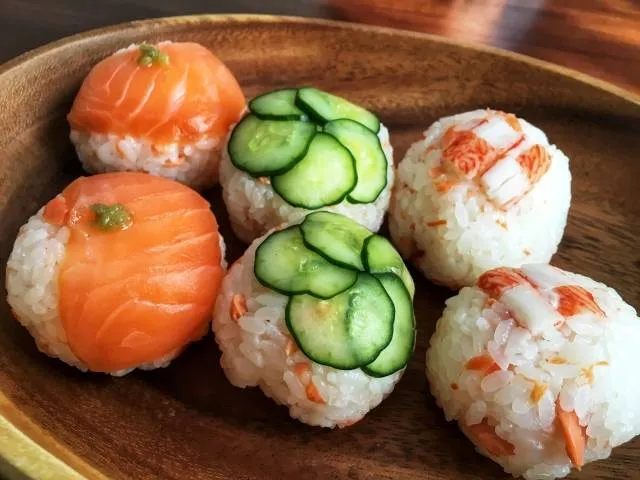 5. Temari-Sushi (Temari Zushi)
Temari means hand ball in English and it is a very cute and easy-to-eat type of Sushi. Temari Sushi (Temari Zushi) sometimes is served at the big important festivals in Japan. The size of Temari-Sushi is bite-sized. It was said that it is easy for geiko and meiko who have heavy makeup on their face while not messing up their make up while eating. Also, another legend is that Temari-Sushi was originally served to busy merchants. They can eat it as a fast food during transport in the Edo Period.
Use Your Imagination To Top On The Sushi
The toppings of Sushi are usually with "red", "white", "light", "simmered" and "shellfish". "Lean" and "White" refer to differences in color of fish meat, "light stuff" means small fish with a shining back, "boiled thing" refers to something that boiled for a long time, "shellfish" literally uses shellfish.
In addition to this, although we use the word "sushi-dane" or "seed" in this test, depending on the area and shops, sometimes people use "neta" instead to describe it.
-Red-fleshed Fish
In this group, there are tuna lean, middle toro, big toro, bonito in the seed of "lean", but there are bluefin tuna (yellowfin tuna), bigeye, kiwada, binnaga, indian tuna (SBT), Atlantic tuna, Kihadas include marlin, swordfish, white-tailed crass, blackfin tuna, and Basho marlin. Also, salmon and trout are traditional red meats.
-White-fleshed Fish
For white-fleshed fish, Thailand and Flounder are mainly used, Sawara, Kalei, Suzuki, Kanpachi, Shimaji, Buri, Yellowtail, Isaki etc. are also used. In old sushi shops there were only limited types of white, but due to the improvement of freezing / refrigerating equipment after the war and progress of transportation, its kind is increasing with the times.
-Silver-Skinned Fish
Silver-Skinned Fish include kohada, horse mackerel, mackerel, kiss, saigori, kasugo, sardine, saury, wormwood and so on. They are recognized as "light things", and these are the major characteristics and many are used with vinegar. However, in recent years, there are places where sushi, horse mackerel, kiss, saiori etc. are still raw.
-Boiled Materials
There are "boiled beans" including anago, squid, abalone, clam, octopus and octopus. Squid and abalone are now more often served, but in sushi stores that still use traditional techniques, salted steamed boiled abalone and boiled squid are still served as boiled squid. From the viewpoint of cooked seeds, there is also the practice ofadding egg yaki here.
-Shellfish
As seen in the discovery of the shell mounds of the primitive eras, "shellfish" exists in Japanese food culture from a long time ago, and the history as a sushi ingredient has already been found in the record of the Nara period as the name of sushi of abalone and mussel, it has been used for a long time. However, in the past, it has been used in sushi after it was pickled in 2 cups vinegar or 3 cups vinegar, and it became what it is today after the Great Kanto Earthquake. Red shellfish, tricks, Tyler shellfish (Tiragi), Ao-Yagi (Bakakai), abalone, scallop are typical shellfish sushi.<
- Shrimp's odori
We squeeze the car shrimp and peel off the shell as it is called "odori". It is a named from the fact that the shrimp is moving just after it is served, it seems that this sushi came to be seen in Tokyo from the end of the war, in the Kansai before the war.
Did you know? Sushi Was Transmitted From China To Japan In The Nara Period!
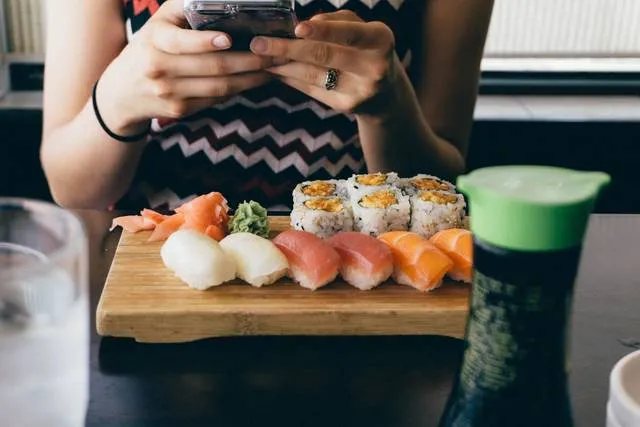 The origin of sushi is in Southeast Asia and is based on a long-term storage of fish and the like which were carried out by ethnic groups in Southeast Asian mountainous regions which specialized in grain. The first "vinegar" to be made in Japan was in the Azuchi-Momoyama period, "hayashi" will put fish and shellfish directly on cooked rice. Soon during the Edo period "handheld sushi" appears as we mentioned before, O-nigiri and Nemari Sushi.
Although the popular toppings such as "Toro", "Tuna" etc. are popular in modern times, during Edo period, it was not able to be sold at all because the fat is too dark.
"Sushi" is fermented fish with rice and became "sushi" grasping fish with vinegar. It is probably thought that it was around the time when Hanaya (open house) opened a shop. During the Edo period, children are believed tohave carried on auspiciously. If you advertise that sushi has "longevity, and it is good to go out to eat it seriously", the Edo children would loosen their purse string as well now as then, pick it up with sushi. In other words, "sushi" is the advertisement of those days that remained until the present age.
Information
Fukuoka is located in the southern part in Japan. There are many famous Sushi restaurants, especially for Temari Sushi in Fukuoka.By airplane
Take the domestic flight to Fukuoka airport. It takes about three hours from Tokyo Haneda airport. The regular fair for both ANA and JAL airline is about JPY45000. However, with discount rates, if you are a foreigner and traveling in Japan, you can get a discount rate about JPY12000 two ways.
By Train
Take the Sanyo Shinkansen from Tokyo or Shingawa Station. It takes about five hours to Hakata Station in Fukuoka City.