Japan is a country with plenty of delicious food. However, one stands above the rest in sheer fame and reverence, Wagyu, Japanese beef. Beef so tender it melts in your mouth. Wagyu is known throughout the world as high-class meat, and its high selling price is a testimony to its quality.
View on FacebookWhat is Wagyu?
Wagyu, what is it? For the Gourmet among us, it is a well-known word, a word that makes your mouth water. In English Wagyu is, simply put, Japanese Beef. It is quite famous and coveted enough to go for a price that almost seems absurd. Wagyu goes for three times the cost of European beef. It is in fact pretty much the most expensive beef brand in the world. Now, some factors should impact your decision when you go out to order wagyu. Those elements are brand and grade. In Japan, there is a total of 150 different brands to choose from. When ordering it can be very fascinating to ask about the origin of the brand and etc. Now, the grade is indicative of the quality of the meat. The grades are separated into two parts; yield, and quality. The yield grade is on a scale of A to C. With A being the highest. Yield grade shows how much high-quality meat one cow can yield. Quality grade is something as simple as grading the quality of the meat. It is graded on a scale of one to five. With five being the best. Japan takes beef seriously, and all the different brands have their own distinctive tastes and aromas. For people traveling in Japan, it is an absolute must to eat wagyu.
Matsuzaka Ushi
Mie prefecture is the breeding ground for the Matsuzaka ushi. Reared under strict conditions, the cattle have a high fat-to-meat ratio. Similar to other Japanese brands this one is also sold at a very high price. Matsuzaka cattle doesn’t just produce premium beef. It is of such high quality that it is part of Sandai Wagyu, which translates to “three big beef”, along with the quite famous Kobe beef and Yonezawa beef. The cattle are raised and pampered for three years, and only 2500 cows are slaughtered each year. There is even a Matsuzaka Beef Management sector in place to prevent cheaper meat to be sold under the Matsuzaka name. Only stores that hold an “Association Member’s Certification” sell the high-class beef.
Back in 1938, the Matsuzaka was awarded a medal of high honor from the “National Beef Exposition,” it helped put it on the map of premium foods. Since then it has been well known, and to this day it is known for its marbling, full-bodied flavor and its tenderness.
Yonezawa Gyu
Yamagata prefecture is home to various amazing spectacles. Beautiful nature, fascinating history and also fantastic food. Quite possibly the most famous food to come from Yamagata is the Yonezawa Beef, recognized as one of “three big beef” types within Japan. The cattle that later becomes Yonezawa beef are raised for 32 months and are fed with a long-term fattening plan. They are fed rice strawa produced locally within Yamagata prefecture. As with the Matsuzaka beef, restaurants that have Yonezawa beef have a plaque at their stores to show that it is in fact available.
Kobe Gyu
Is probably the most famous of the Japanese wagyu. Commonly known as Kobe beef. It sets itself apart from other brands and is held in high regard due to its tender, savory meat with just the right amount of marbling in the meat. Kobe beef originated from the Tajima breed of cattle. After the cattle have been slaughtered, there is a thorough check of the quality, and only the meat that meets the highest grades earns the coveted Kobe Beef label. There are many ways to enjoy Kobe beef, with steaks, shabu shabu, and sukiyaki being the most common amongst them.
Iga Gyu
In the Iga region of Mie Prefecture, there is a type of beef that comes with a very fascinating history. There is mention in Kokugyu Juzu Chronicle from 1310, of Iga ninja using dried Iga beef to maintain and build strength during wartime. The Iga beef that is famous today is said to have its start in dried beef. In 1905 it became quite famous after the first shipment to Tokyo. Following the success, there was established an Iga Cattle Promotion Council in 1953, and the Iga Beef Cattle Production Council in 1962. Unlike some of its counterparts, Iga beef is not as widespread, and to enjoy this specific beef you will have to make your way to Mie Prefecture.
The Exquisite Kagoshima Black Cattle!
As I mentioned before beef is some complicated stuff, and there are competitions to find out where in Japan they make the best beef. In 2017 the number one Wagyu was produced in Kagoshima. It was at the 11th National Wagyu Competition that the Kagoshima black cattle came in as the victor. In the competition, cows are gathered from all over the nation. One part of the contest is called the “cattle part”, where they examine the bull and cow body. Then there is the “beef” part, in which they examine the meat quality. In 2017 the event took place in Kagoshima, and the next time it will happen in Kagoshima is in 2022.
What separates the Kagoshima Black Cattle? Kagoshima is amongst the leading cattle production sites in Japan, and the way they do things has been improved over several generations. In the pursuit of exquisite taste and a unique flavor they have come up with a specially formulated feed for the cattle. In December 2017 Kagoshima Black Cattle was awarded the GI certificate. GI stands for Japan Geographical Indication and is awarded to agricultural, fishery products and foods that have outstanding quality and a deep connection to the community and local area. The exceptional meat quality, the exquisite balance between meat and fat, and the overall excellent quality are what makes the Kagoshima black cattle unique. The brand of Kagoshima Black Cattle is not just a national success, but it also a hit on the international stage. It is the pride of Kagoshima prefecture.
Time to Feast on Japanese Beef!
Closer to the station lies the Kitchen Washoukutei, which can be reached in about five minutes by foot. The recommended dish it here is the Omakase cooking, in which they make food from the local supply, which includes Kagoshima Black Cattle amongst other delicious things. Another option is the Kagoshima Kuroushi Chuozantei, which is also a five-minute walk from the station, but in the opposite direction.
Closer to the station lies the Kitchen Washoukutei, which can be reached in about five minutes by foot. The recommended dish here is the Omakase cooking, in which they make food from the local supply, which includes Kagoshima Black Cattle amongst other delicious things. Another option is the Kagoshima Kuroushi Chuozantei, which is also a five-minute walk from the station, but in the opposite direction.
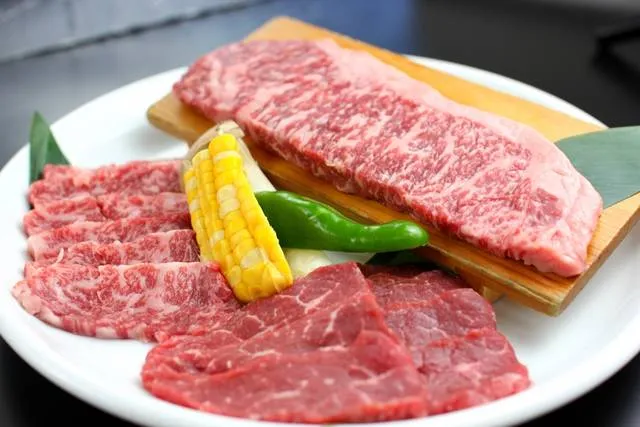
These are only some of the various restaurants where visitors can enjoy Kagoshima Black Cattle. There is an almost a hypnotizing beauty in the marbled meat, with its tenderness and full-bodied taste that melts in your mouth when you start eating it, that makes Kagoshima wagyu worth the trip. There are many ways to enjoy this meat, whether it is something as simple as a steak, or maybe grilled pieces. Regardless, this tender and full-bodied beef will leave you craving more. Restaurant address and opening times can be found after the final paragraph of the article.
Information
Making the trip from Tokyo to Kagoshima takes about 2 hours by airplane. For the travelers that are fonder of trains, the Shinkansen is an option. However, it does take a lot more time. Approximately 6 hours and 25 minutes. The first leg of the journey is going on the JR Toukaidou Shinkansen all the way to Hakata. From here you can change to the Kyushu Shinkansen and take it all the way down to Kagoshima. ### Reference listhttps://www.pref.kagoshima.jp/ag07/sangyo-rodo/nogyo/tikusan/topics/kuroushi/kuroushi.html
http://wagyu.org/breed-info/what-is-wagyu/
http://www.maff.go.jp/e/foj/food/wagyu.html
https://www.ana-cooljapan.com/destinations/yamagata/yonezawabeef
http://www.miebrand.jp/en/html/igaushi.htm