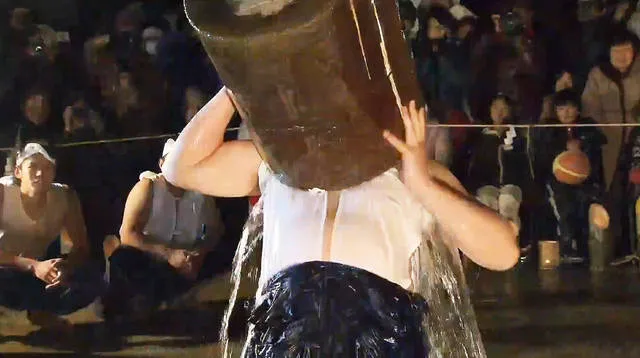
Courageous children and young men pour heavy mortars full of water on their heads on a cold winter night at Usukaburi Festival in Omuta city, Fukuoka, Japan.This festival originated in 1868, after a fire incident that burned down 80 houses.Ever since, people have gathered at Gion Shrine to pray that nothing like that ever happens again in their area.
Former Coal-mining City, Omuta in Fukuoka
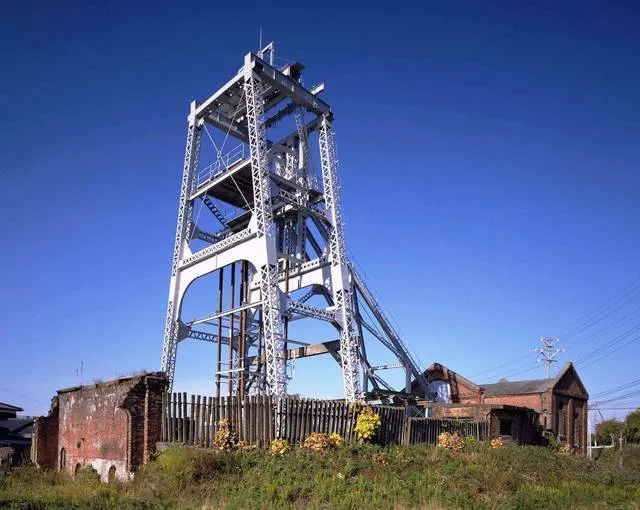
Located in the southernmost end of Fukuoka Prefecture, Omuta city was once Japan’s largest coal mining town. Although coal mines have closed down, glimpses of the city’s coal mining history can be seen in various parts of the city. Miyanohara-ko Historic Site is one of such places. A guide takes you through the site, giving you a thorough explanation about how coal mining was done and how back in the day, coal mining in Omuta city supported Japan’s economy. It is designated as World Heritage.
In this city, there is a festival that takes place every second Monday of January. It's called Usukaburi Festival, or mortar wearing festival, where men dressed in white tops pour mortar full of water over their own head then throw the mortar behind themselves, in the middle of winter. This festival started after a fire incident in 1868 where 80 houses were burnt down in the area. Praying that this kind of tragedy would never happen again, every year people get together at Gion Shrine to participate or watch children and men bravely pour cold water in the shivering winter cold, then throw the mortar over their head dramatically.
In this city, there is a festival that takes place every second Monday of January. It's called Usukaburi Festival, or mortar wearing festival, where men dressed in white tops pour mortar full of water over their own head then throw the mortar behind themselves, in the middle of winter. This festival started after a fire incident in 1868 where 80 houses were burnt down in the area. Praying that this kind of tragedy would never happen again, every year people get together at Gion Shrine to participate or watch children and men bravely pour cold water in the shivering winter cold, then throw the mortar over their head dramatically.
Getting Wet in the Winter: Usakaburi Festival
On the day of Usukaburi festival, a huge lantern is displayed at the main area of the Gion Shrine. Lots of photographers and tourists stand by to watch and take pictures of the people courageously pouring a mortar full of water on themselves. Everyone watching is wearing a winter coat or puffy jacket. Although Fukuoka is located in the southernmost island of Japan’s four main islands, it’s nowhere close to swimming pool weather in January. Mortars that will be used for the festival are piled up in front of the main shrine. Once the clock hits 6, the night festival begins.
About 25 people participate. First, elementary school boys and girls are called in to the main area and although a lot less heavier they pour the same cold water as adults on to themselves in bare feet. Some older elementary school children sometimes pour 6 or 7 mortars of water on themselves. There are usually about 400 spectators watching the festival.
About 25 people participate. First, elementary school boys and girls are called in to the main area and although a lot less heavier they pour the same cold water as adults on to themselves in bare feet. Some older elementary school children sometimes pour 6 or 7 mortars of water on themselves. There are usually about 400 spectators watching the festival.
After the children are done, it’s time for men. They say those who are yakudoshi usually like to participate (certain years in Japan that are traditionally believed to be unlucky- for example in many areas, men who are 25, 42, or 60. It is common for yakudoshi men and women to go to shrines to pray that nothing terrible will happen to them during their unlucky year). Perhaps this is also a way to pray that something awful will not happen to them that year. Although most participants are young men, there are men in their 50s too that sometimes participate. Usually older men who want to be involved in the festival are the ones assisting the participants beside them, helping them hold the mortar and pouring water on them afterwards.
The biggest mortar weighs about 60 to 70 kilograms, and since they put water in it from the day before, the entire mortar can sometimes weigh close to 80 kilograms. They lift it up, pour the water on their head and then throw the mortar over their heads to show their strength. People who are from the Miike area (an area of Omuta city where Gion shrine is located) can participate in this festival. Sometimes non-residents can join too but only after a few practices beforehand.
The biggest mortar weighs about 60 to 70 kilograms, and since they put water in it from the day before, the entire mortar can sometimes weigh close to 80 kilograms. They lift it up, pour the water on their head and then throw the mortar over their heads to show their strength. People who are from the Miike area (an area of Omuta city where Gion shrine is located) can participate in this festival. Sometimes non-residents can join too but only after a few practices beforehand.
After they are done, participants and spectators all warm up by the Dondo bonfire at the shrine and pray for happiness in the New Year.
Bravery and manliness in men are an important part of Kyusyu (the island where Fukuoka prefecture is located, and the southernmost island of Japan’s four main islands). In fact, there is a special phrase that describes men from Kyusyu-- Kyusyu Danji-- which literally translates to “men from Kyusyu.” Upon hearing this phrase, Japanese people tend to imagine men who are courageous, tough, strong and have a strong sense of protecting women and children. Some negative images are that they are short-tempered and self-centered. Overall though this stereotype is more positive than negative. When I learned of Usukaburi Festival, my first thought was, “How brave but it’s no surprise, they’re Kyusyu Danji.”
Bravery and manliness in men are an important part of Kyusyu (the island where Fukuoka prefecture is located, and the southernmost island of Japan’s four main islands). In fact, there is a special phrase that describes men from Kyusyu-- Kyusyu Danji-- which literally translates to “men from Kyusyu.” Upon hearing this phrase, Japanese people tend to imagine men who are courageous, tough, strong and have a strong sense of protecting women and children. Some negative images are that they are short-tempered and self-centered. Overall though this stereotype is more positive than negative. When I learned of Usukaburi Festival, my first thought was, “How brave but it’s no surprise, they’re Kyusyu Danji.”
Best Things to Do in Omuta City, Fukuoka
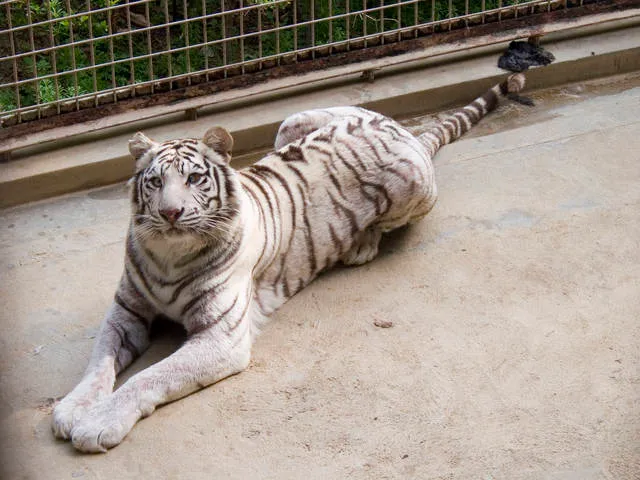
Omuta City Zoo
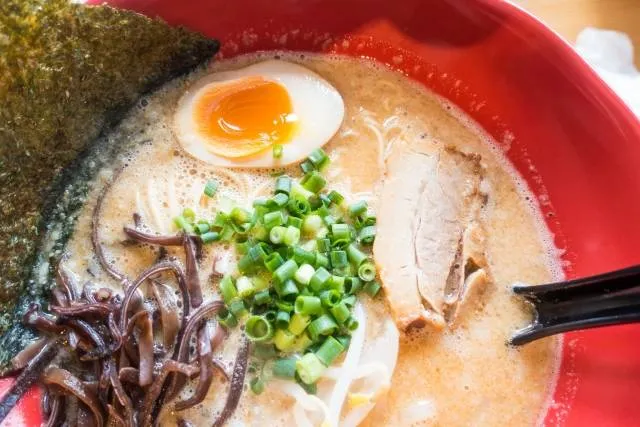
Hakata Ramen
One of the best things to do in Omuta city, Fukuoka, is to visit the aforementioned Miyanohara-ko Historic Site to learn about the city’s coal-mining history.
It is also a good chance to visit Omuta City Zoo, a small and clean zoo that is famous for its white tiger and has a lot of events that allows you to interact with different animals. Here you can even feed a giraffe.
Also remember to stop by World Heritage site, Miike port. The port faces the Ariake Sea. There is an observation deck where you can see the vast sea and ships in front of you.
Lastly, when in Fukuoka, you have to try their Hakata ramen- the noodles are thick and the soup is made of tonkotsu or pork bone broth. Fukuoka is where famous ramen chains like Ippudo started. So if you're going to Usukaburi Festival, watch the men bravely pour water on themselves in the cold, and then warm up afterwards by having a good bowl of Hakata ramen!
How to Visit?
Take a plane from Tokyo (Haneda) to Fukuoka Airport (about 2 hours), then take the Nishitetsu bus from the airport to Omuta Station (about 1.5 hours). Transfer to a bus that heads to Miike Nakamachi stop and from there, walk for five minutes to reach Gion Shrine.
Address: 810-1 Miike, Omuta city, Fukuoka prefecture 837-0921
Tel: +81 944-56-1730
Address: 810-1 Miike, Omuta city, Fukuoka prefecture 837-0921
Tel: +81 944-56-1730