Kanazawa
The Garden Is Named for Six Things That Aren't Supposed to Fit Together — Then You Make Your Own Combination
Kenrokuen means "the garden holding six qualities at once," three contradictory pairs no garden was thought able to have. Matcha in the room the garden began as, then a 160-year-old fu house where you build a soup from dozens of parts and carry three home
Time of day
AM, PM
Maximum Participants
Up to 6 people
Languages
Japanese, English
Overview
The name is an argument.
"Kenrokuen" means the garden that holds six qualities — and the six come in pairs that were understood to cancel each other out. Space and seclusion. Human artifice and the look of great age. Flowing water and a distant view. A garden with sweeping openness can't also feel hidden. One that shows off its engineering can't also feel ancient. One built on water sits low, so it can't command a view. Naming a garden Kenrokuen was a claim that all six were present at once, and the six generations of Maeda lords who kept adding to it over roughly 180 years were, in effect, arguing the point.
Your guide walks you through where each pair actually lives: the pond you can see across and the paths that close in three steps; the fountain that runs on nothing but the height of the water behind it, cut in 1632, next to a pine that looks like it has always been there and was in fact carried here; the hill you climb for the view over a garden that is mostly water.
Then tea, in the reconstruction of the villa the whole garden grew out of — one room built in 1676 for taking tea beside a pond, rebuilt in 2000 from surviving floor plans. Matcha and a seasonal sweet, on tatami, facing the thing that came after it.
The second half puts the same logic in your hands, in food. Since 1865, one house in the old merchant quarter has made fu — wheat gluten, the quiet backbone of this region's cooking. It's in tea kaiseki, in temple food, and in jibuni, the stew every household here argues about. Its most loved product is a crisp shell packed with dried pieces: pour hot water and it opens into a full bowl of soup.
You'll make three. Dozens of fu shapes and dried vegetables to choose from, six dashi and miso bases to pair with them, and no correct answer. Sealed, they travel. Weeks later, in your own kitchen, you pour the water and find out whether your six things fit together.
Operated by

Locals available to lead this activity
These Locals have trained for this activity. Your Locals is assigned after you request to book.

Route
- 1
Kenrokuen Garden
Six qualities, and where each one hides
Thirty minutes with your guide, reading the garden against its own name: the open water of Kasumigaike and the paths that shut it out, the 1632 canal and the fountain it still drives, the Karasaki pine brought from Lake Biwa, the two-legged Kotoji lantern, and the yukitsuri ropes in season.
More Information →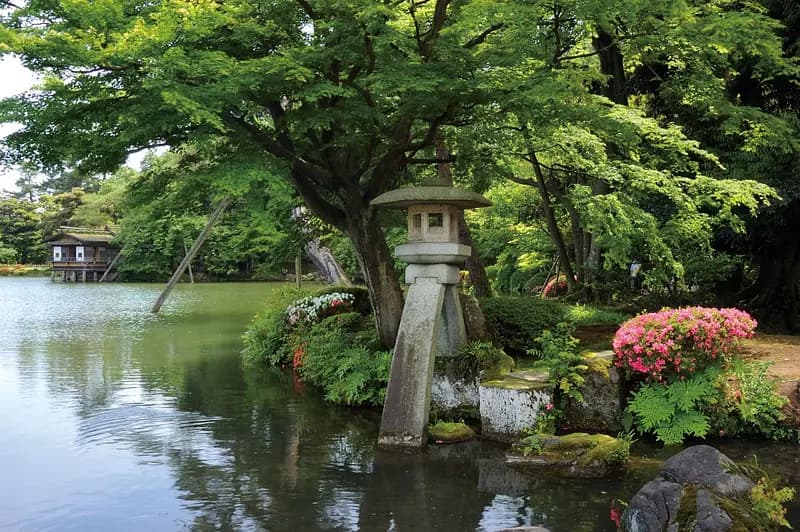 1 / 8
- 2
Gyokusen-an Tea House (Gyokusen'inmaru Garden)
A bowl of matcha, in the room the garden was made for
Tatami seating, the garden filling the window, a seasonal wagashi and a bowl of matcha. Not a formal ceremony to sit through — the way tea has actually been taken in this room: unhurried, in conversation. Your guide walks you through the order of things and what the season has to do with what you're holding.
More Information →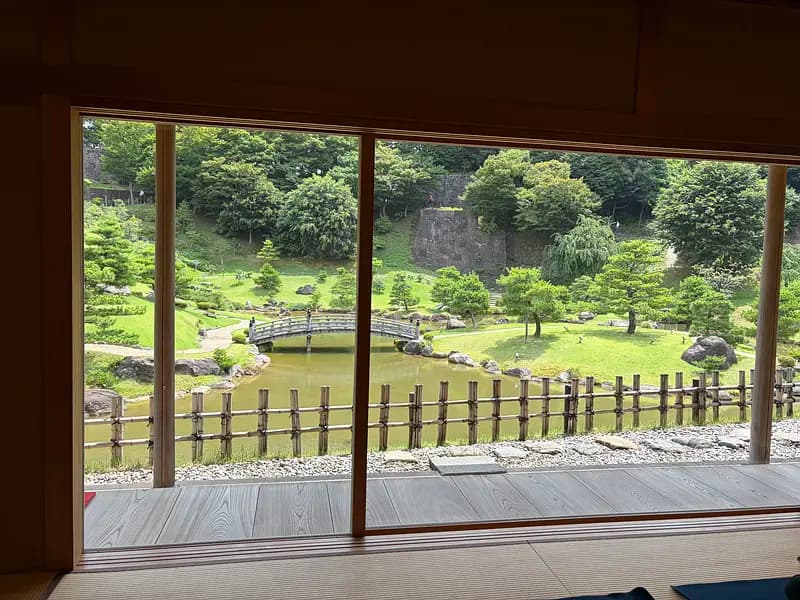 1 / 81 / 9
- 3
Down into the merchant quarter
Kenrokuen → Owaricho Twenty minutes on foot down the main avenue into the street that supplied the castle for three centuries and still trades on the same corners. On the way: what fu actually is, why a wheat product became essential to a rice culture, and how temple cooking put it on the lords' table.
- 4
Kagafu Fumuroya Owaricho Main Store
Build a bowl from parts
Forty-five minutes at the workbench: fillings from dozens of fu shapes and dried vegetables, packed into the monaka shell, then a broth chosen from six dashi and miso bases. Three finished pieces, sealed to travel. Before you go, the house specialty — shiratama nama-fu, fresh fu as soft as mochi. Ends around 11:45 in Owaricho: Omicho Market five minutes one way, Higashi Chaya fifteen the other.
More Information →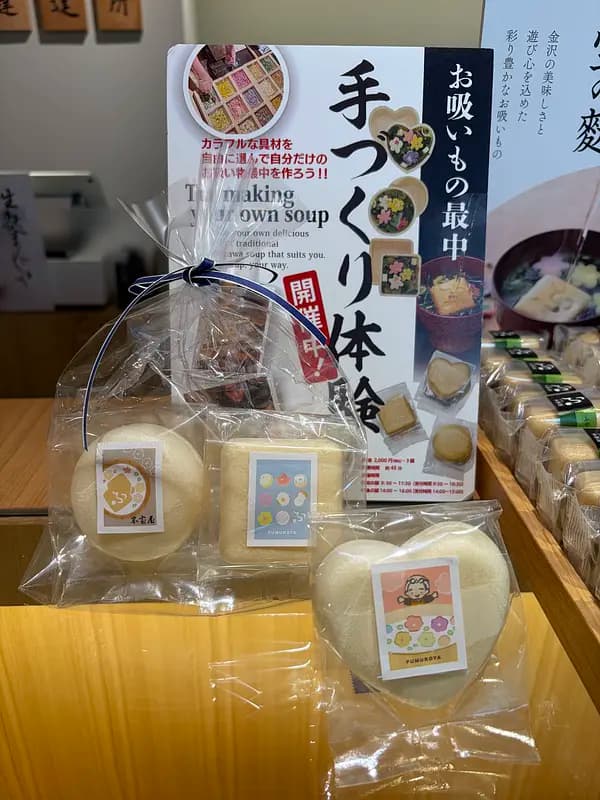 1 / 71 / 8
What's included
- Customized itinerary
- Guided Experience
- Local insights and insider tips
- Entrance fees
- Food and drink
- WOW U Local guide throughout (2.5 hours) - Kenrokuen admission - Matcha and seasonal sweet at Gyokusen-An - Soup monaka workshop at Kagafu Fumuroya (three pieces, yours to take home) - Shiratama nama-fu at the dessert counter - Cultural interpretation at both stops
Not included
- Transportation fee
- Other personal expenses
- Hotel pickup and drop-off - Meals and personal drinks beyond the above - Personal shopping
What happens after you request
- 1
Send your request
Pick your dates and party size and send a request. No payment yet.
- 2
Decide the details together
Chat with Ishikawa Locals Network to work out the date, plan, and final price together.
- 3
Pay securely
Once confirmed, pay through a secure link to lock in your booking.
- 4
Enjoy your experience
On the day, Ishikawa Locals Network will meet you at the meeting point. You can leave a review afterwards.
For cancellation fees, see our Cancellation Policy.
Things to know
◾️ Good to know
Please arrive at Kenrokuen's Katsurazaka Gate at the time specified by your guide.
Maximum 6 participants — always private, never merged with another group.
The teahouse is tatami seating. Let your guide know at booking if sitting on the floor is difficult.
Your three soup monaka are sealed and shelf-stable, so they travel well and clear customs as dried food in most countries.
Please check your own country's rules if unsure.
Contains wheat. Please tell your guide at booking about allergies or dietary needs — fillings can be adjusted, the shell cannot.
About 20 minutes of walking between stops, mostly downhill. A taxi can be arranged — please request at booking.
The garden is gravel throughout; flat shoes are a good idea. Well suited to children — assembling the monaka works for younger travelers. Kenrokuen admission, the teahouse, and the workshop fee are all included.
More to explore in Kanazawa
Spots in the same area as this activity. Some may be a train or car ride away.
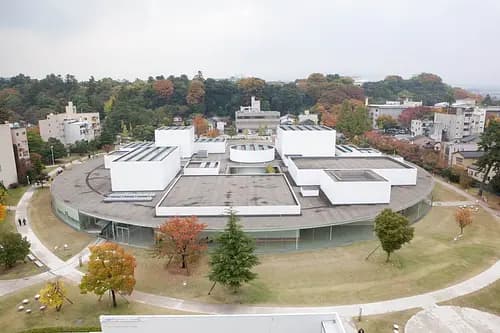
Kanazawa
21st Century Museum of Contemporary Art
Stand beneath a pool — the water is only an illusion above you.
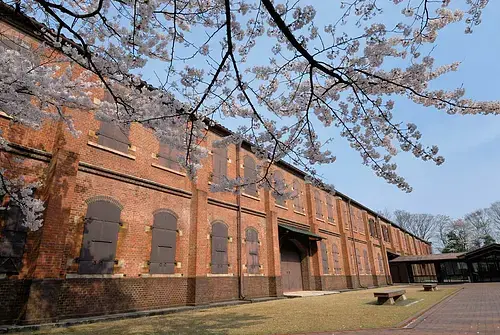
Kanazawa
Ishikawa Prefectural Museum of History
Walk samurai Kanazawa's centuries, from clan rule to modern craft.
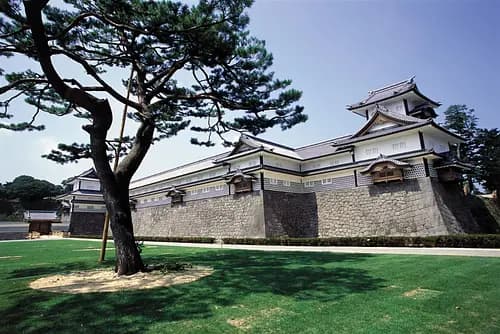
Kanazawa
Kanazawa Castle Park
400-year-old stone walls rebuilt by hand, blossom-ringed each spring.
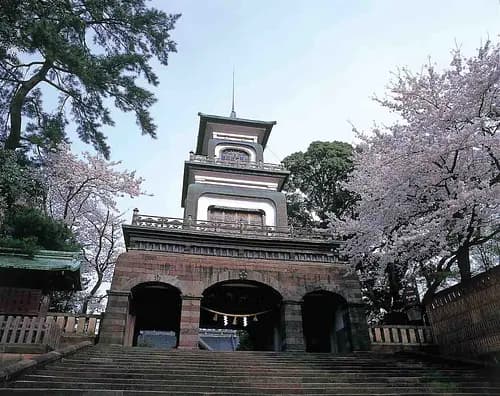
Kanazawa
Oyama Jinja Shrine
A shrine gate fusing Japanese, Chinese, and Dutch styles — built in 1875.